The Whole Wide World
conception of a cultural geography – how one is shaped by the landscapes we inhabit. Explore the edges between the constructed and natural environment. Particular focus on natural light.
be aware this might be slow to load because of the number of images
Work Blog Intro
Terms to consider:
Provocation – idea to ‘provoke’ a body of work. Explore the contemporary experience
Currency – does this work have contemporary relevance?
The provocation for this Semester is the ‘Whole Wide World’ – specifically our relationship to a particular part of our world. It is to be kept to the context of Ponēke, and Aotearoa.
The other restriction is to begin making with only one set of media.
Painting Sculpture Time-Based Photography
Then remaking this media in another set of media after 6 weeks.
My Initial thoughts:
Immediate idea for media is to explore using Photography. With this I can rapidly produce work and ideate. I often fall victim to conceptualizing work to much before starting, keeping in a more ‘digital’ medium might help stop this.
This is also the first step into thinking about my larger art practice, which I believe has traditionally been moving between photography and painting. So for the first semester of the year I will stay relatively inside a comfort zone and maybe branch out later.
Ideas
1
In work in the OT response to the royal commission into historic abuse in state care in the 20th century
– Interested in looking at something from the crown response side as I am not in the place create something in relation to the survivor stories – nor am I going to seek that out.
- A personal response to the work that has been done, is being done, what will be done
- Im personally worried that the recommendations from this massive piece of work are not legally binding, and will not be implemented.
- I am also concerned that the lack of treating underlying causes that leads to failures in care – and other preventative measures are not being looked at.
- I feel the place of capital/nation states and indigenous rights/ and longstanding issues the equity-equality will make any of the hard work that is being done fraught/naught
- I see so many people that want to be doing the right thing.
- How do you rebuild trust that is broken – can you?
How would I approach this artistically – what is the historical precedence for this – look at work from Canada and Ireland. Start with looking at work that is critical from outside the system – see if there is any work
2
Local politics – zoning policy – the marrying between
city planning/council politics/developers/communities/whenua
We are so affected by these decisions that are largely ignored by wider public scrutiny. Housing in Wellington is an incredibly contentious issue, and I think it would be interesting to where I sit within all these larger relationships and power struggles at play.
3
Our geography/landscape influencing our cultures
I personally am affected by my environment – would the verdant hills of wellington create a different practice from say someone in the flat plains of Alberta – we look to see ourselves in landscapes
How do we attach ourselves to place through this geography/topography
How do we locate ourselves within an environment
Response to Ideas
I think idea 1 will be used in my Art and Politics Paper, it has been something I have wanted to do for a long time and I feel that is a smarter place to do it, less dry than idea 2.
Idea 2 has been on my mind for a while. I feel very aware of these decisions that are currently being made have ripple effects that will be felt for decades to come. That said I feel like I want to sit with this a bit longer, until I feel confident I can create a more activist/public facing project.
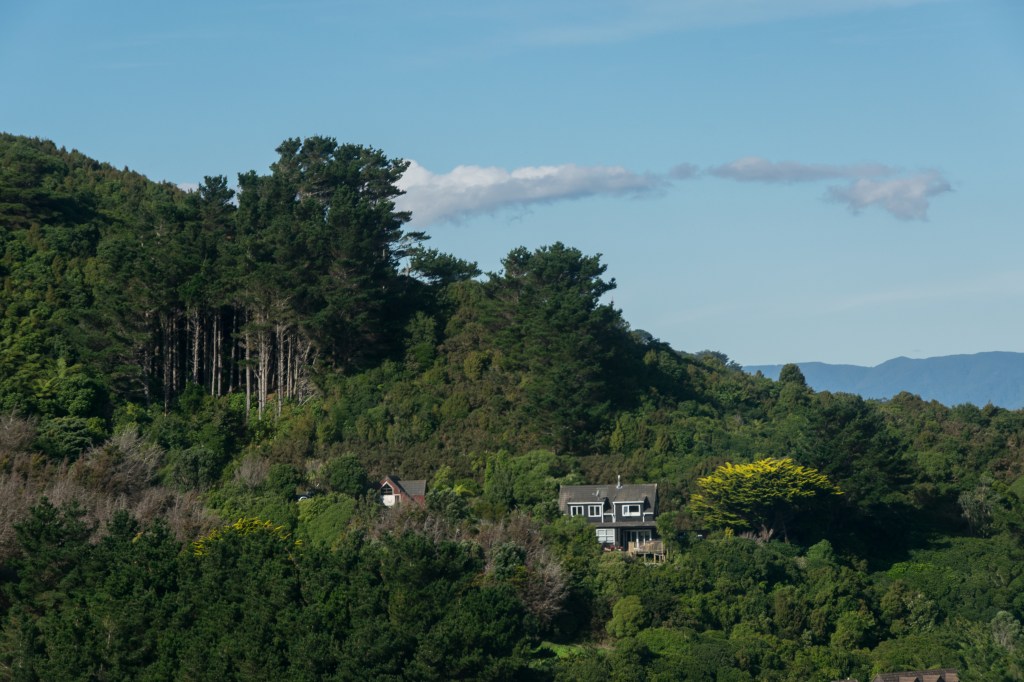
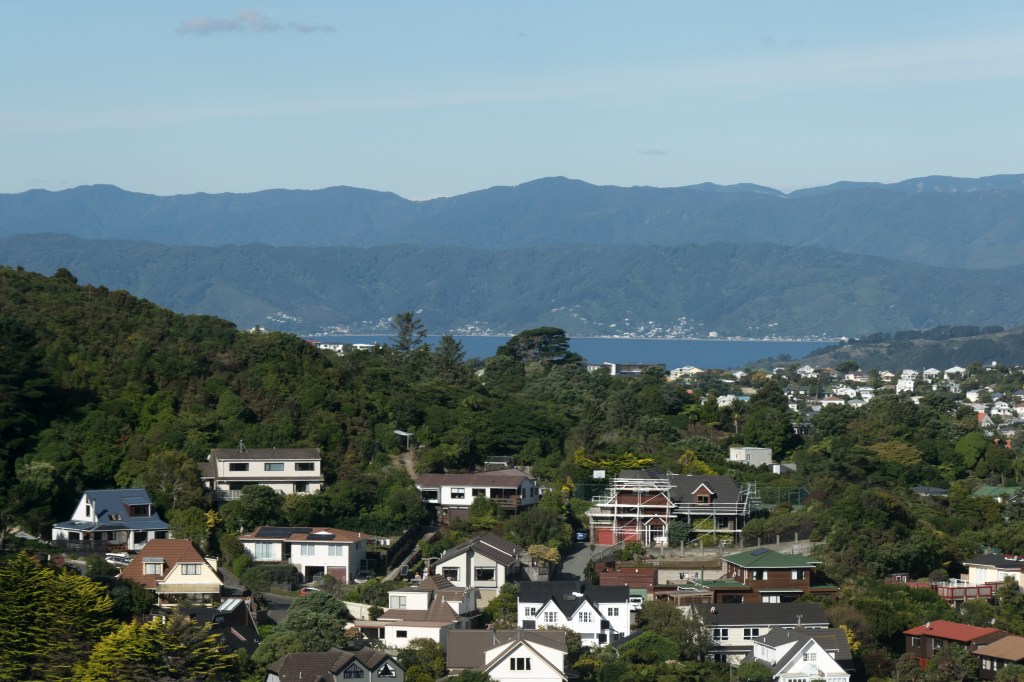
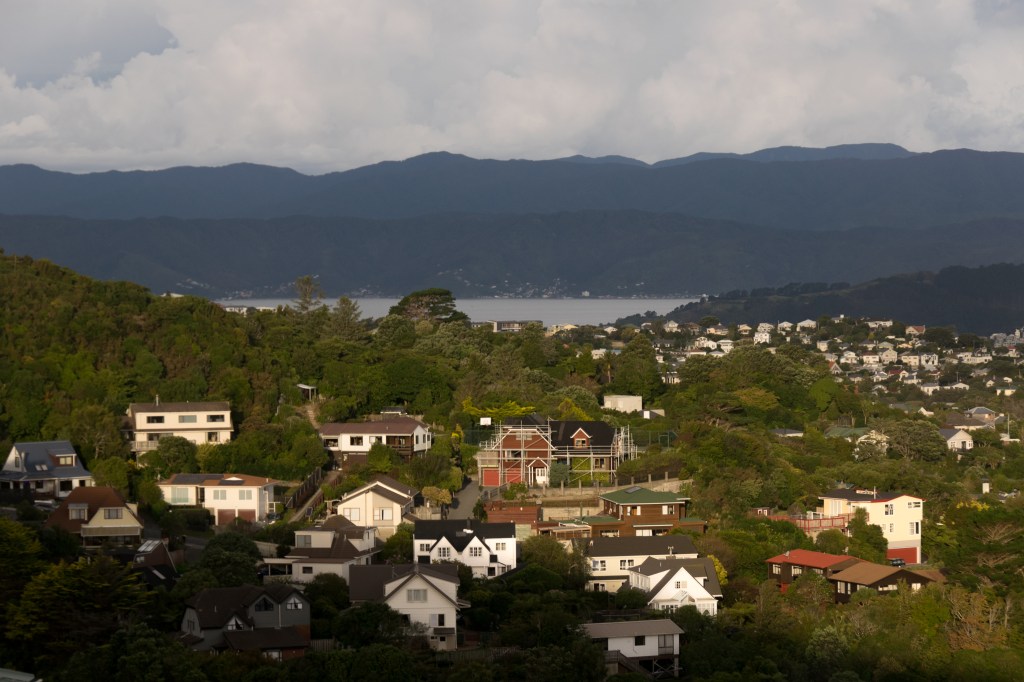
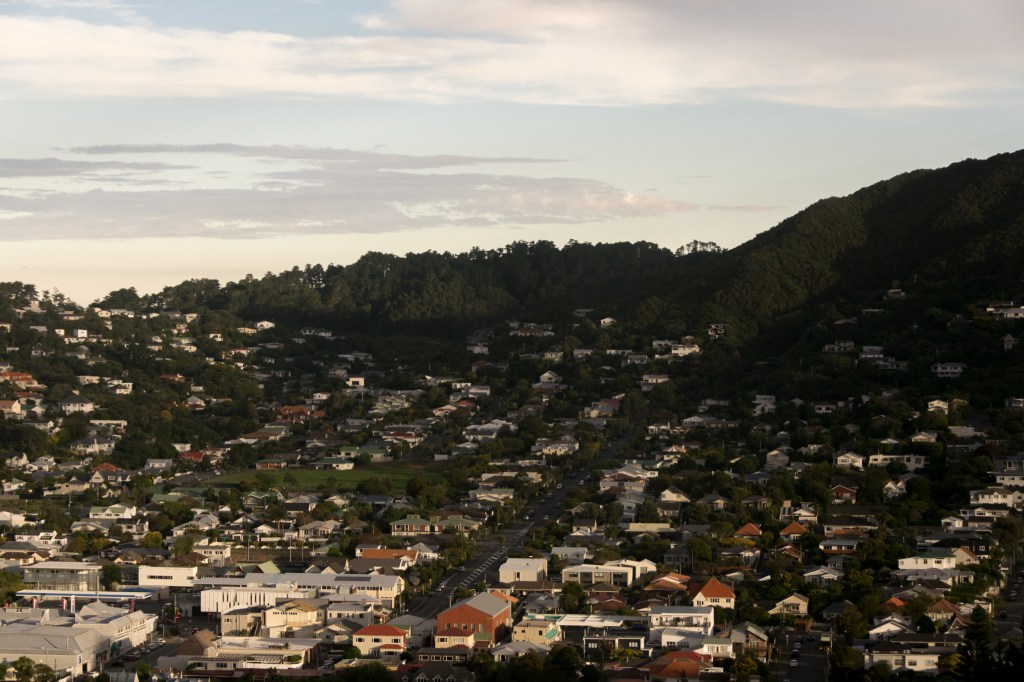
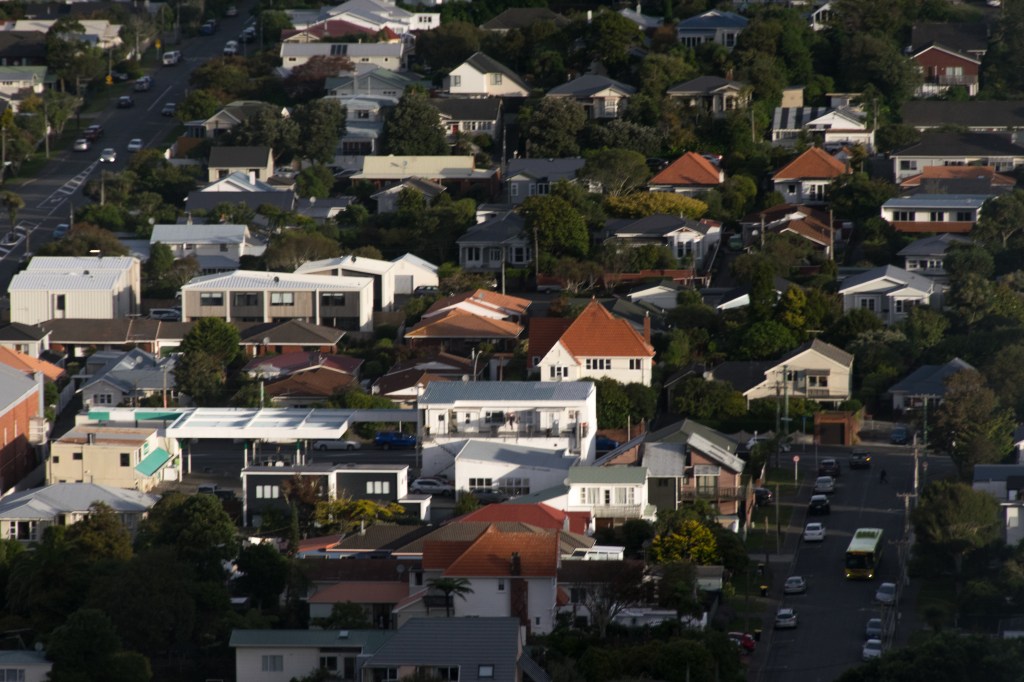
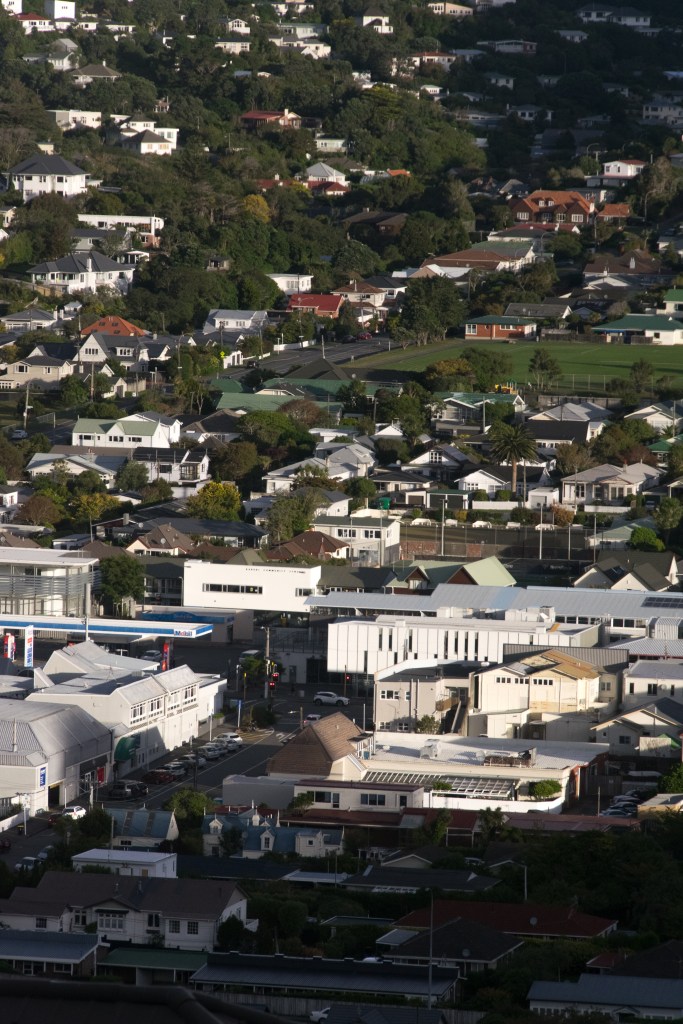
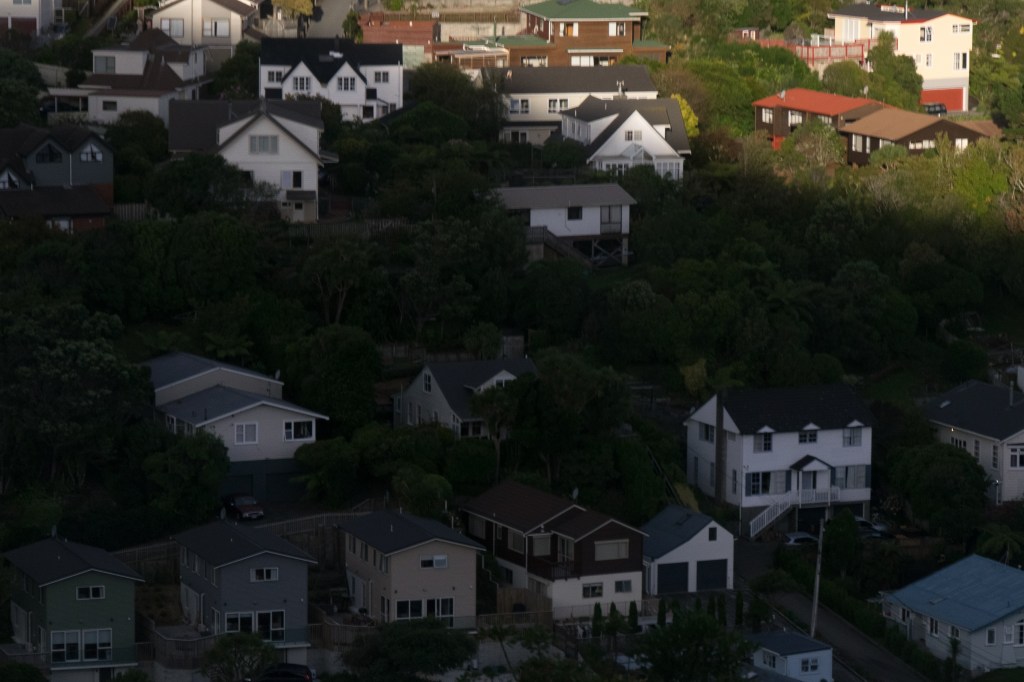
Idea 3 is a thought I have had after moving into the suburb of Karori after living in Aro Valley for a couple of years. The new house looks over the suburb from the top of the hill, down into the harbour. It is such a wide encompassing view, there is always something happening any time of the day. I am particularly drawn to the beauty of the landscape, the way the sunlight moves across it which brought to me thinking about placement of housing on these hills.
I can see at what time of day a house loses the daylight, which made think about why we place things where they are. Each house along an axis must be subtly modified to react to the changing condition as the sun moves below the hills. In this way the geography dictates what gets built, how it gets built.
I am aware of the socio political contraptions at play, but I wonder whether they are also at some point become reflective of the geography around them.
I am currently engaging the most with idea 3. I think it is both interesting and a literal exploration for me, of not only the local environment but knowledge. There are a lot of different practices to pull from to discuss this, I think it sits at this interesting intersection between social and physical geography. I am interested to find whether there has been any artistic expression of these ideas before?
Concerns/Hopes
I am vaguely aware of how cultures separate along geographic lines, much like speciation they tend to deviate where influence cannot follow. Mountain ranges, rivers, deserts all create a physical distance from other groups.
With the growing global cultural hegemony, can this sort of speciation still occur. Culture is no longer formed in a ‘vacuum’.
Of course this is immediately apparent in the housing stock of Colonial NZ (and even to today) – affected by European sensibilities of architecture. The houses in many ways have been supplanted into a foreign landscape. I can think of subtle changes in the material using local woods and less masonry than English counterparts.
I think it is potentially easier to find this relationship between local environment and culture in indigenous cultures from before pre-imperial movements. Then maybe from this point we can find a commonalities and feelings within modern cultures.
As I said in my initial ideation. There must be a fundamental difference between how someone relates to a place that is highly topographic vs flat. What happens when you place someone within the other geography?
A personal anecdote for this question
After living in hilly/mountainous areas for over 15 years I came to spend a summer at a vineyard in North Canterbury. The house I lived in looked out over flat farmland for almost as far as the eye could see, except for the ‘foothills’ (though definitely not hills!) of the Southern Alps. The mountains looked so reachable yet one day when I went out to tramp in them, it took hours to reach – I had no sense of scale at the house. I felt alien to this landscape, the long evenings, and earlier sunrises. I was also thought the view was quiet boring/ lacked interest – the house was even oriented away from the mountains to look towards the horizon line.
But my friend who grew up there loved it, the view was home. She loved the way the weather rolled across the landscape, the relative peaceful and serenity of it. I was used to and in love with the tempestuousness of Wellingtons Climate, battering the houses on peaks and in valleys of the windy hills. This friend did not share this love of mine. To her Wellington did not exhibit much change in view, the weather did not change as dramatically with seasons. It felt so cramped and claustrophobic.
This is simple reaction to the change in familiarity, but the familiarity is in some way a worldview. How we believe something should be. Which must be the basis for a culture of place?
Older Work – potential starting references
work from within wellington and overseas.
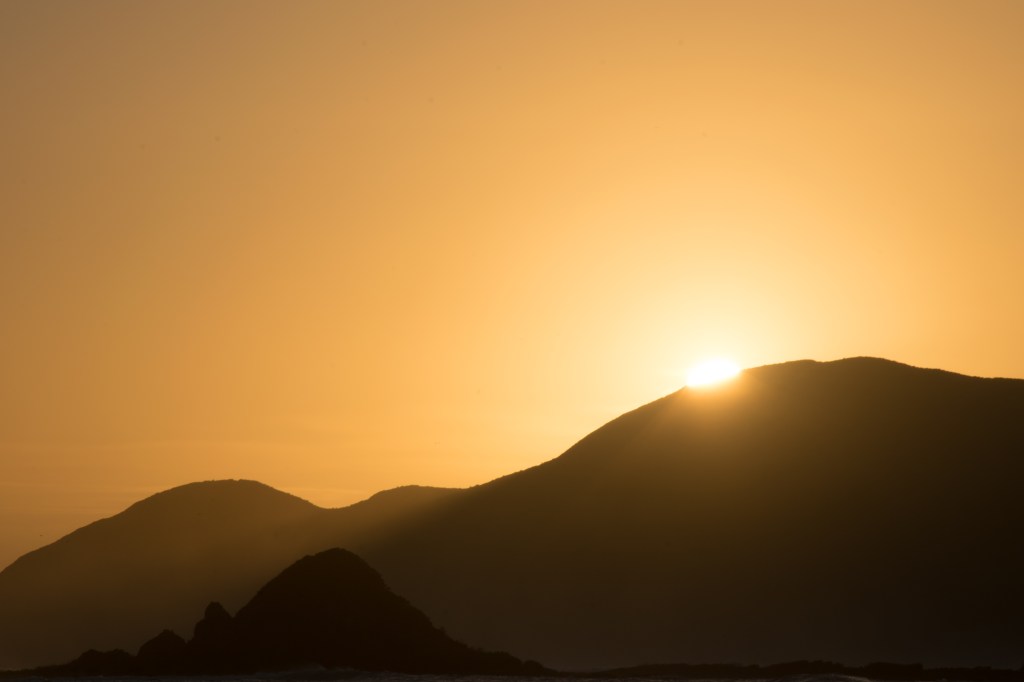
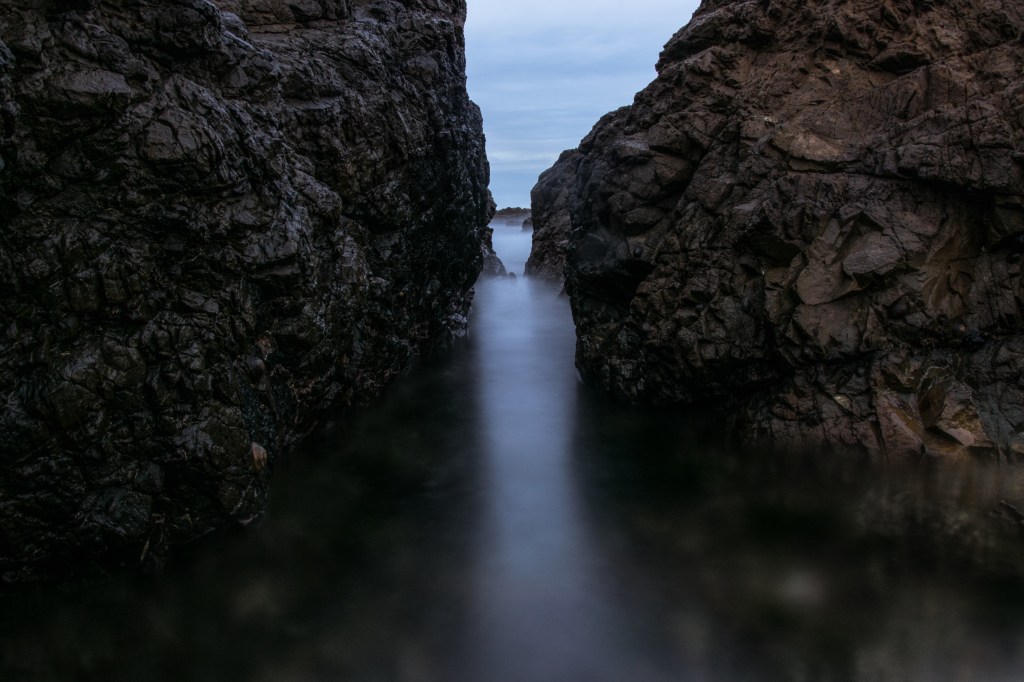
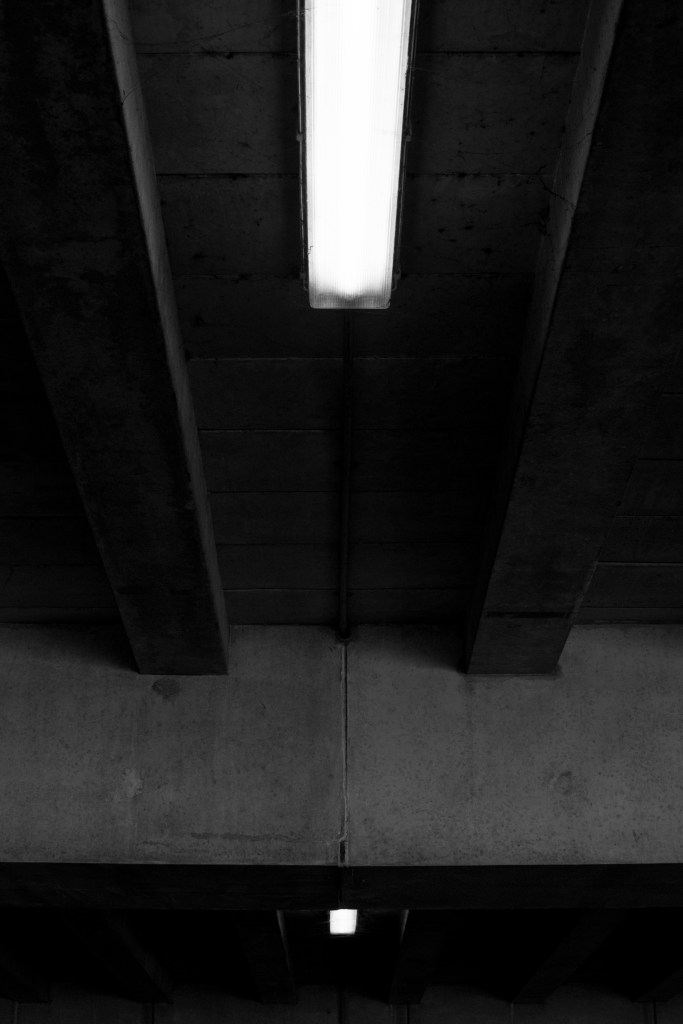
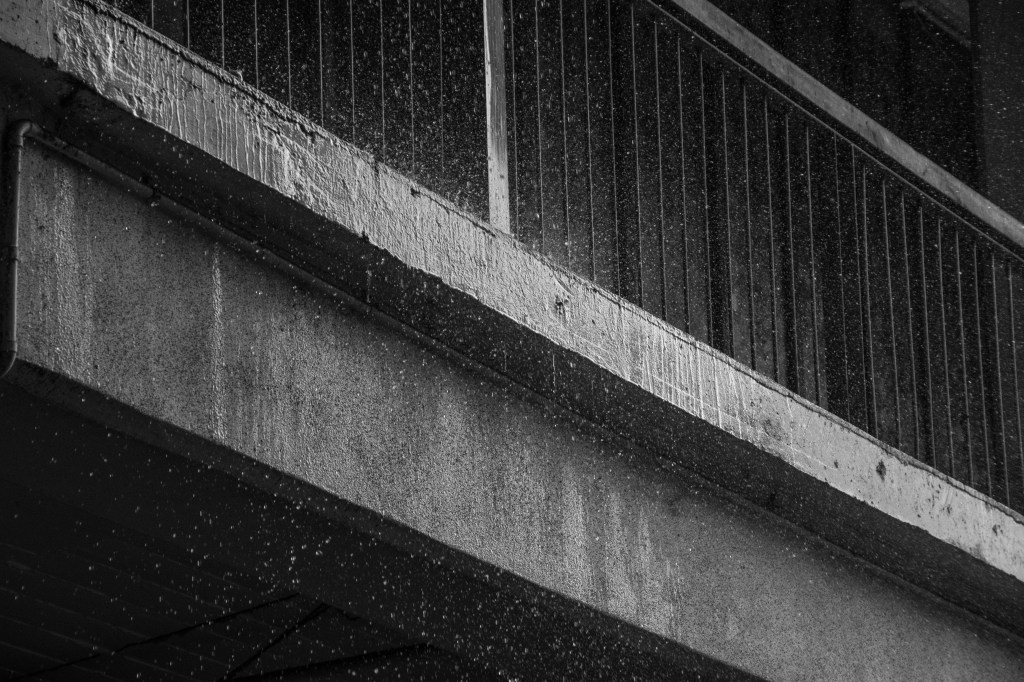

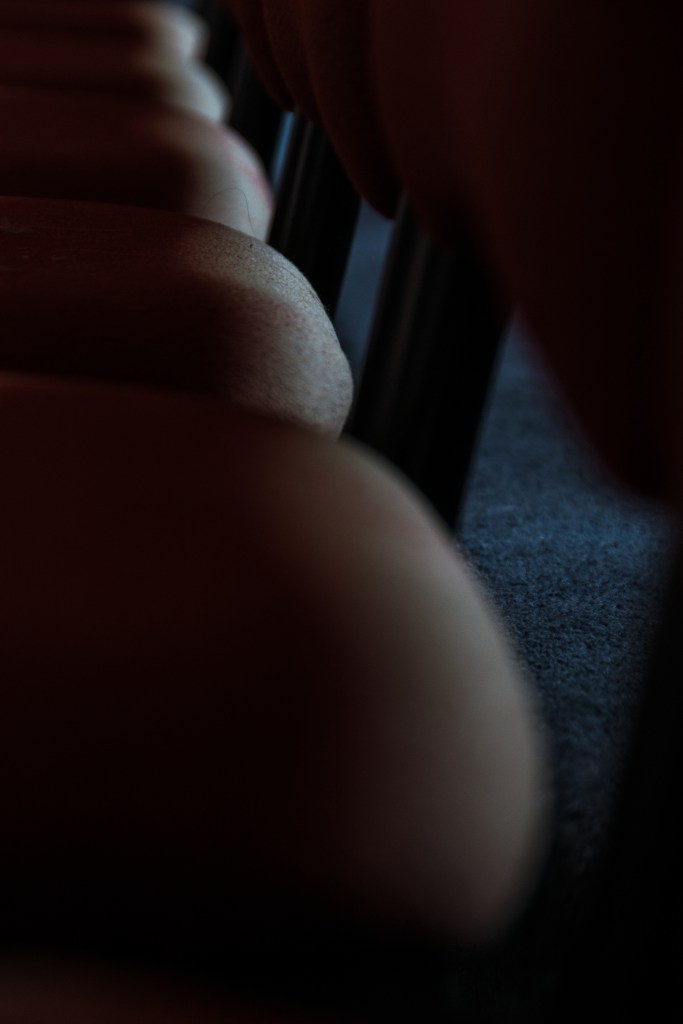
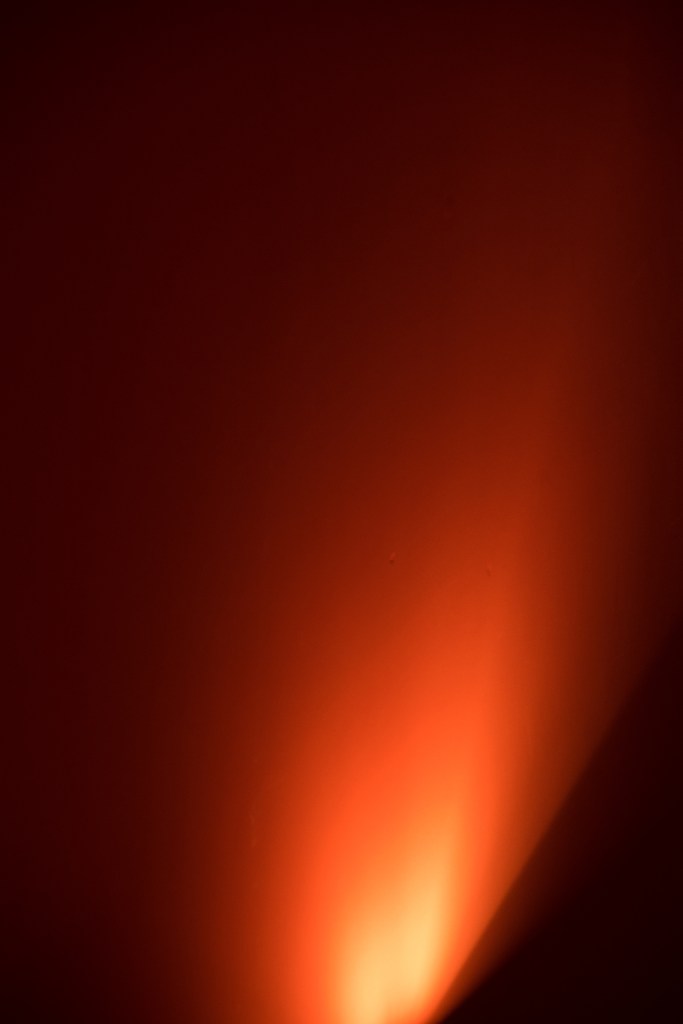
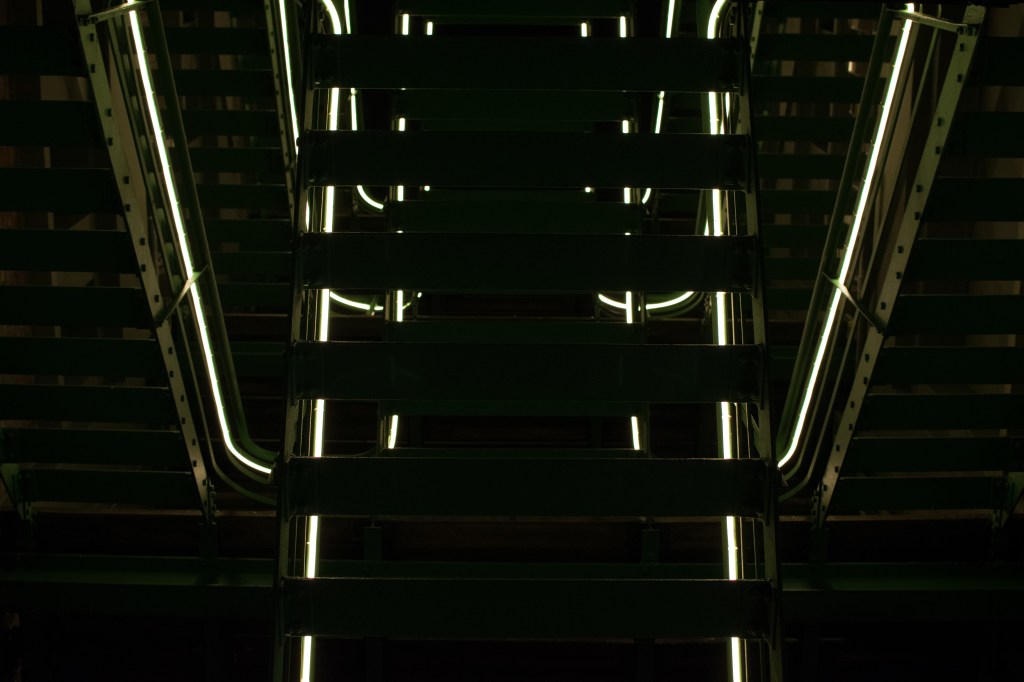
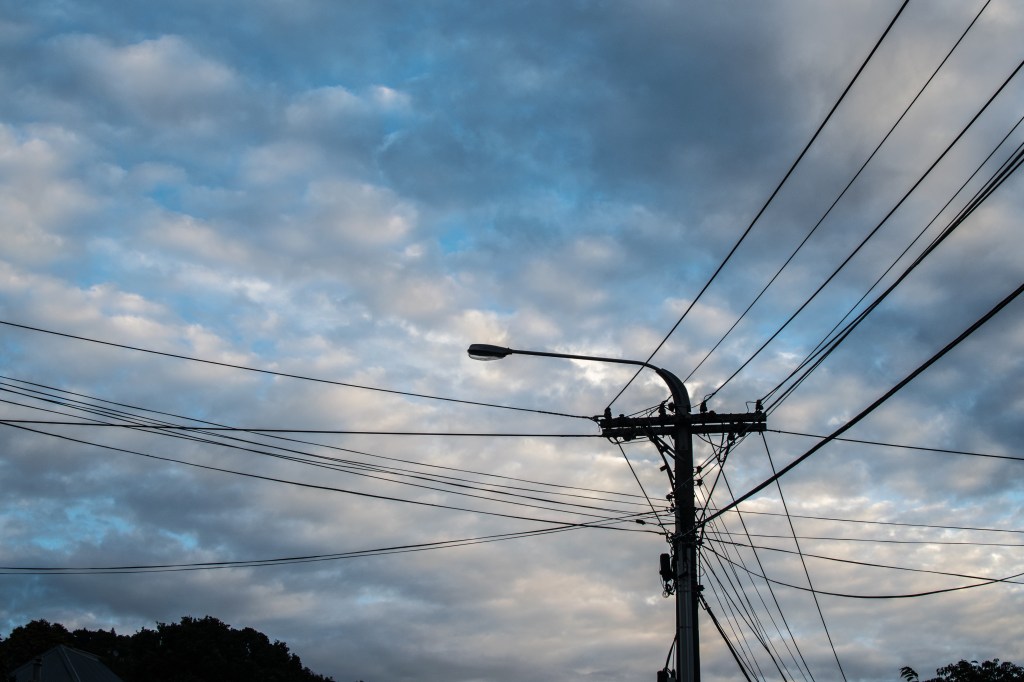
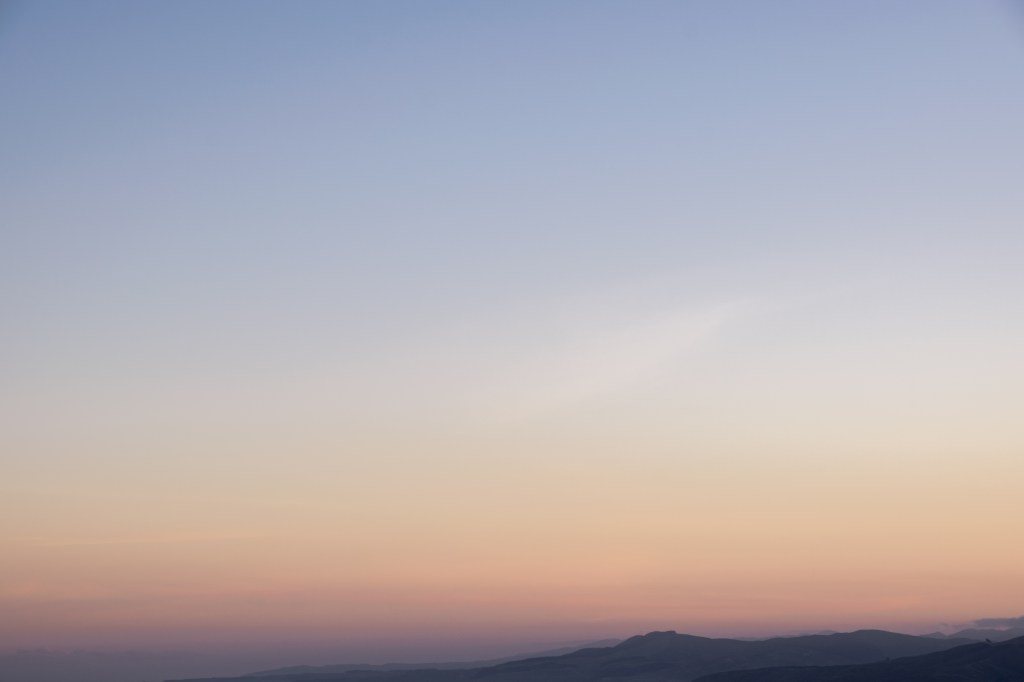
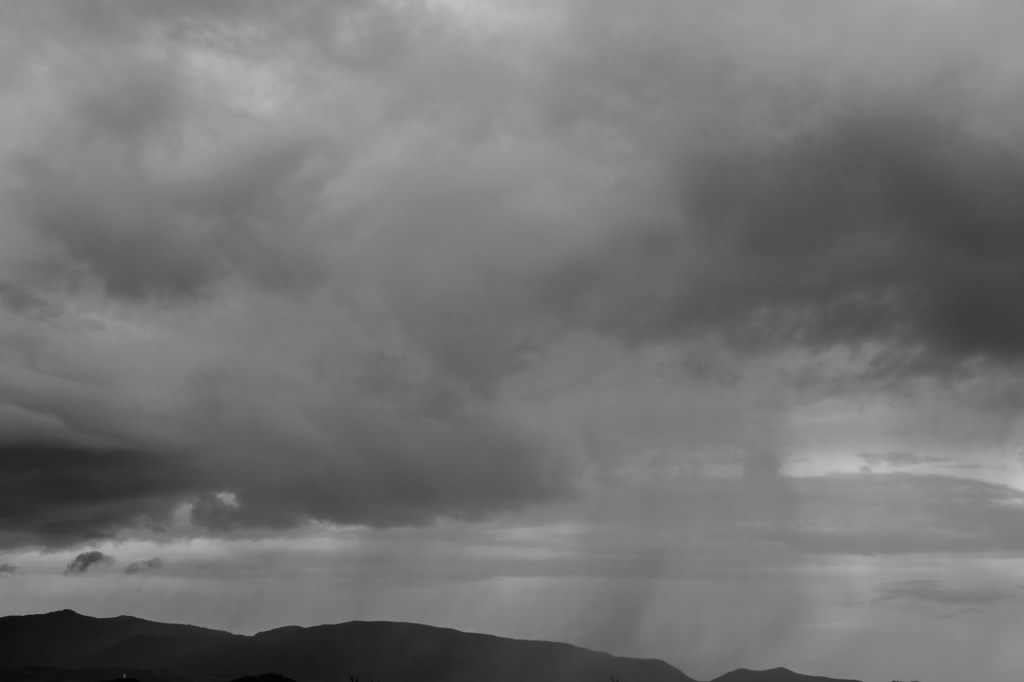
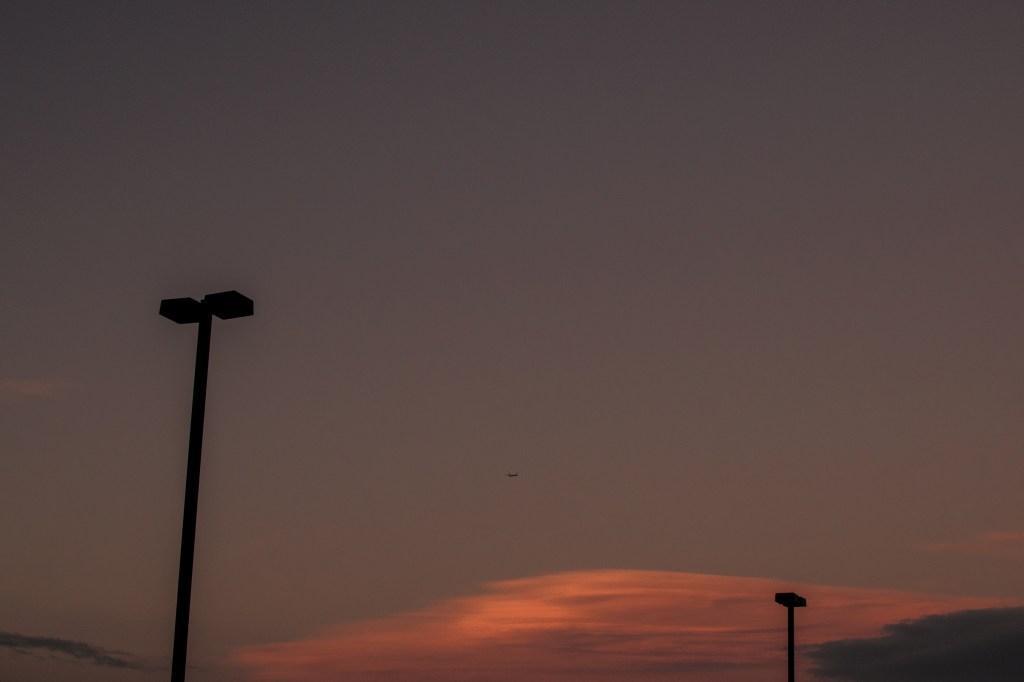
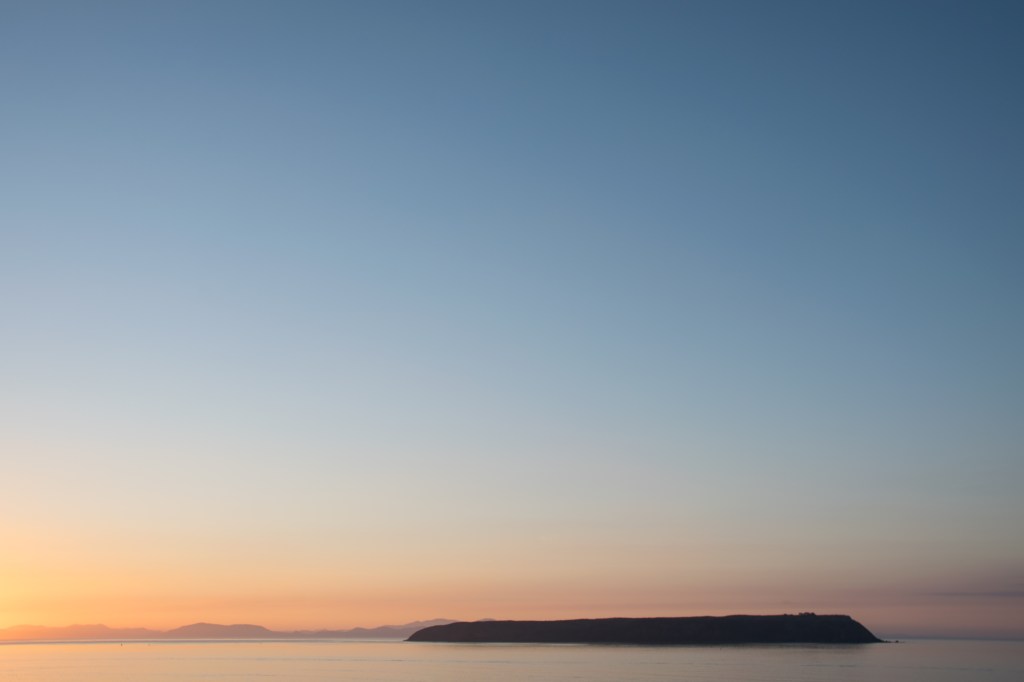
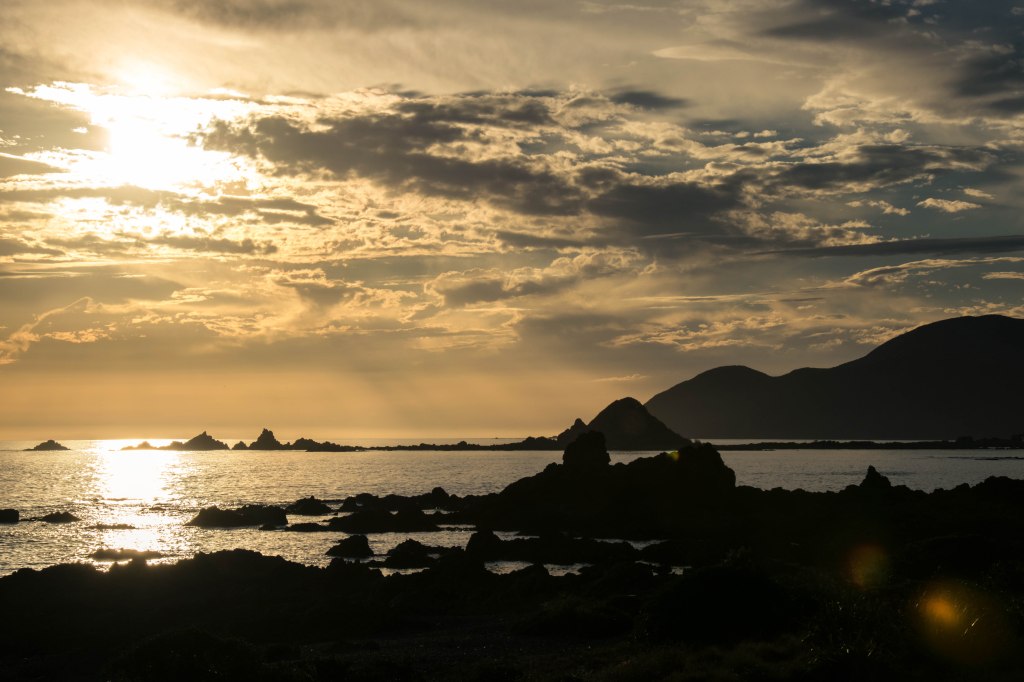
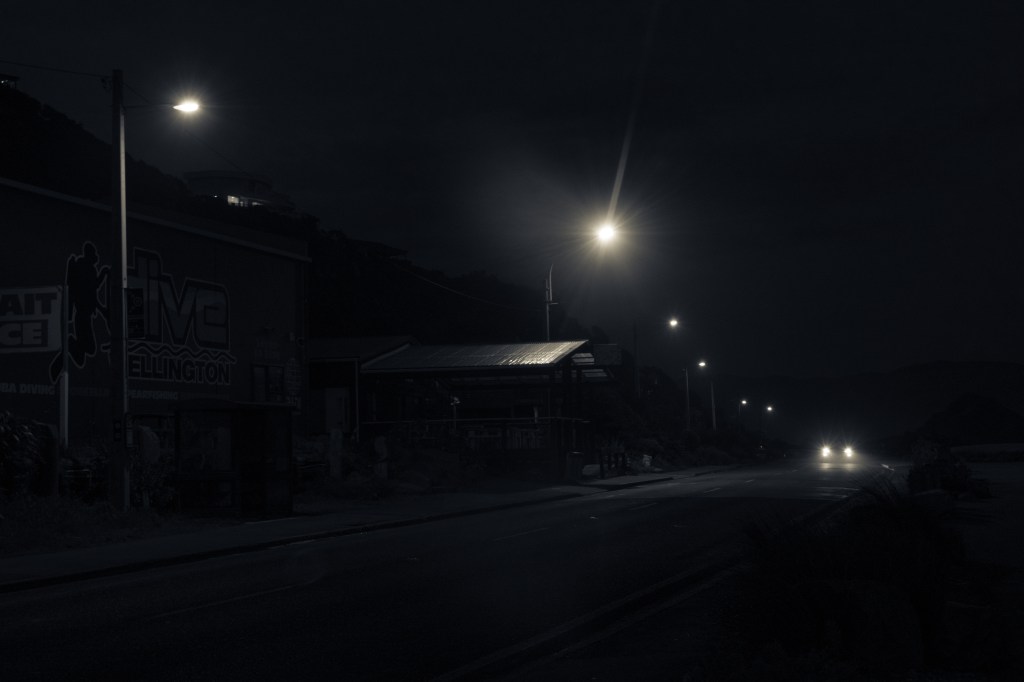
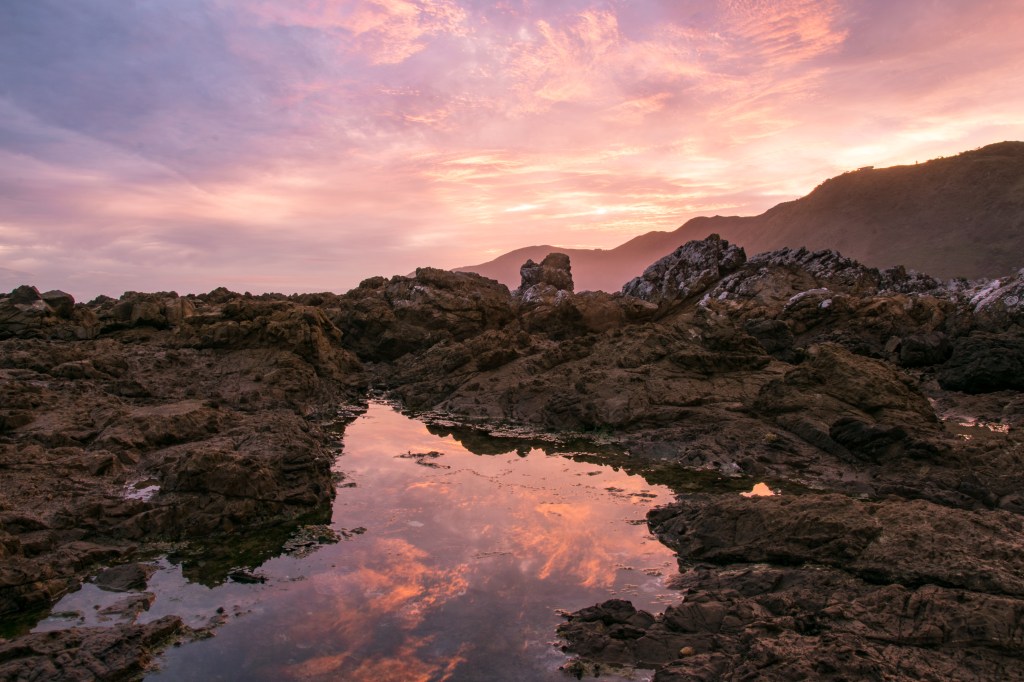
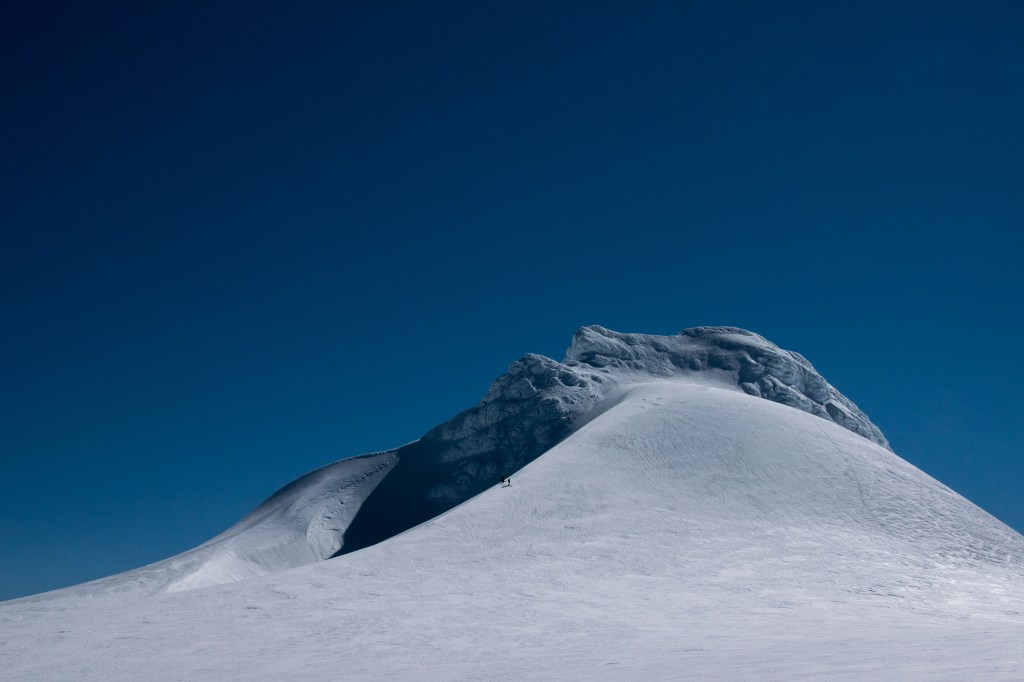
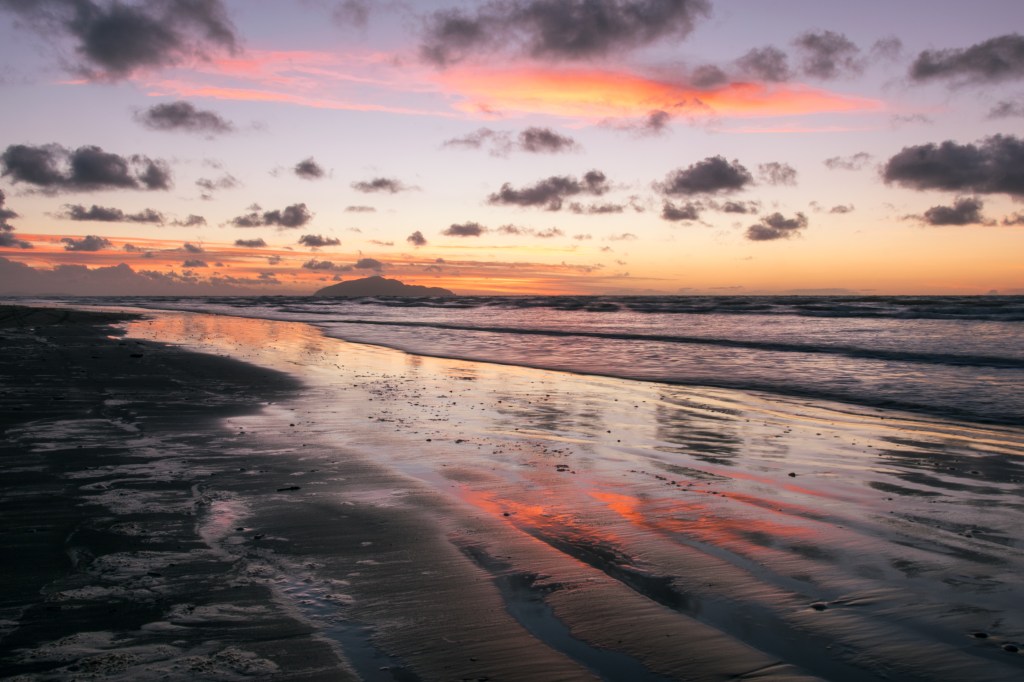
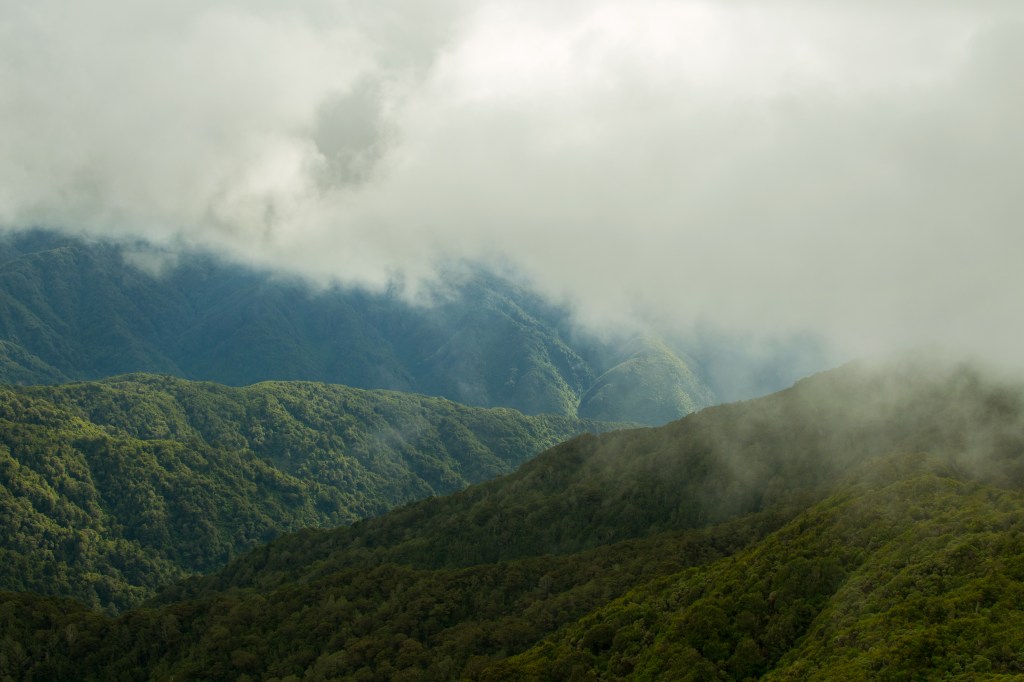
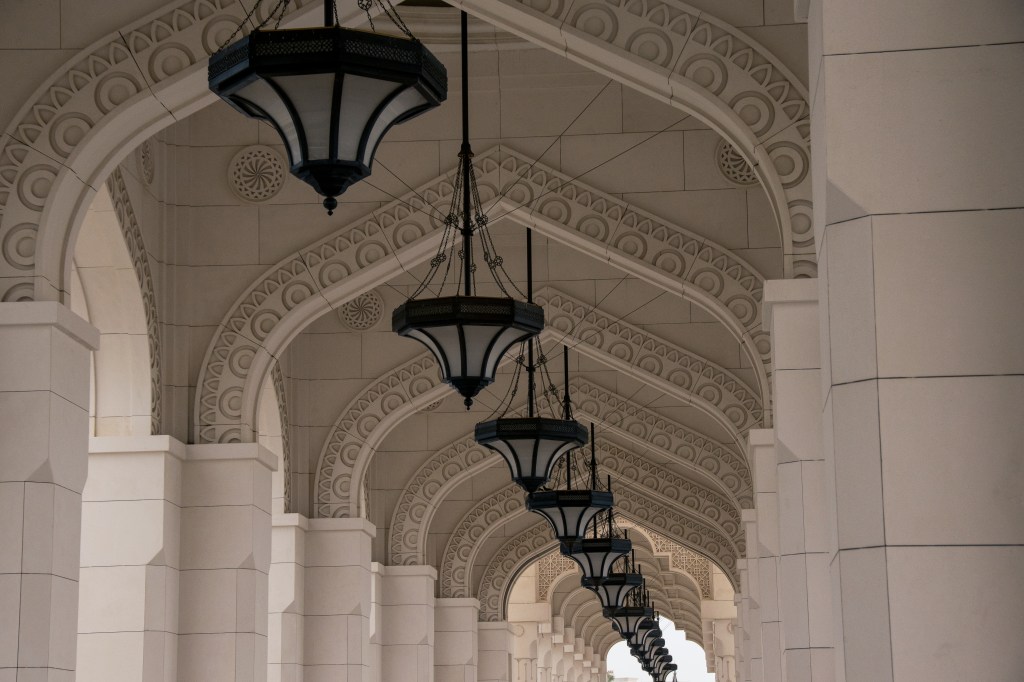
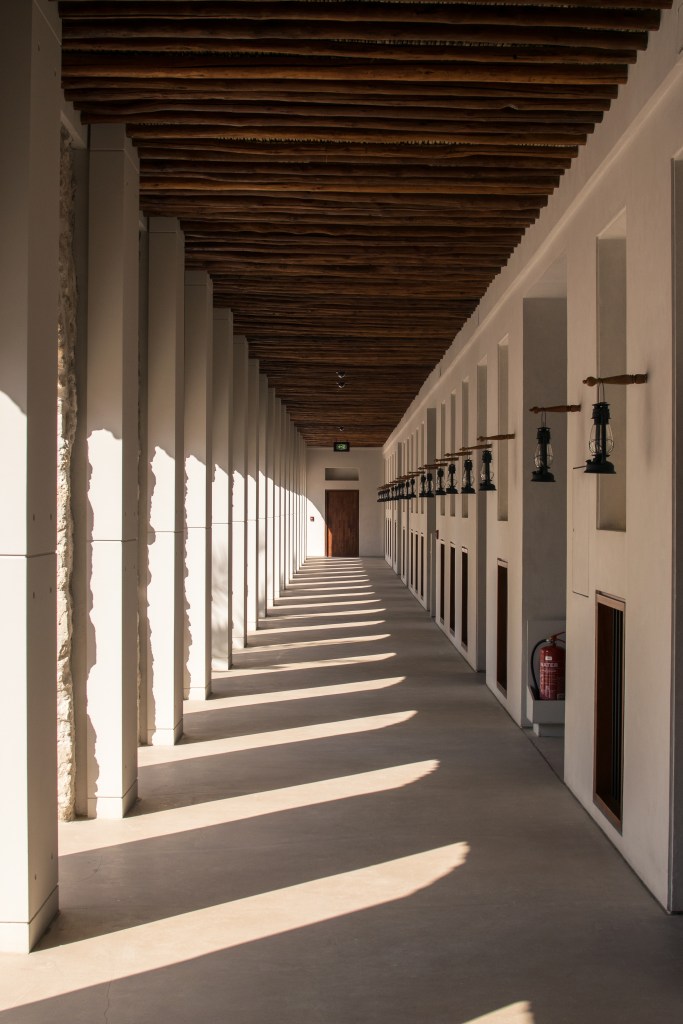
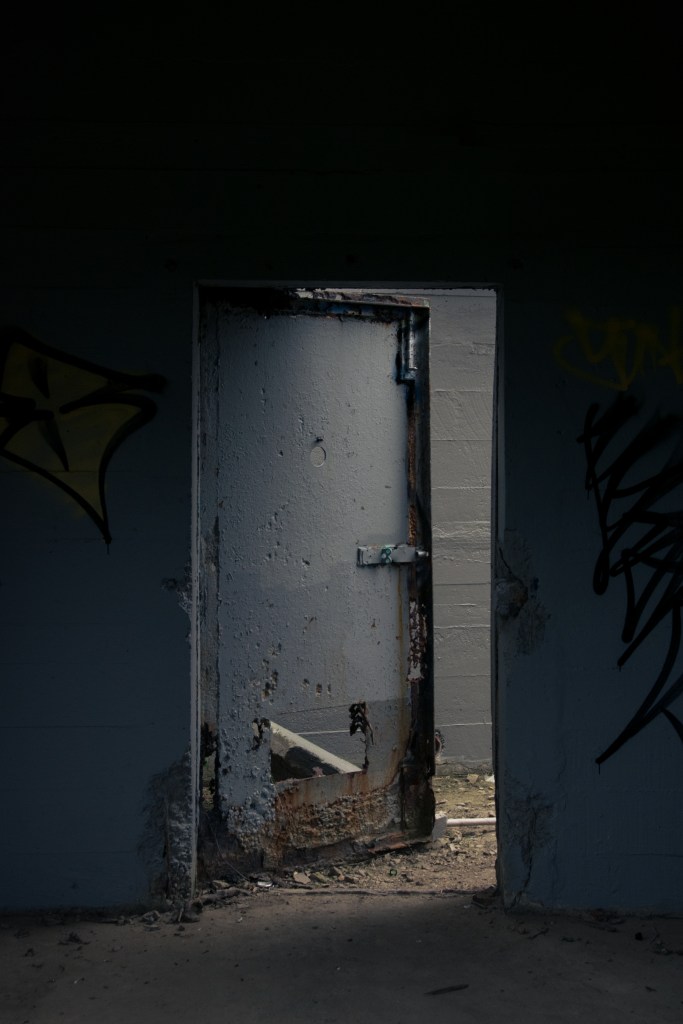
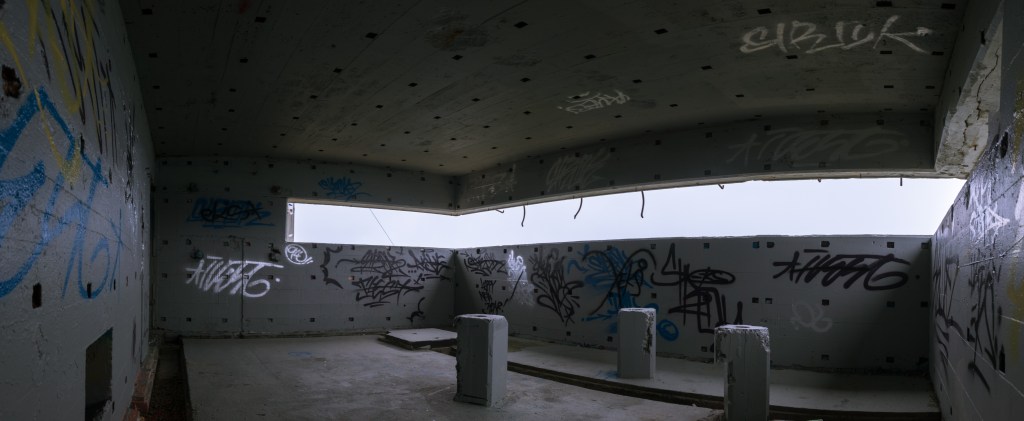
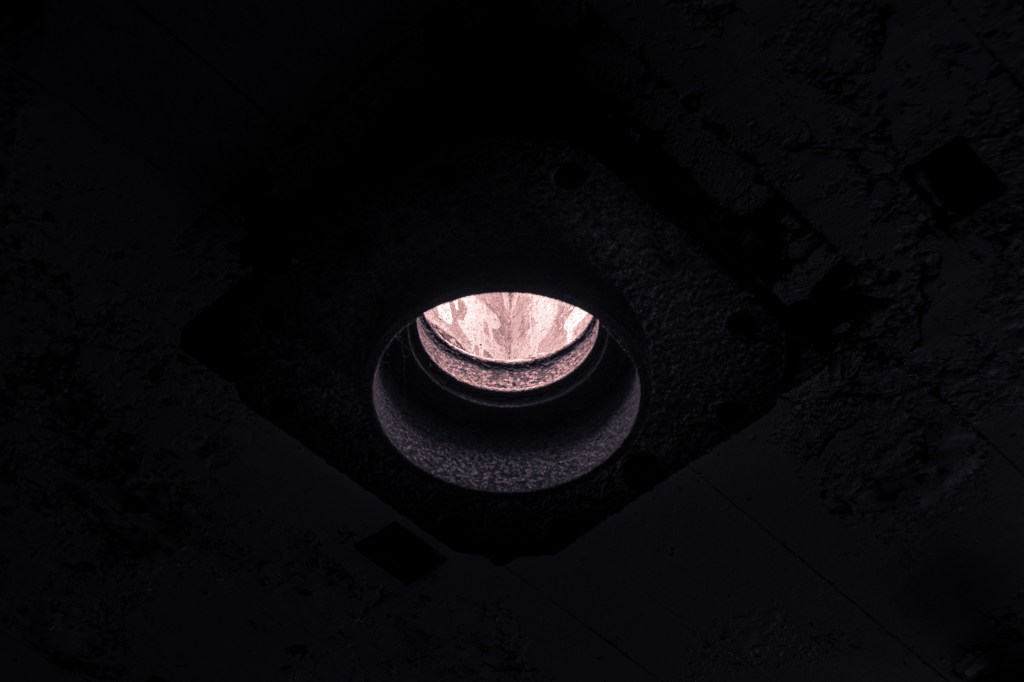
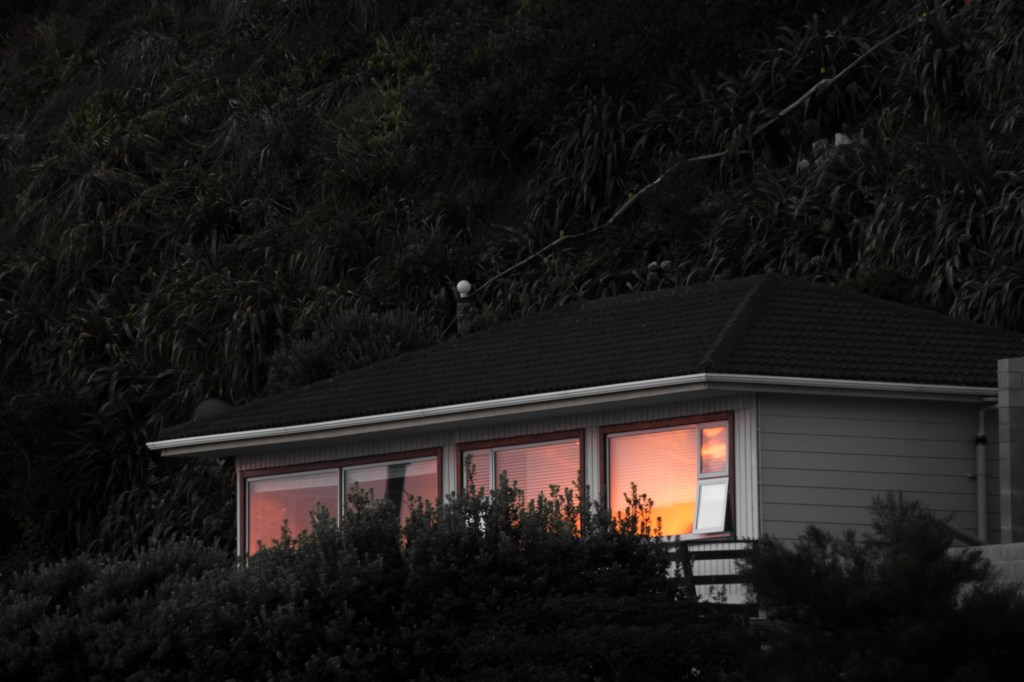
I have a strong eye/ relationship to light. I was obsessed with sunsets around wellington in 2018. I’m still sure they have a special quality to them. I feel different watching sunsets I viewed out in the Arabian desert or California. There is possibly something possessive of these sunsets, the way they ground place.
This has got me thinking about my relationship to light in other areas. I am highly receptive to light, natural sunlight greatly increases my mood. I am happy when the houses I live in have get lots of light. I remember struggling living in Dunedin because the east facing city butted up against a hill that meant light went very quickly in the afternoon unless you lived out on the peninsula.
I am interested in the change in architecture practice giving more reverence to natural light. I know there was a change around 1950 – mid century modernism – to let more light into the home. But what about outside of western Architecture, there has always been some sort of cultural reverence of light in indigenous practice. Think Machu Picchu in Peru which used Incan astronomy to design spaces that would hit light in certain places at certain parts of the year.
link to discussion of Incan Architecture’s relationship to light
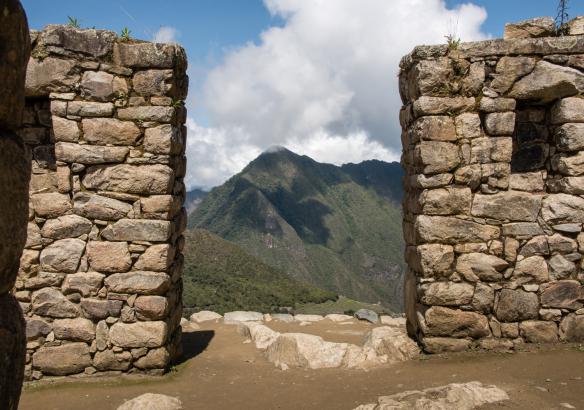
I also think about other cultural relationships to light, such as Te Ao Mārama. Something That would be interesting to explore across the world, compiling a resource to be able to study discrepancies – or at least find my working thesis wanting.
I think going forward I will look at specifically light, to focus the scope of the work.
Story: Light – Te Ara
I found this really interesting read on Te Ara that documents impressions of the light quality of Aotearoa from pakeha settlers. It discusses the difference between Britain’s light being soft and gentle vs. harsh light of NZ.
This has been scientifically observed, findings about the air quality and constant cleansing winds affect how light travels though the atmosphere. And of course we are aware of the high UV radiation in NZ needing us to slip, slop, slap, and wrap.
The problem I mainly see with this article is there is little discussion of the cultural impact outside of the arts, where light has been wrote about extensively.
I need to find that last connection between this observed quality and a cultural reaction to it, modification of housing practices? Maybe I should look into Bach culture in NZ which seems specific to their environments.
I think I am struggling a little to create a timeline of thinking and theorising about light and its play within our constructed environment.
I also feel I need to state a definition of culture, as I have stated many cultural impacts as a result of the geography. I am specifically interested in how light affects construction and use of materials – a material culture.
Beginning Documentation
focus on immediate environment, my house.
19 March

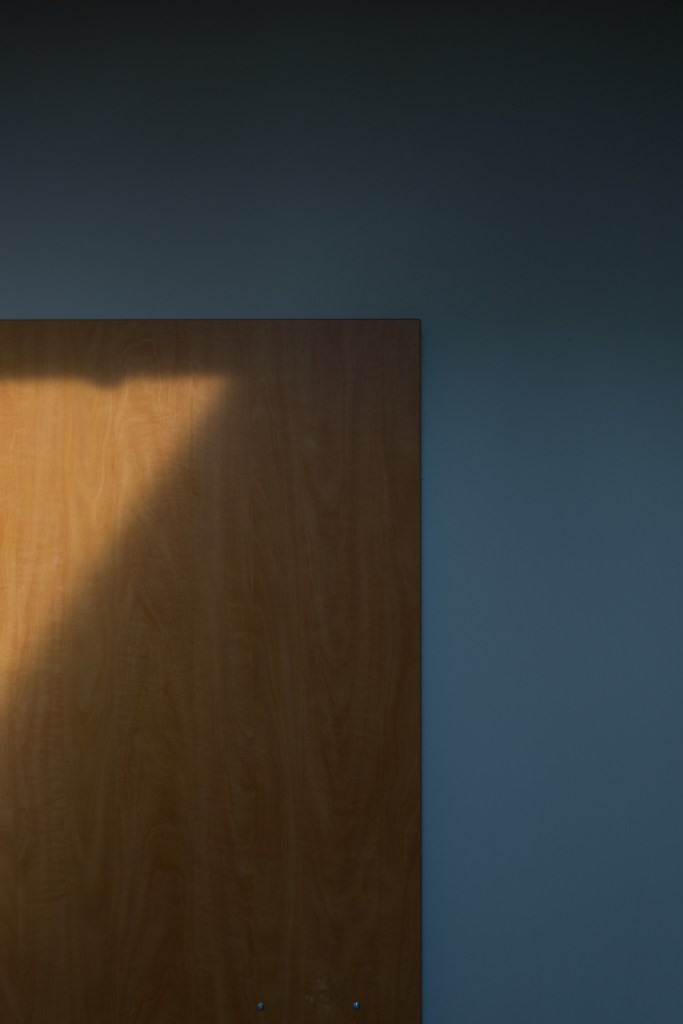
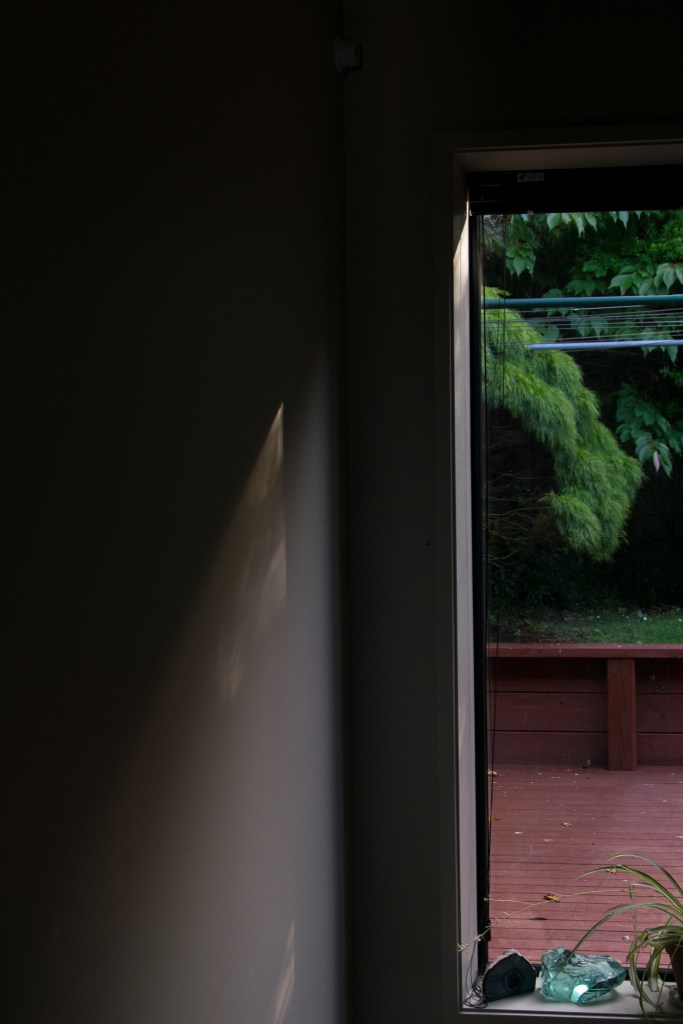
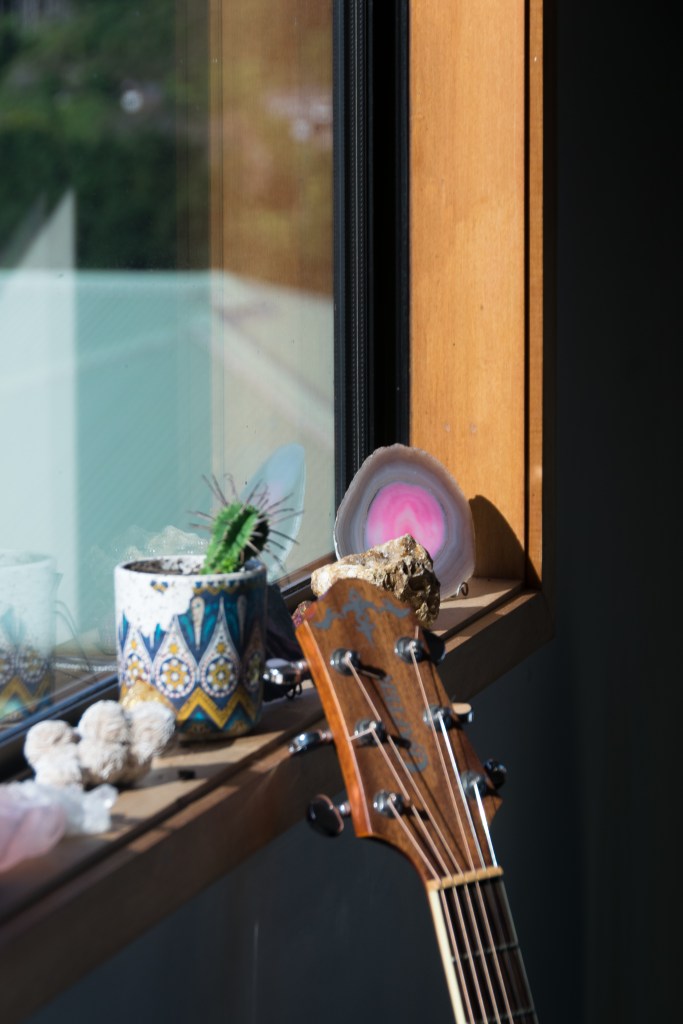
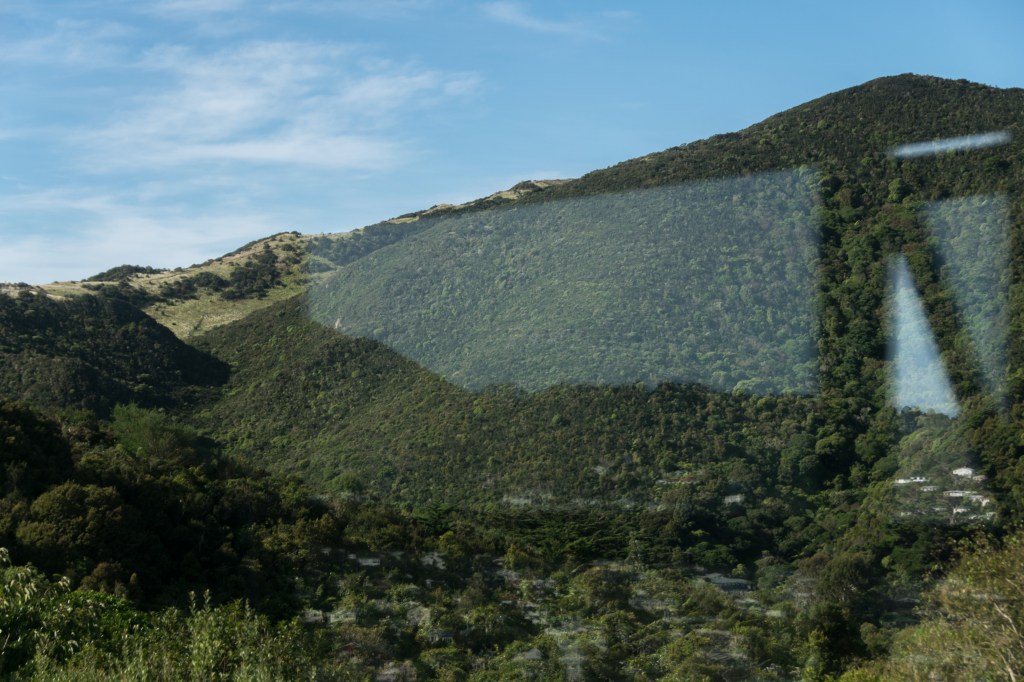
20th March
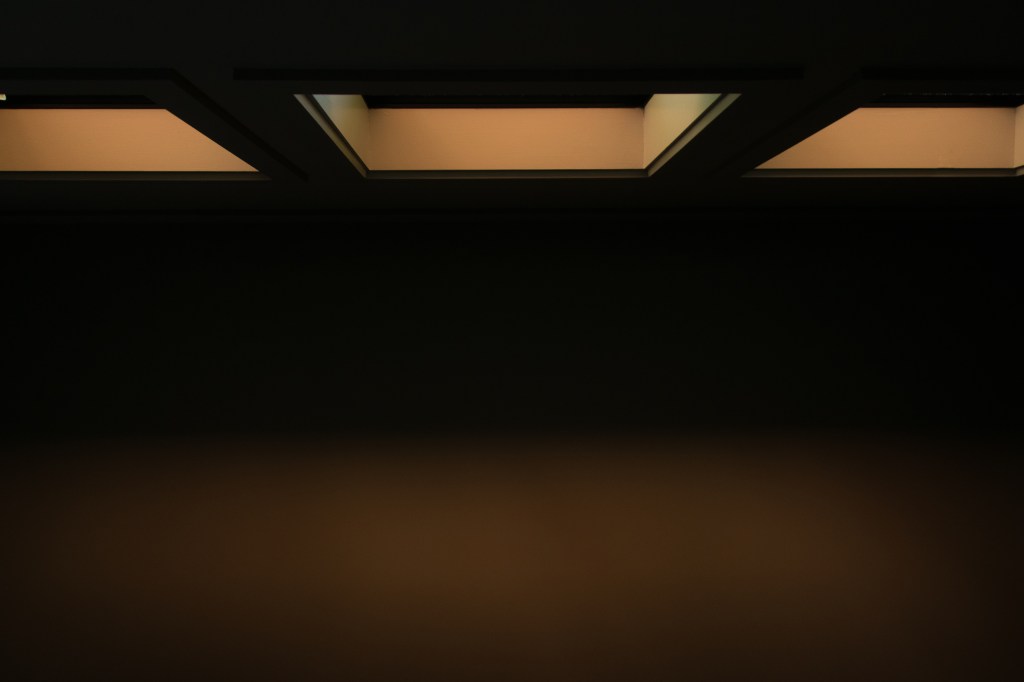
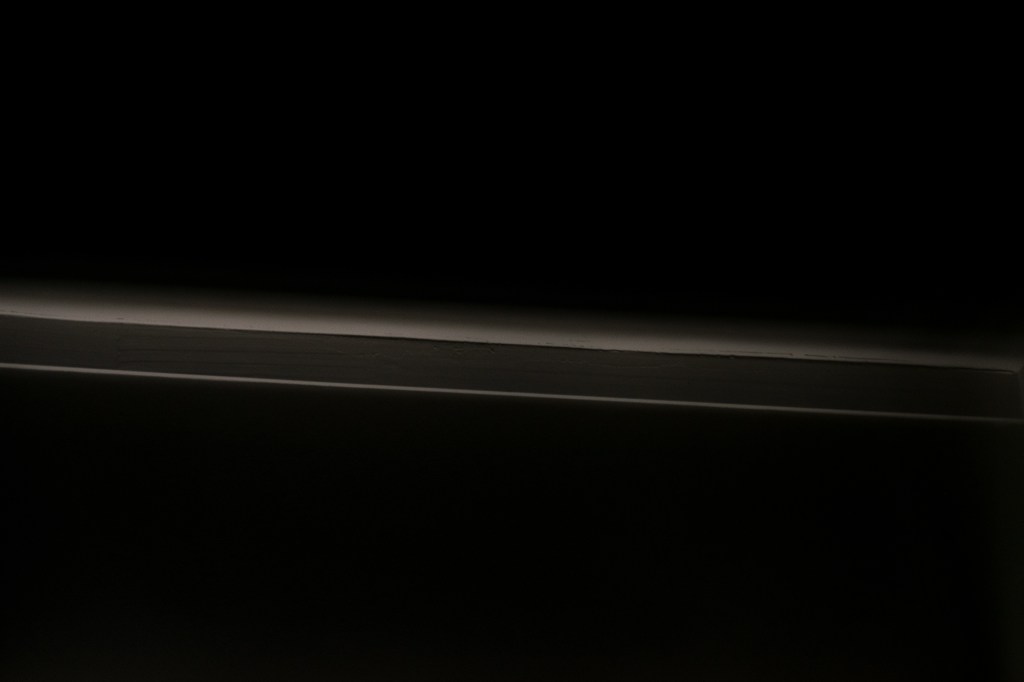
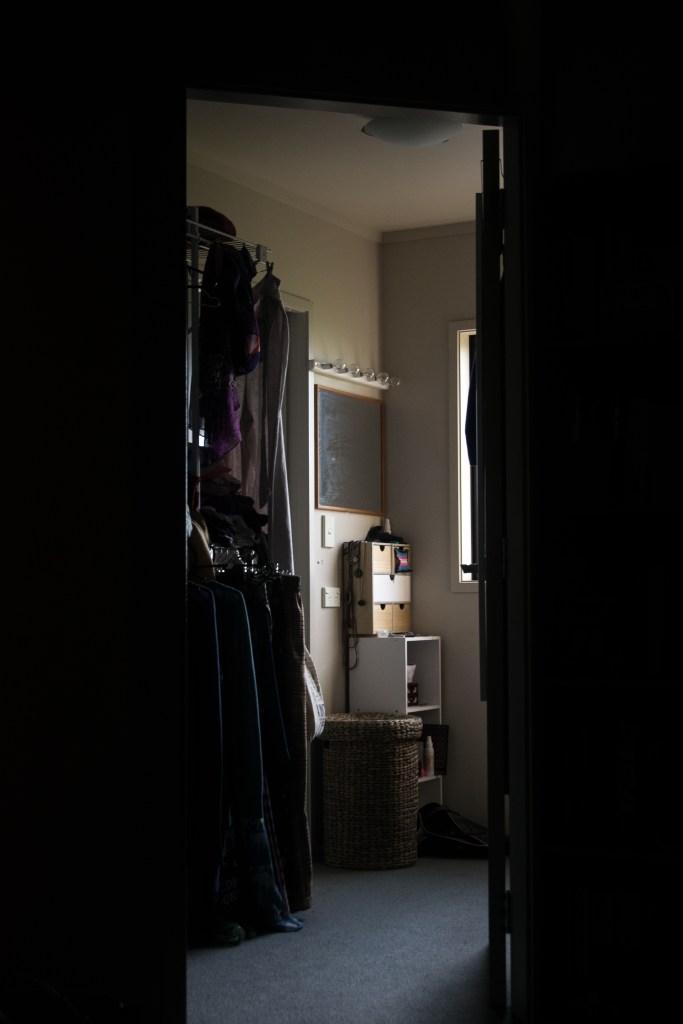
I have been stuck inside my house for 3 weeks due to being a household contact.
I really wanted to do a photo exploration of Wellington as a whole, but time constraint meant that I needed to start producing something.
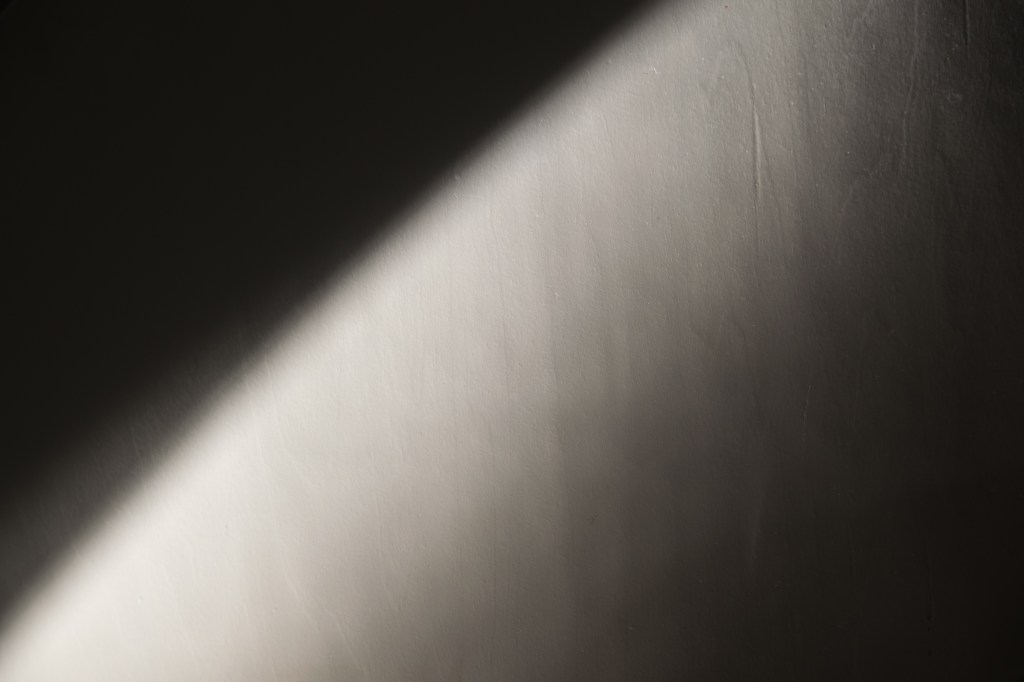
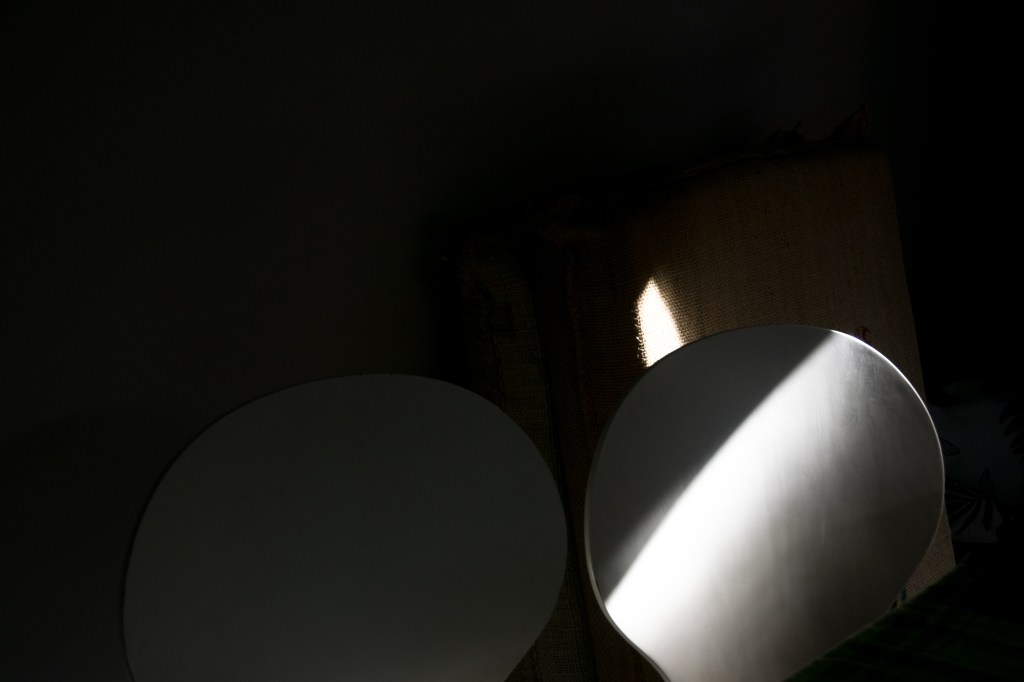
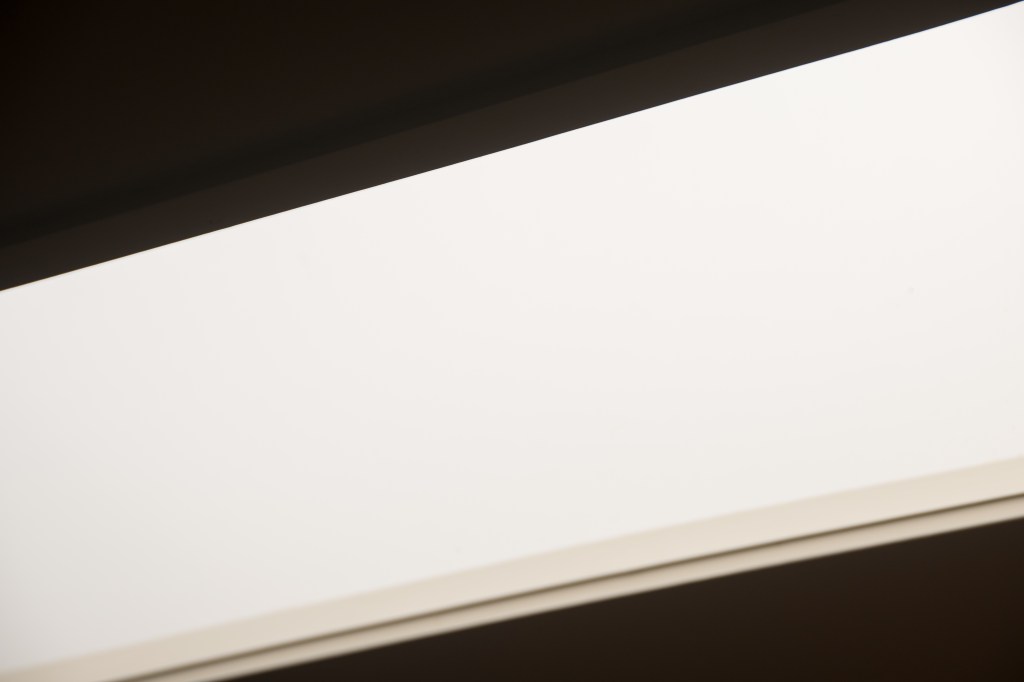
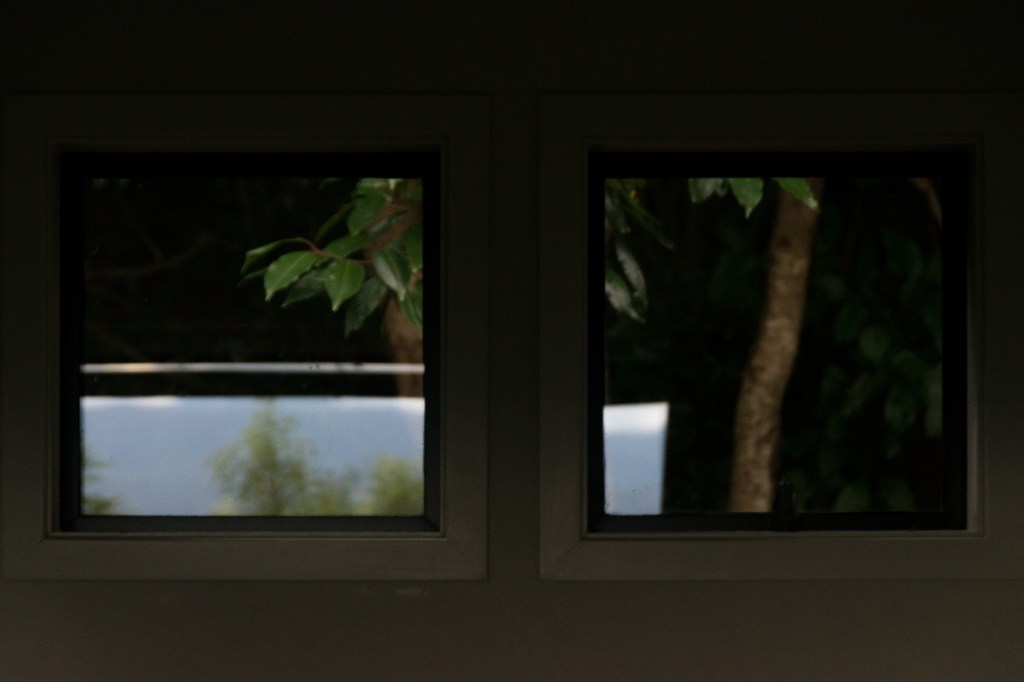
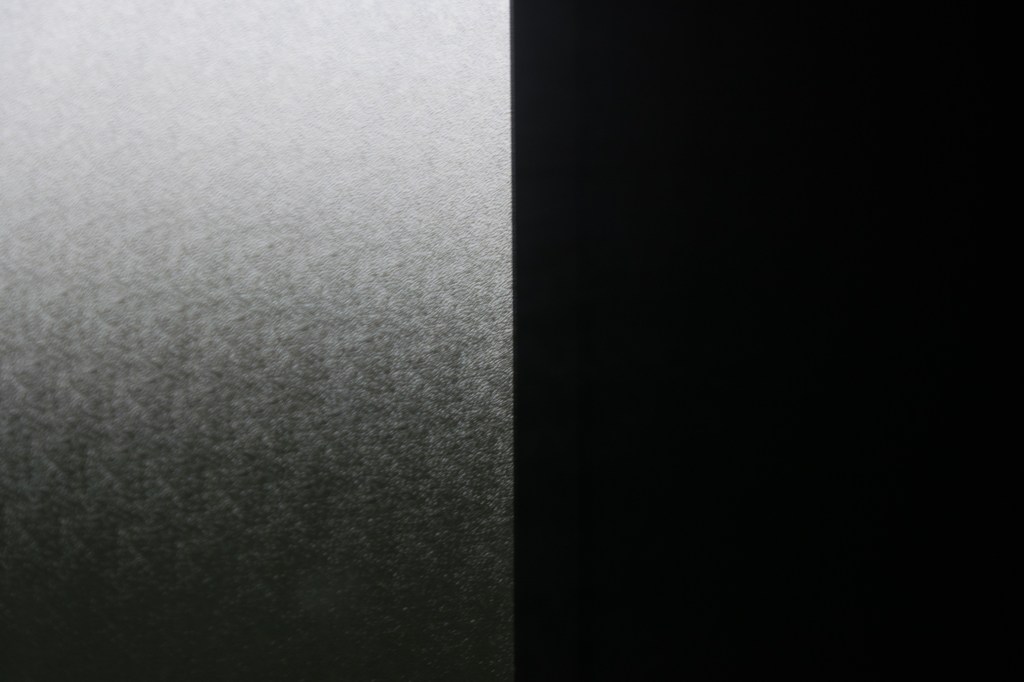
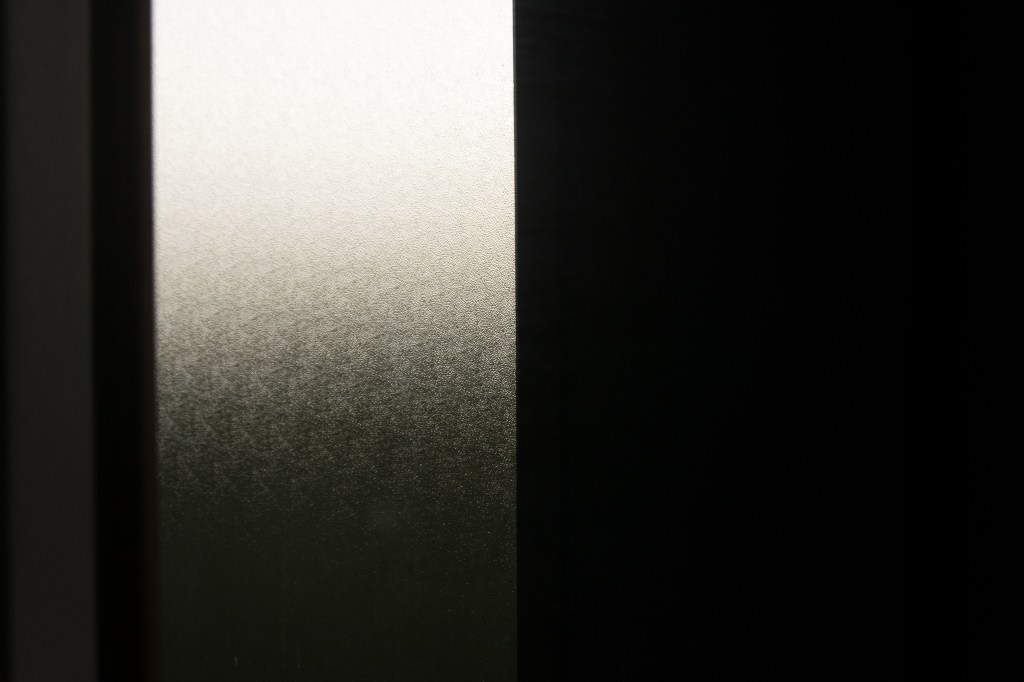
Over the last few weeks I have been more acutely aware of the way light plays within the house, it drew me in enough that I decided to start documenting across the course of the day. Exploring the hard and soft edges of the light.
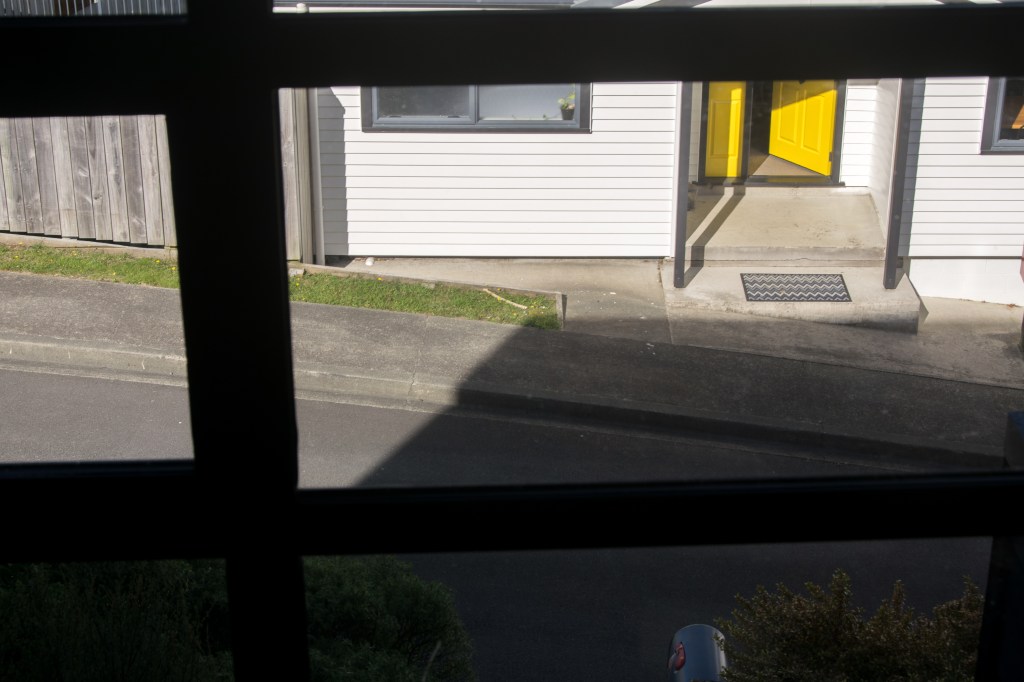
I also started taking photos of the view from the window which initially drew me to this idea. How the light hits the sharp angles of the houses.
I found that most of the areas I looked at had a harsh edge to the light, especially in the long shadow of the afternoon. Even sitting at the computer right now I look at the definition of the shadows of the plant pots next to me.
The house was constructed in 2003, and is very obviously had an architectural hand in its creation, there has to have been thought into the placement of each window. The upper floor remains light all day and is more open plan. The downstairs has a much darker space, light does not reach the set of stairs down to bedrooms which face south. This sparks to me as an odd decision as the garage at the opposite end now has the best access to light across the day.
West Coast Minimalism
I found this fantastic documentary on a group of Californian artists working with light collectively know as West Coast minimalists.
This includes the likes of James Turrell and Dan Flavin, and Helen Pashigan.
The piece that drew me to the video was called untitled(dawn to dusk) by Robert Irwin. A concrete house was built out in the desert and used the windows to explore different qualities of light across the day. I was especially taken away at how the use of Scrims (48 min) – tiny holed fabric – had this really interesting diffuse effect that did not seem to affect that Californian light these artists rave about. The screens seem to create a sense of moving into a light filled fog that I can only describe as a transcendental experience for me. There is a calmness to these spaces which I think is reflective to the way of life experienced by these californian artists.
The video mentions briefly this distinction between the minimalist movements in New York and California. New York had a much harsher approach, stronger angles, geometric form. (20 min)
This speaks to how the light influences approach in art culture.
LIGHT AND SPACE.
Moving forward I want to have a more conscious approach to thinking about how light within a space constructs place. Think about what happens here that cannot happen anywhere else – light as the grounding mechanism.
Work So Far
The practice for this project being developed can act as a control for exploration at other sites not only within Wellington but other places. Feel I really need this comparison to drive home the differentiation
Might try and visit family in Wairarapa over the break and use there space as a site.
I have seen 3 main types of photo so far
Looking out of the site
Looking in at Site
A play between Macro and Micro Imagery
I am focusing on the edges of the changes/contrasts in the environment
I currently can categorise the photos by time, place, weather – but am in two minds currently as it might be interesting to let them stand on their own
By divorcing them from context it leads the viewer to think more about what they are looking at?
I could map the house through lighting. Make a model.
What would this achieve though? As an artistic visualisation of space might it be more interesting to just display photos without placing them.
Beginning to think of the house in terms of its own camera with the window as aperture. The camera is a literal embodiment of light and its temporal effects. I think house as camera is an interesting angle to explore further. Ive been looking at Camera Obscuras and it might be fun to try that on site.
One of the main take-aways is that I seem to be really interested how light bleeds around objects and ‘seeps’ into the place. Makes me think of how much leg work the smaller Victorian cottage windows do in lighting up a room, there’s an economical approach to lighting from a time when glass was much more expensive to obtain.
More Documentation
22nd March
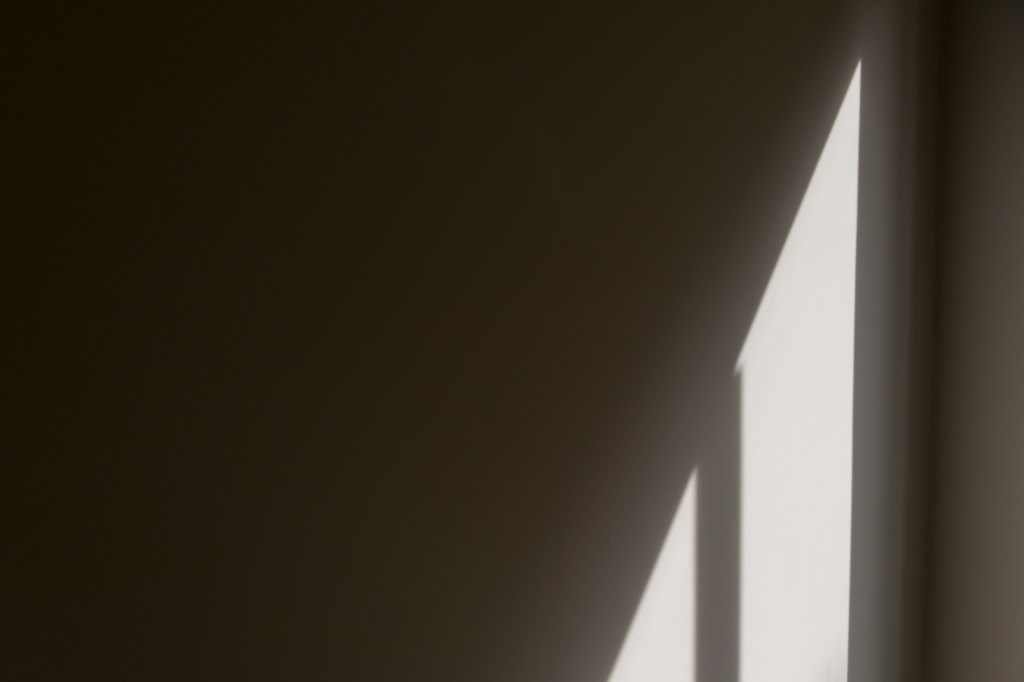
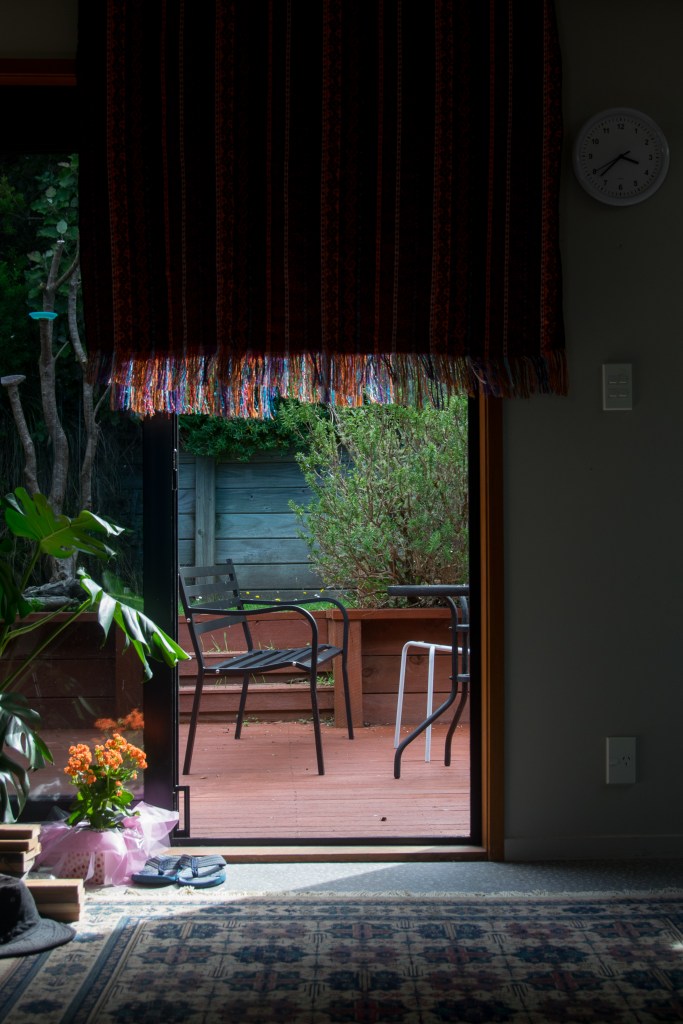
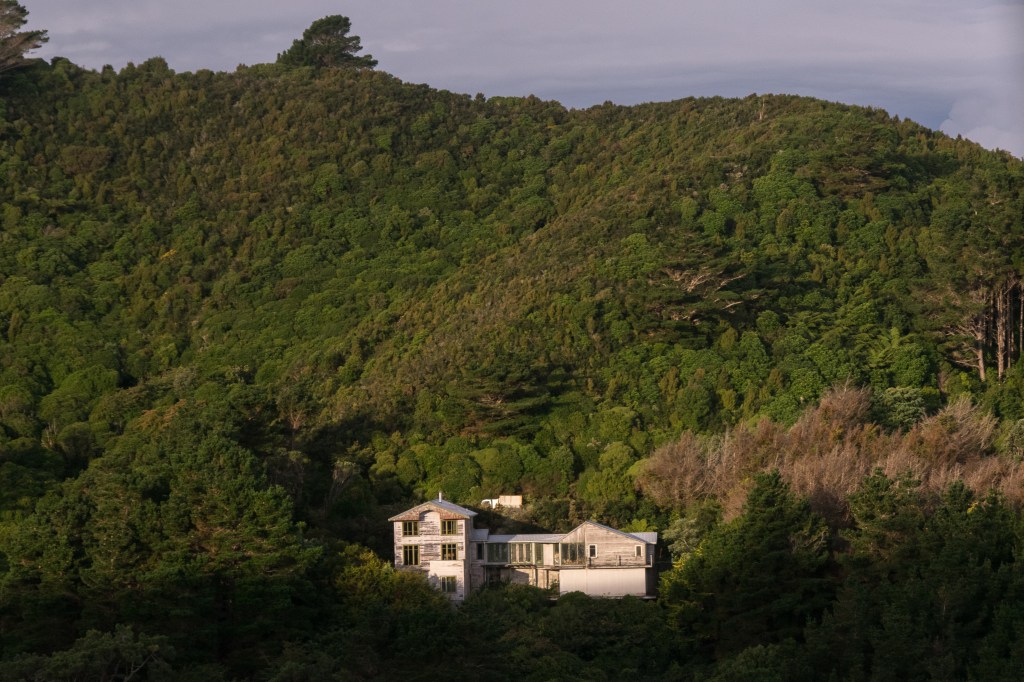

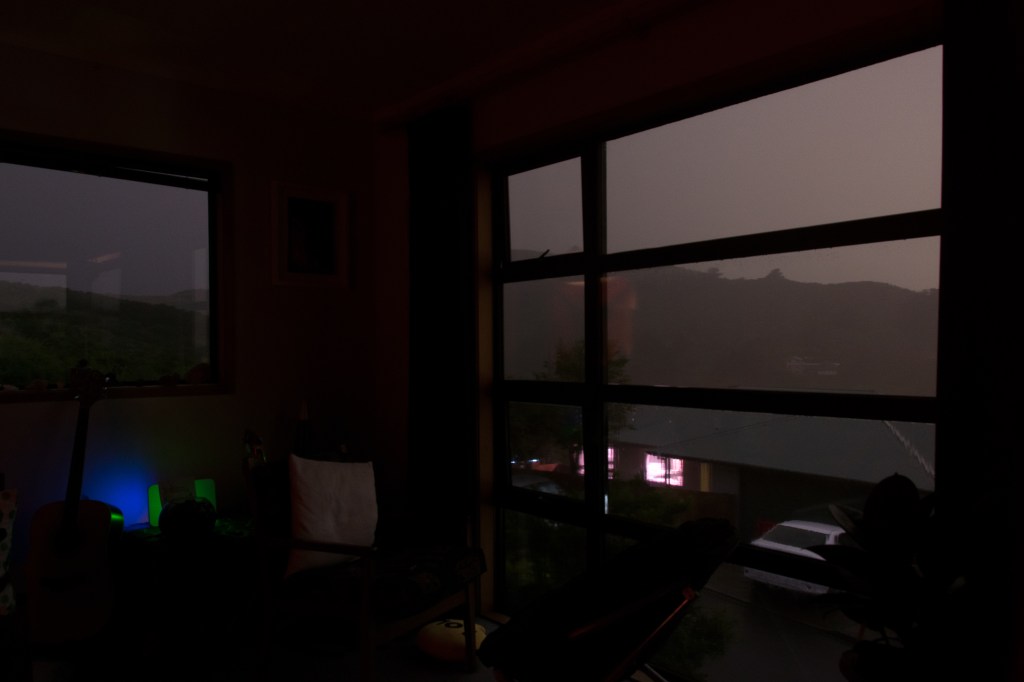
24 March
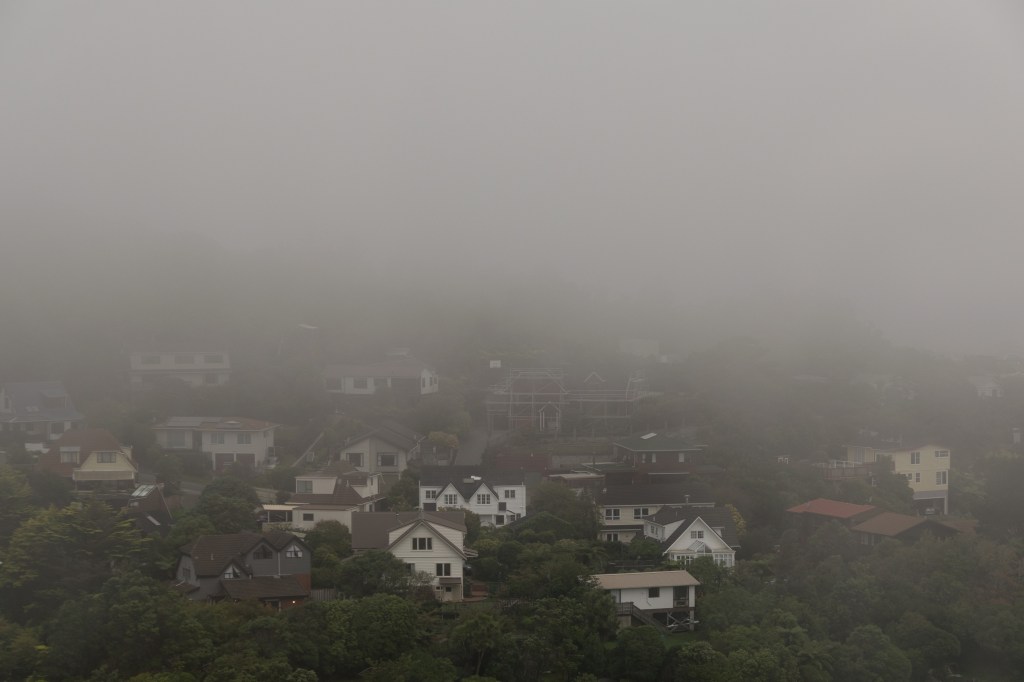
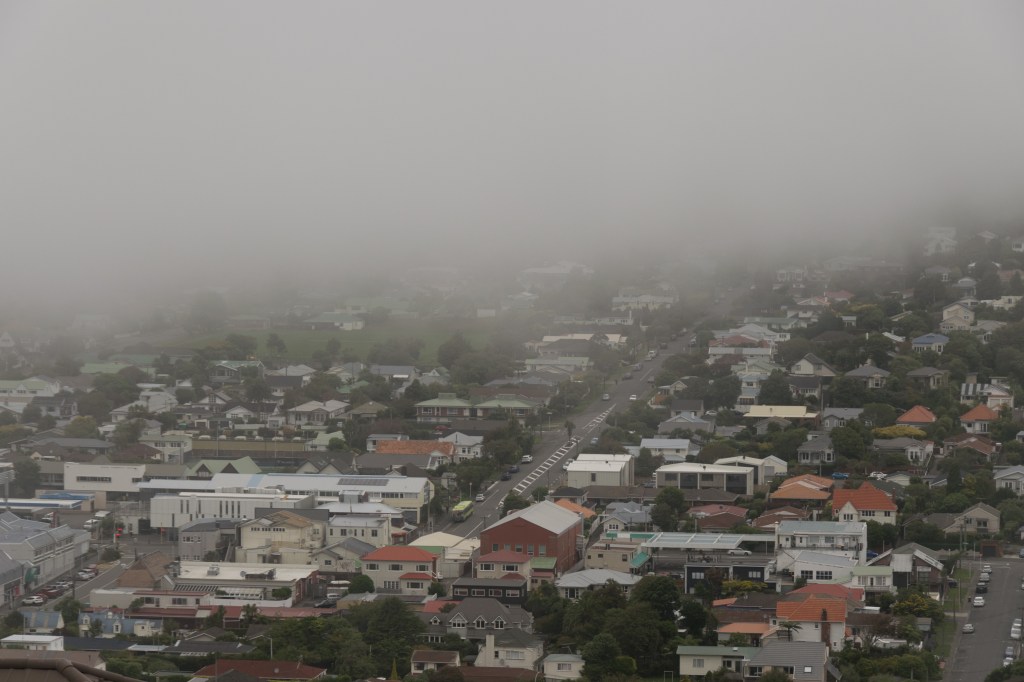
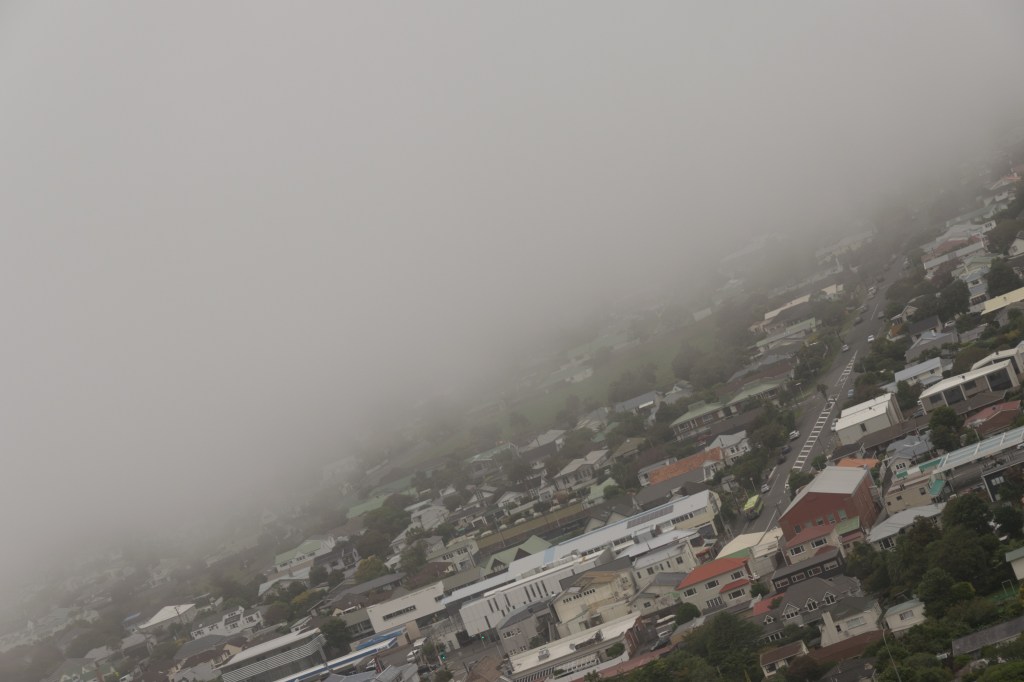
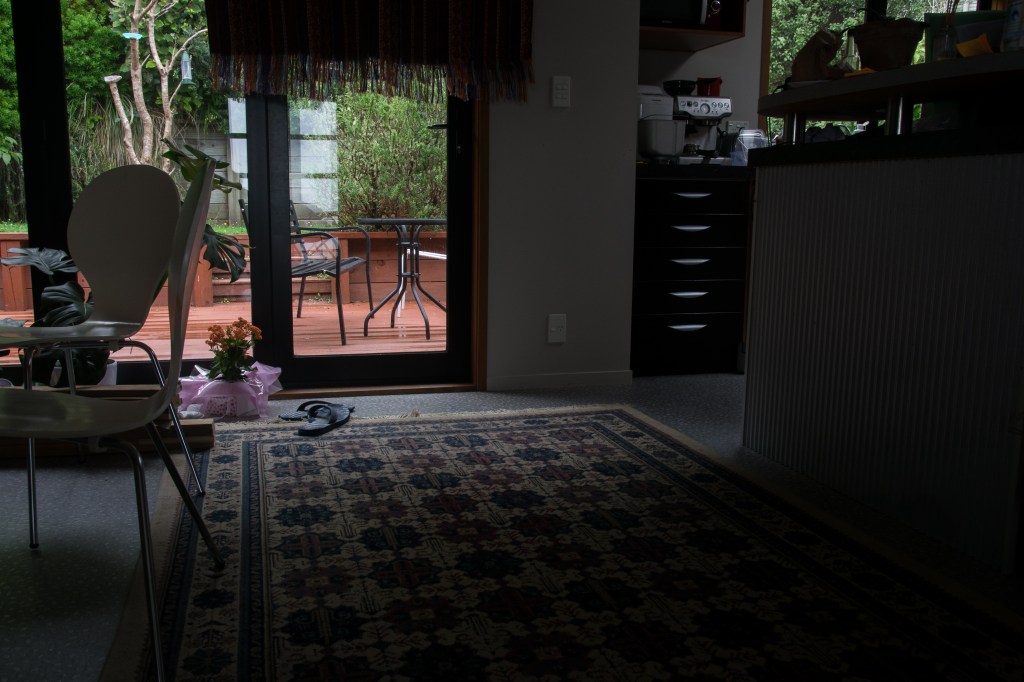


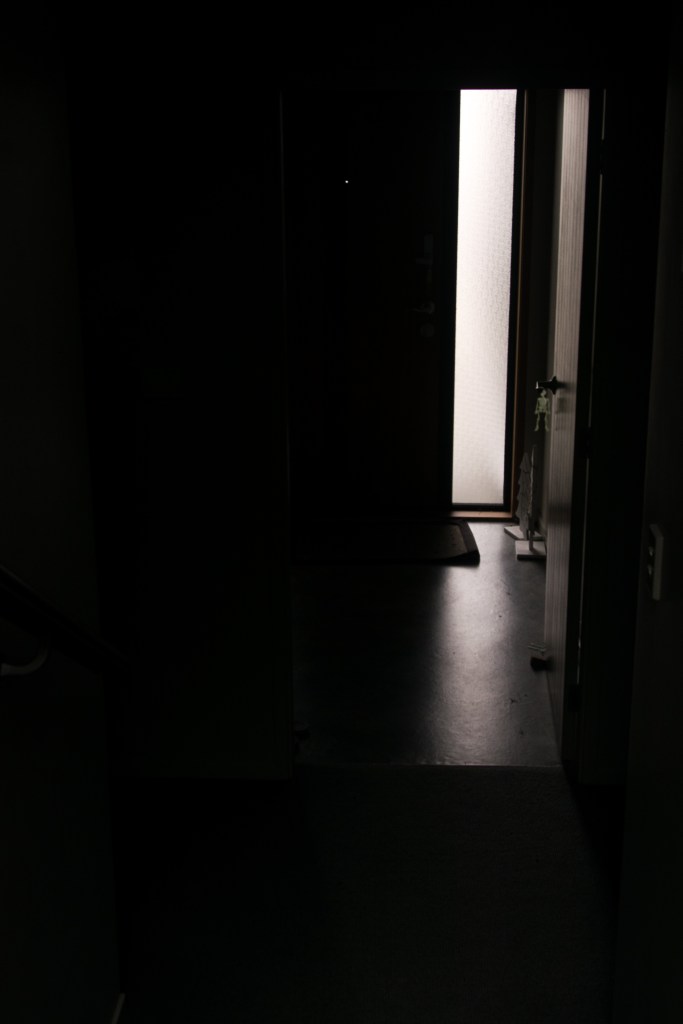
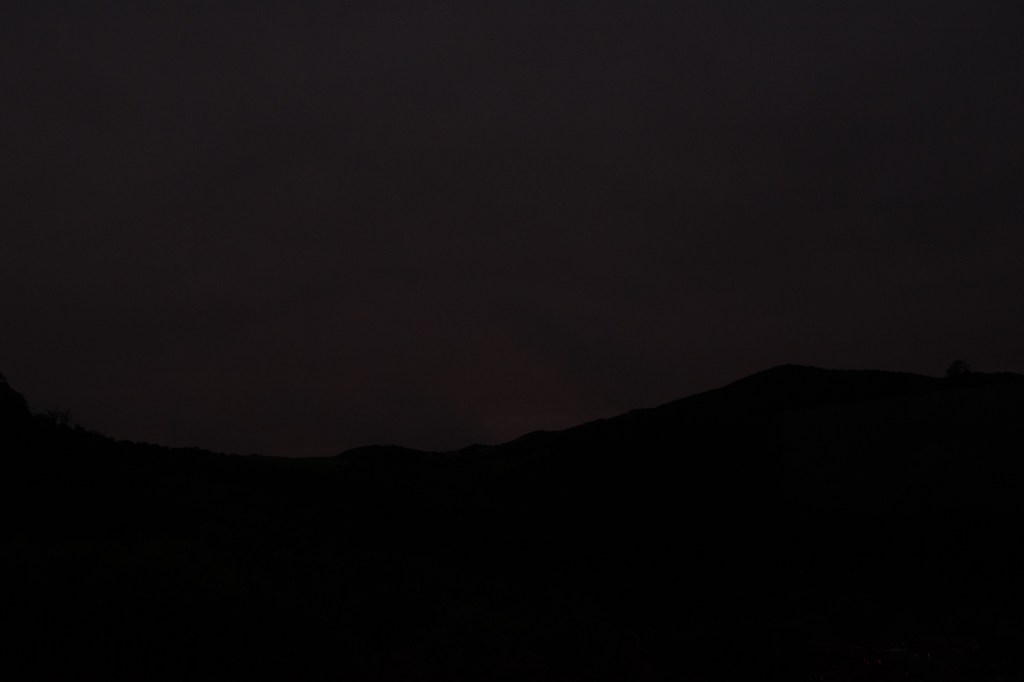
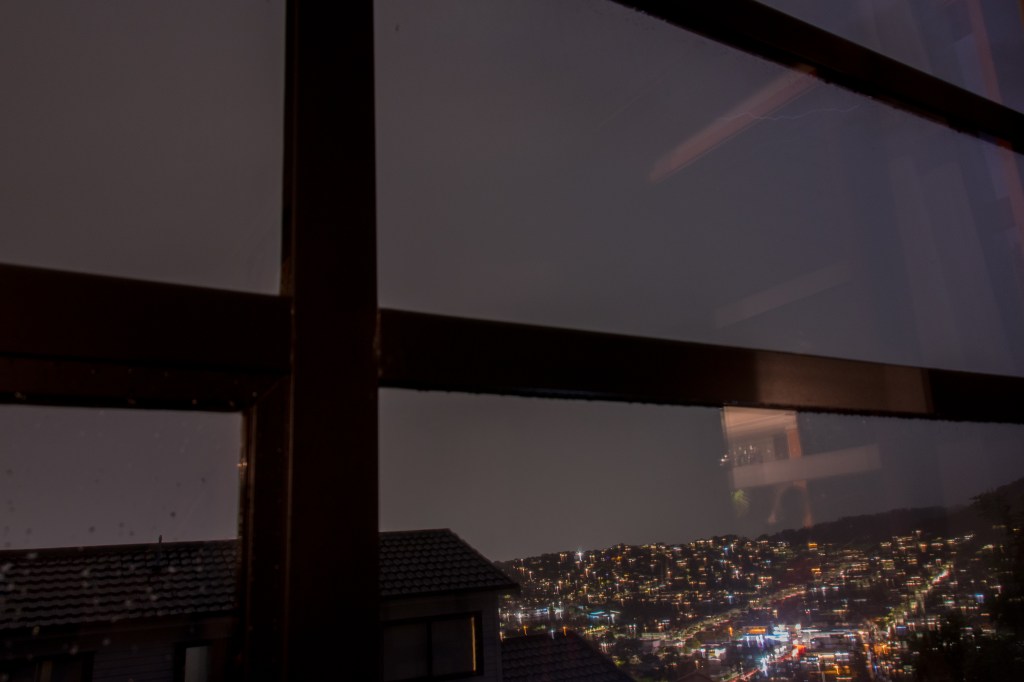
Photos over City


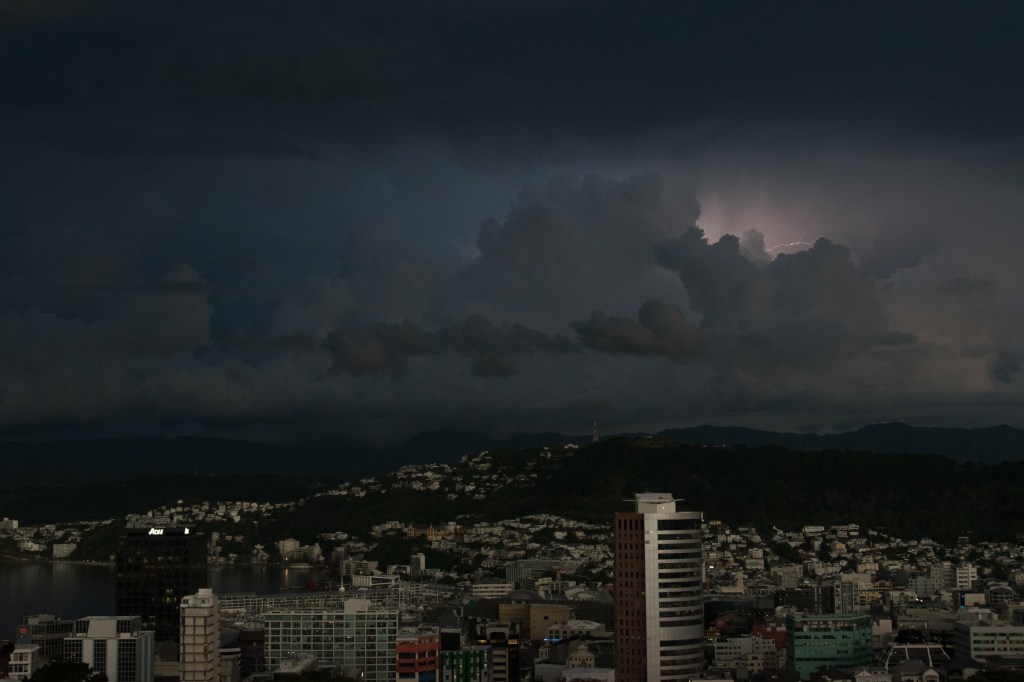
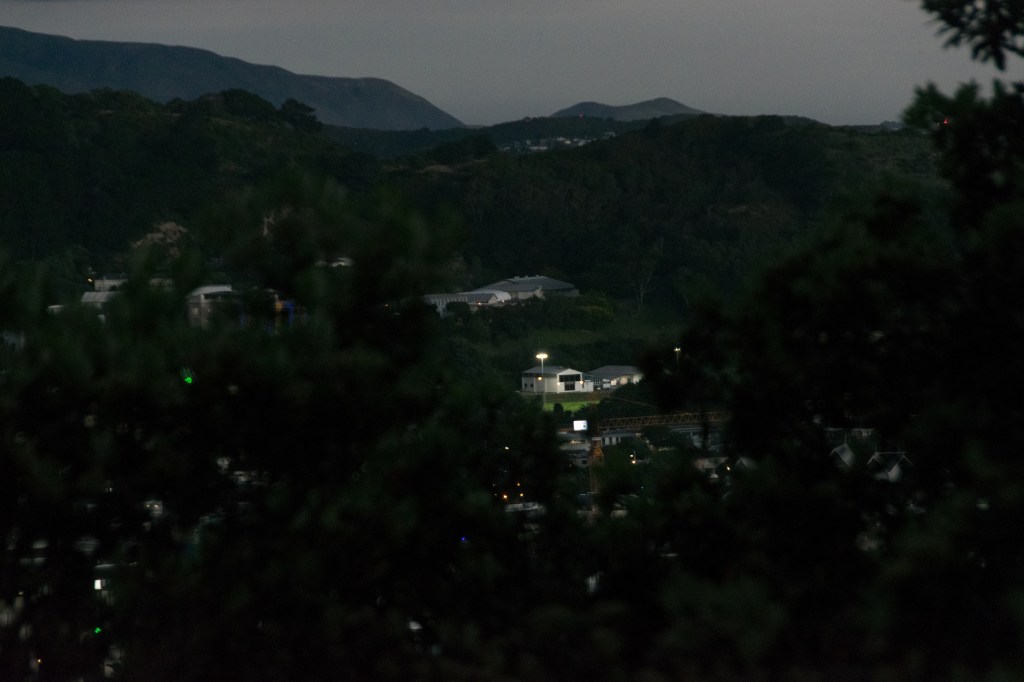
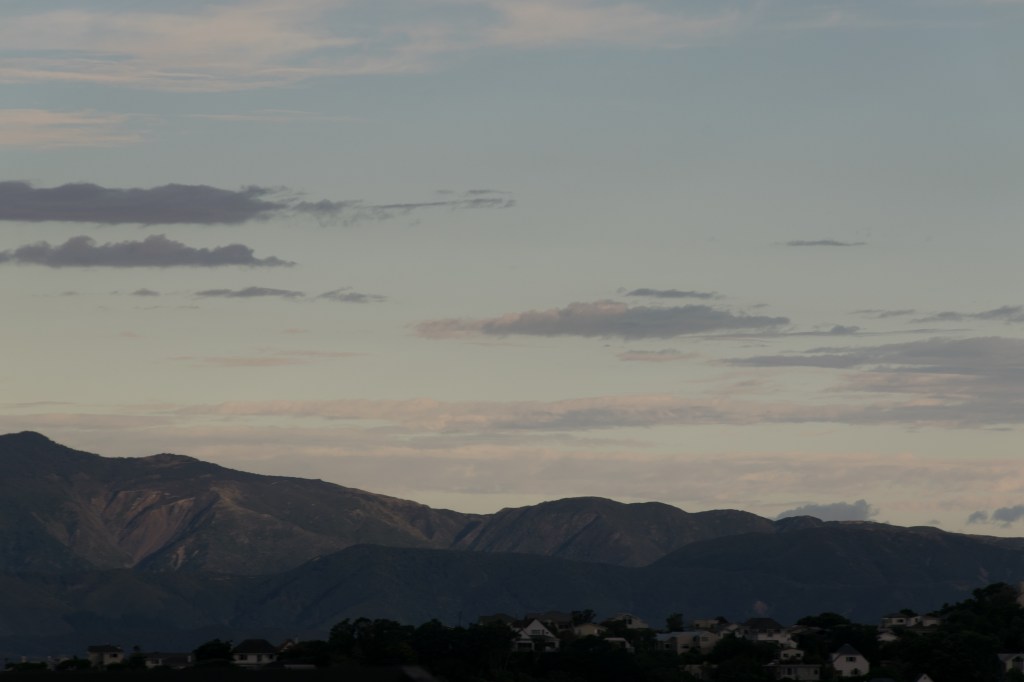
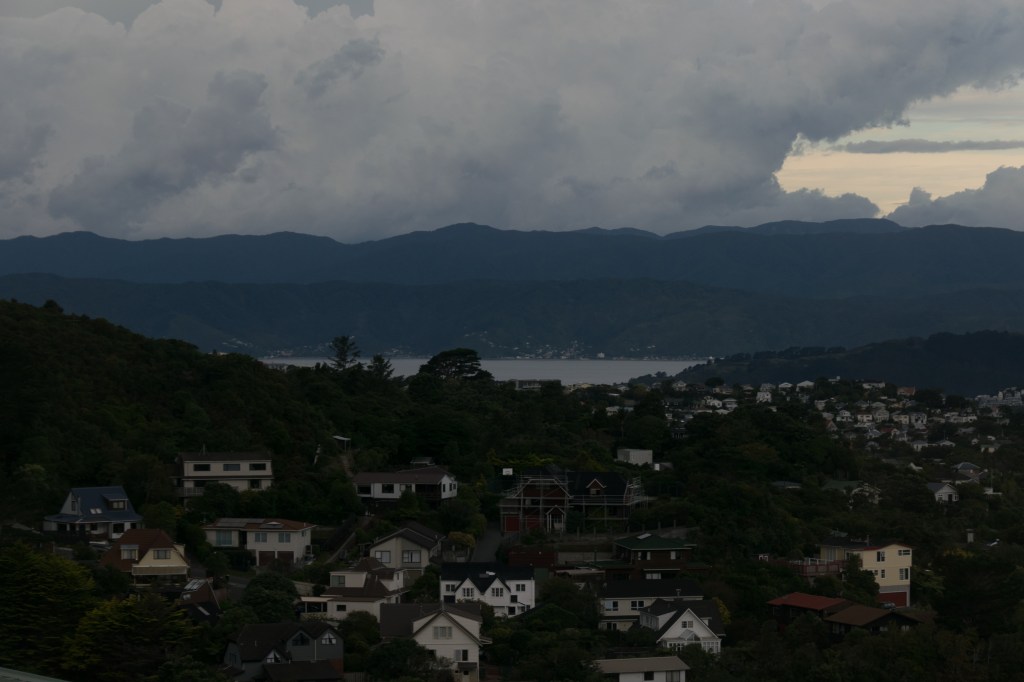
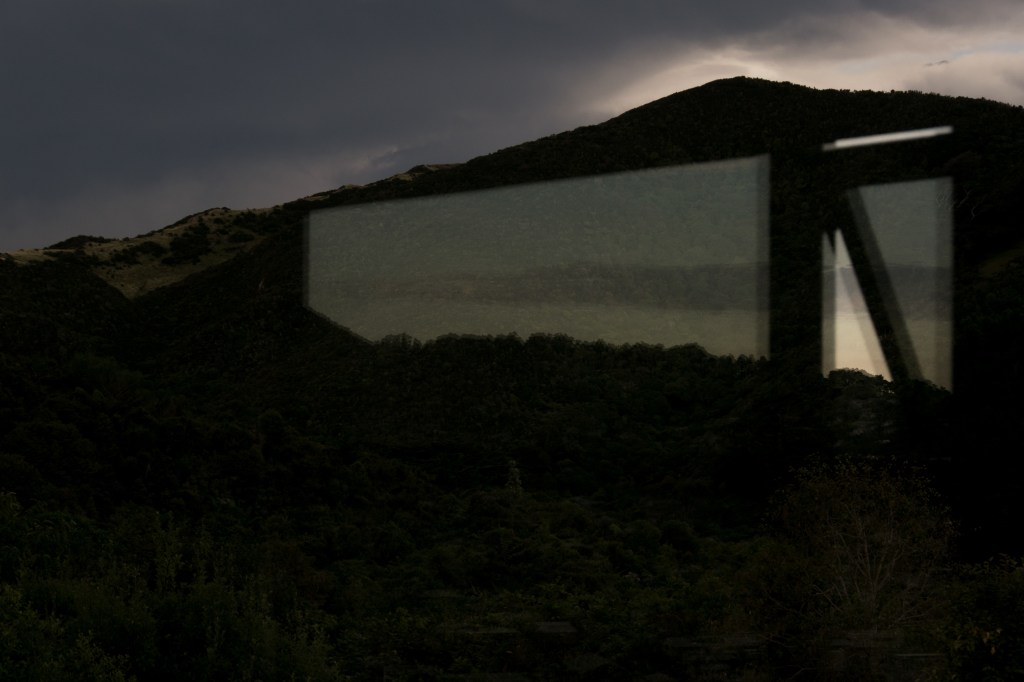
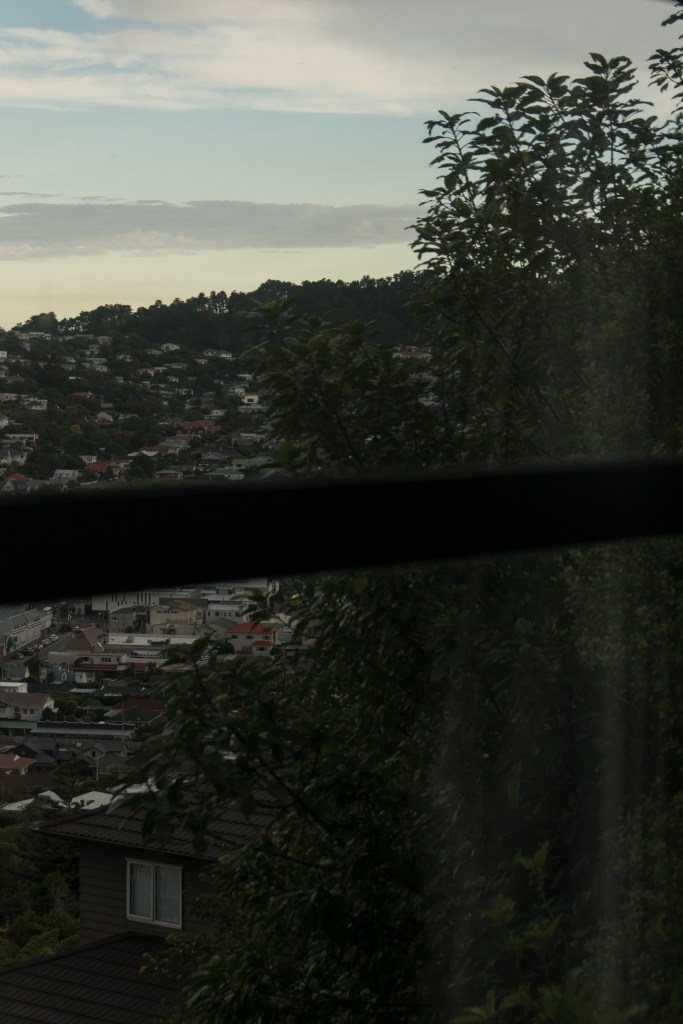
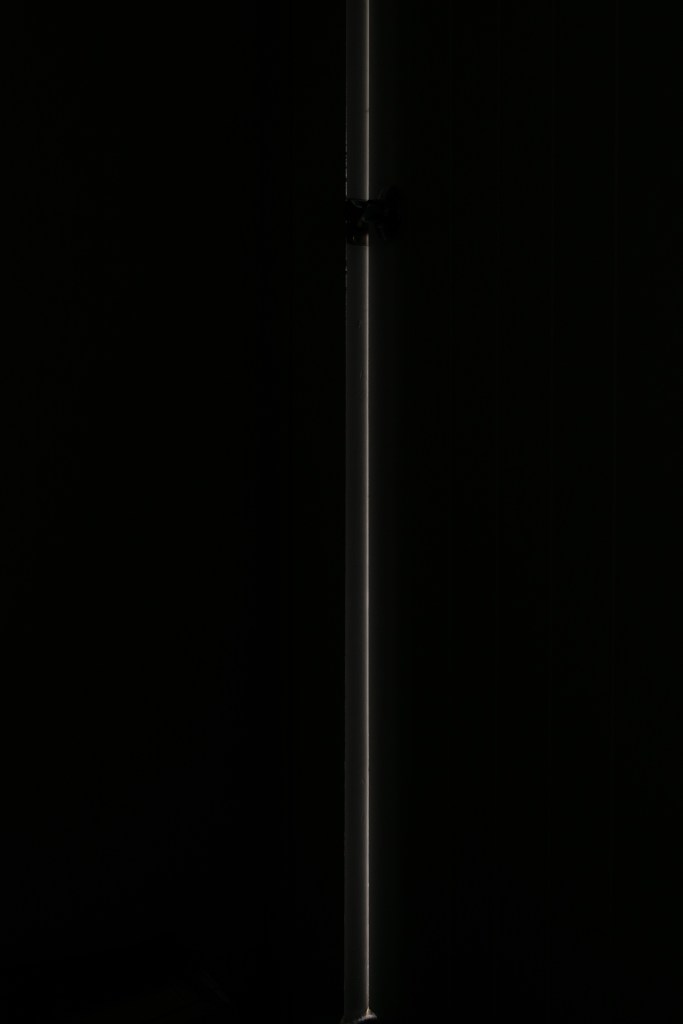
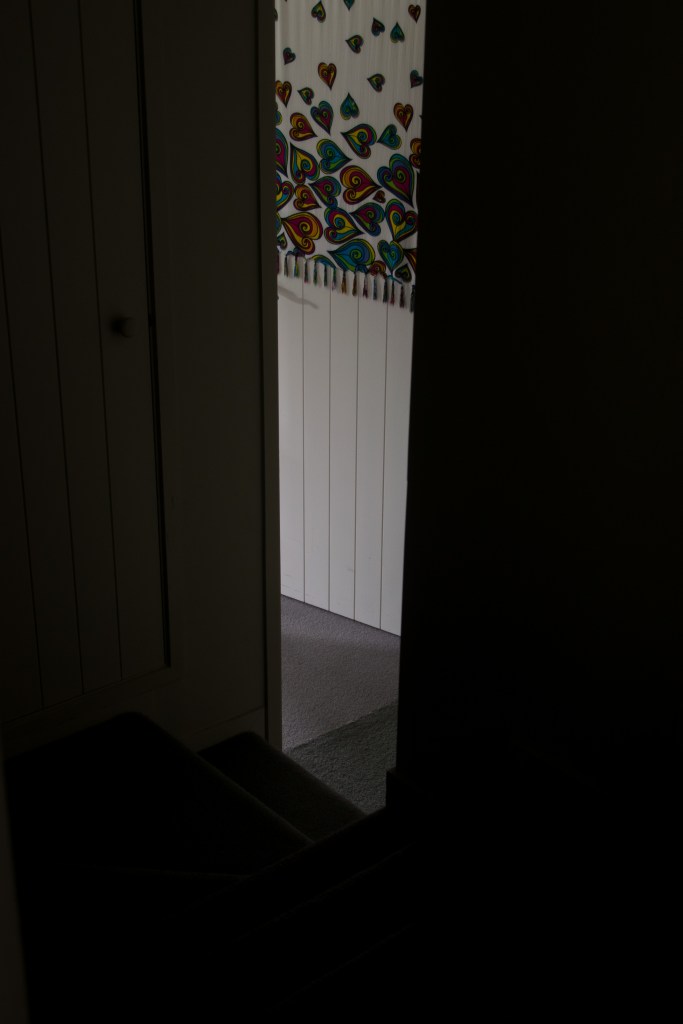
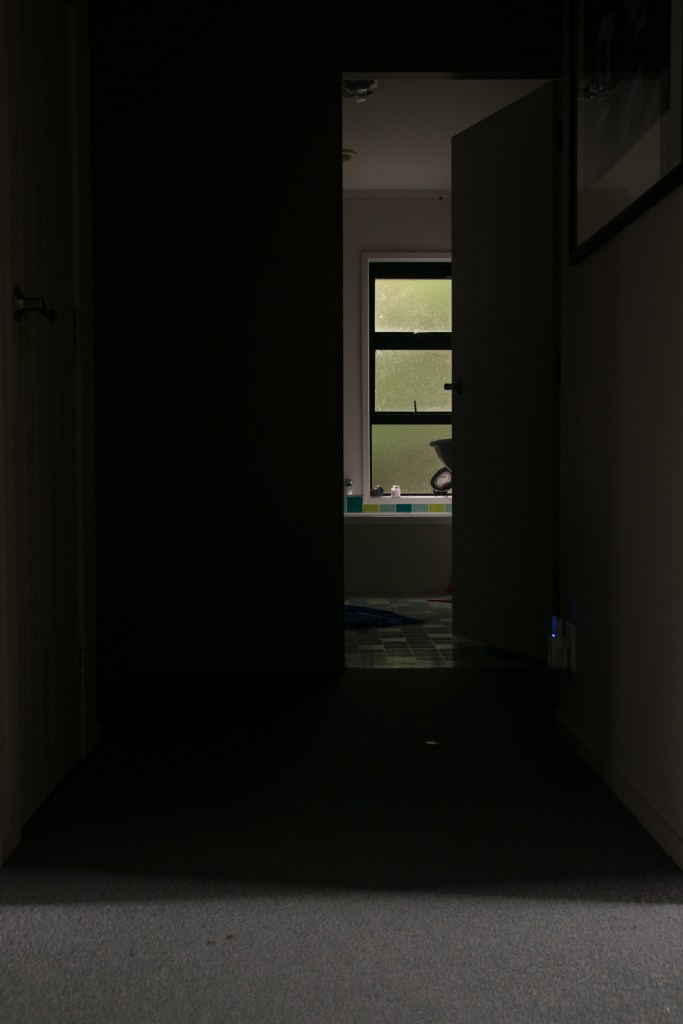
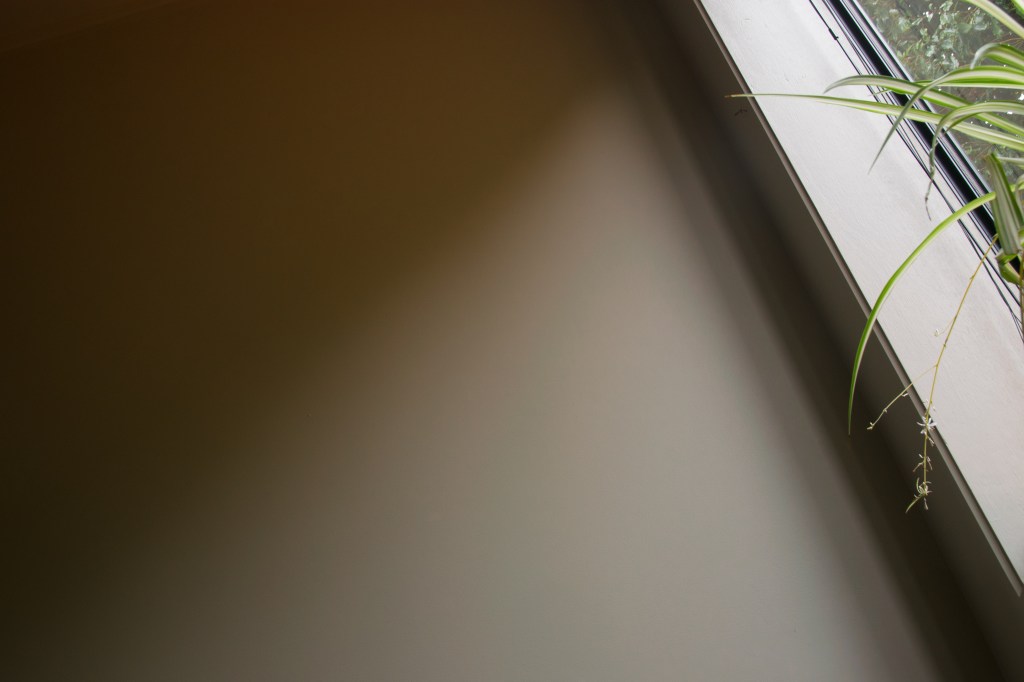
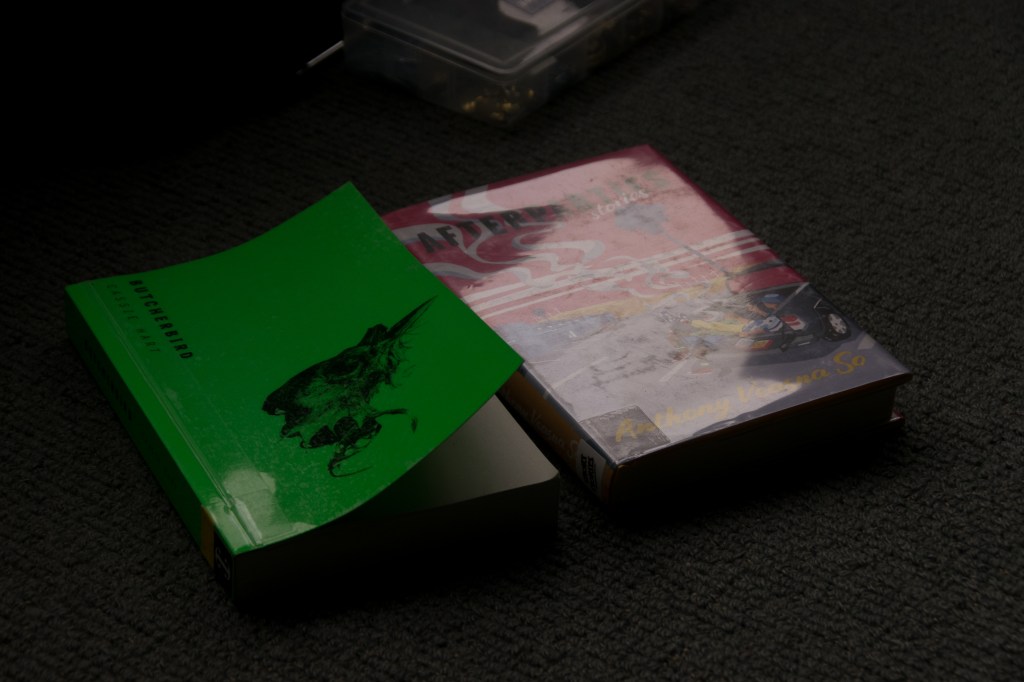
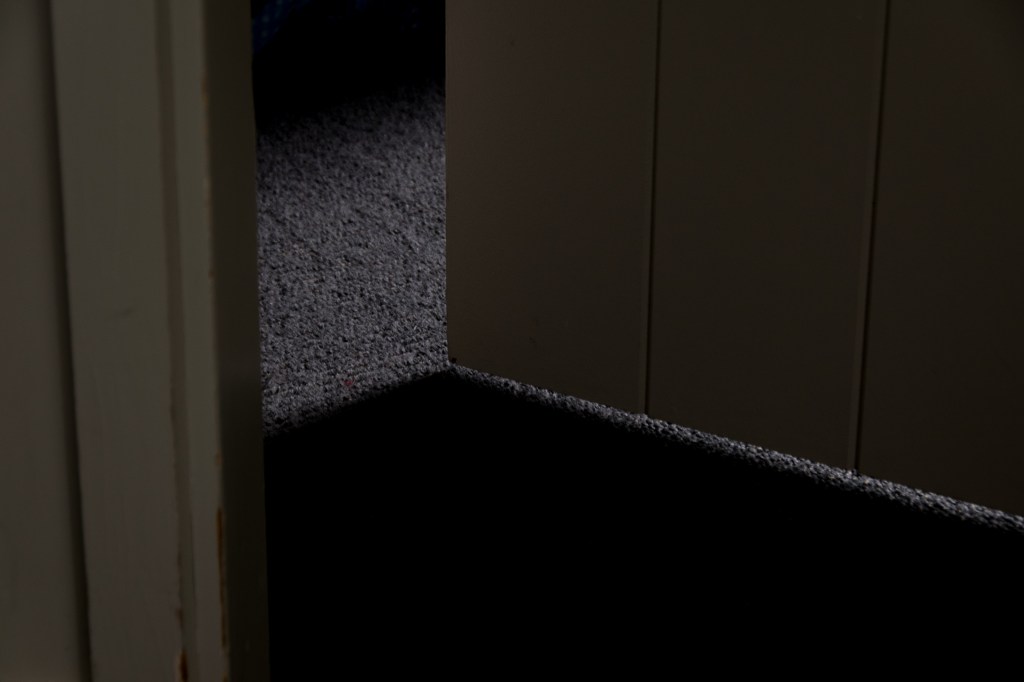
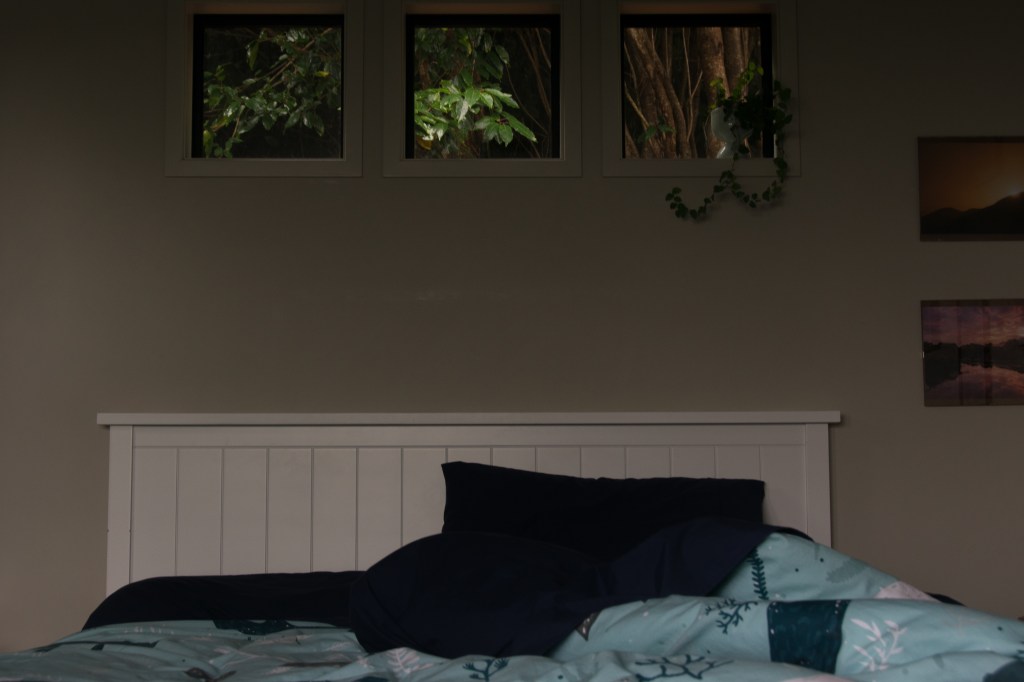
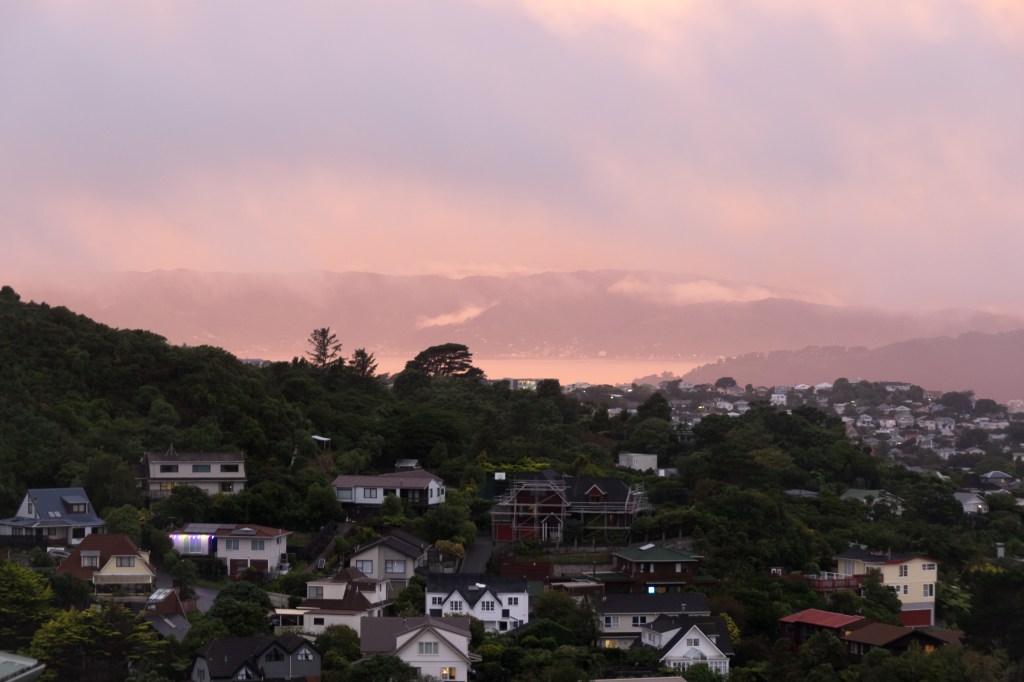
In this series of photos I tried to document more marginal light conditions. Cloudy days, twilight, and the darker downstairs etc. Even took advantage of the thunder storm to try and see how it lit up the lounge.
I started to see some similarities between the way material works and certain light conditions. The diffuse panels of the bathroom and closet create the same conditions as the cloudy days.
The other thing cloudy days was really create this sense of timelessness – especially when Karori became enshrouded in Fog. The buildings seem to melt out of the fog, as if they morph into being with the landscape. I think they feel more in place in these diffuse darker environments then the bright sunny days.
I began experimenting with how dark I can make an image before you lose a sense of what it was. A shot down a hallway that is only defined by a door at the end. The inside of a door cracked open.
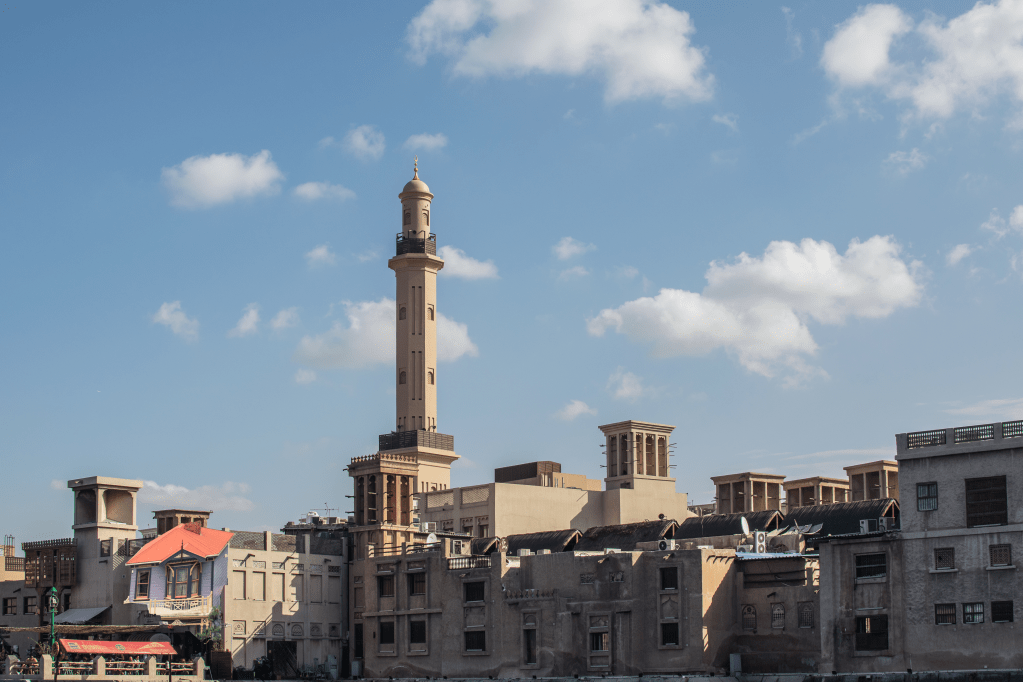
At this point also tried placing houses from other countries into geographically different places to explore how architecture is very much a part of the environment is created in. I like placing the UAE house into the Karori High street – it is tucked away a little which causes you to search for what feels out of place – as a result you think about what feels in place!
I think I will continue this into a series of placing weatherboard cottages around the world as an expression of the colonial project – placing something where it was not designed to be.
Brief Exploration into Architecture and Place
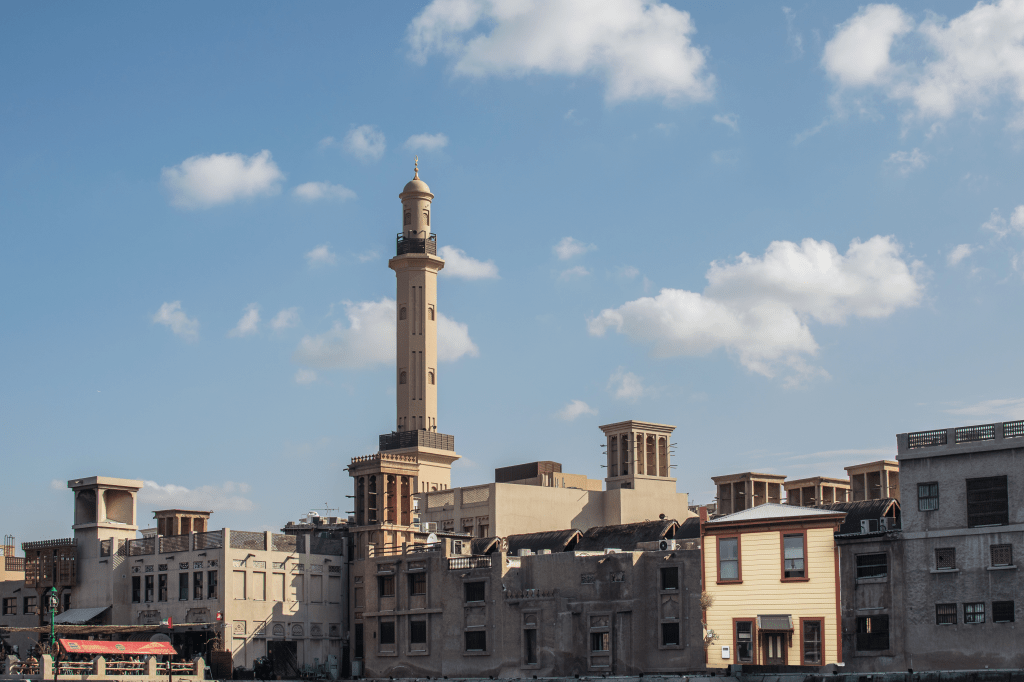
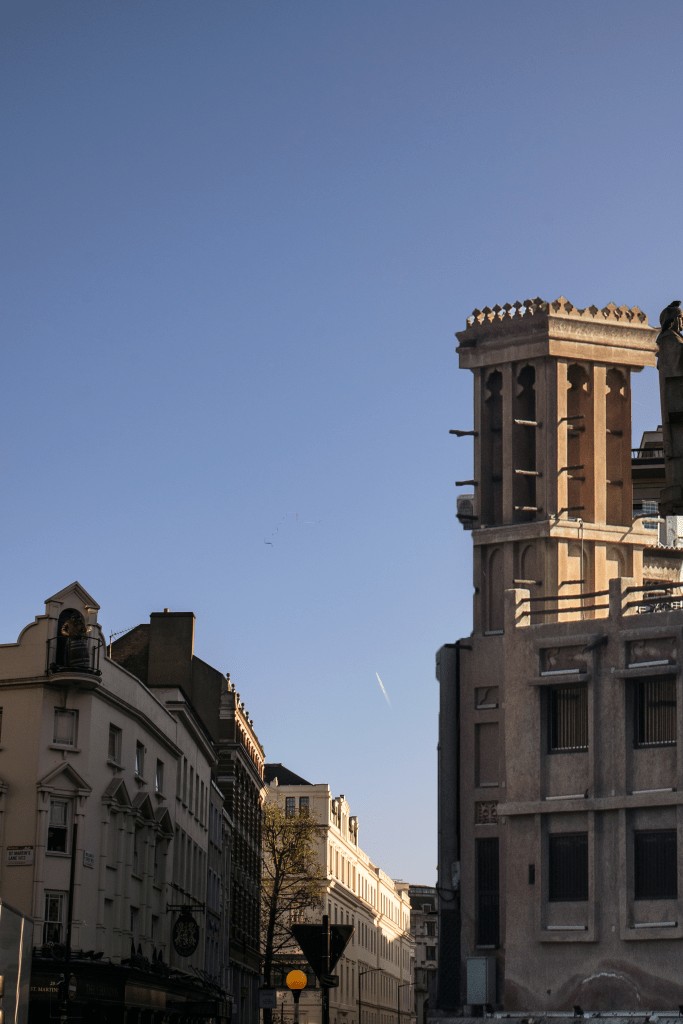
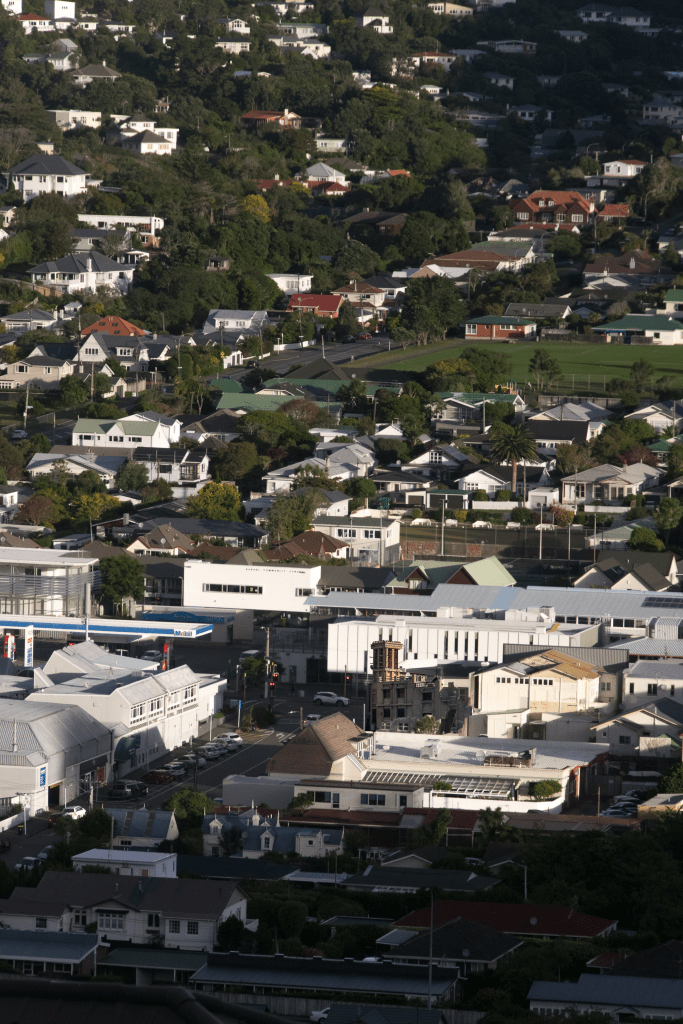
Critique
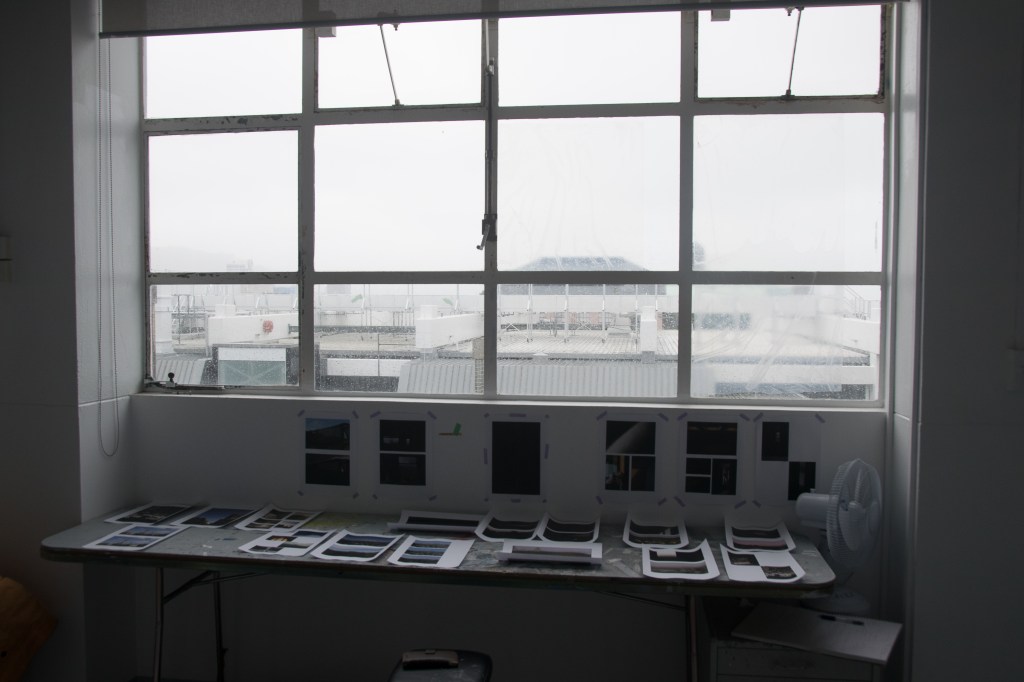
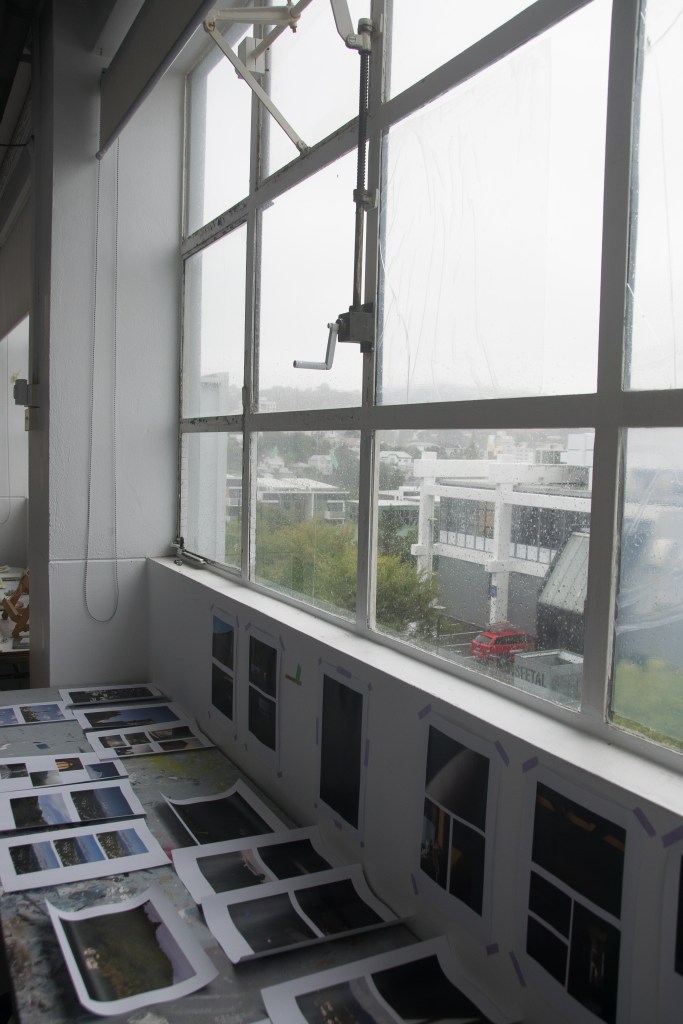
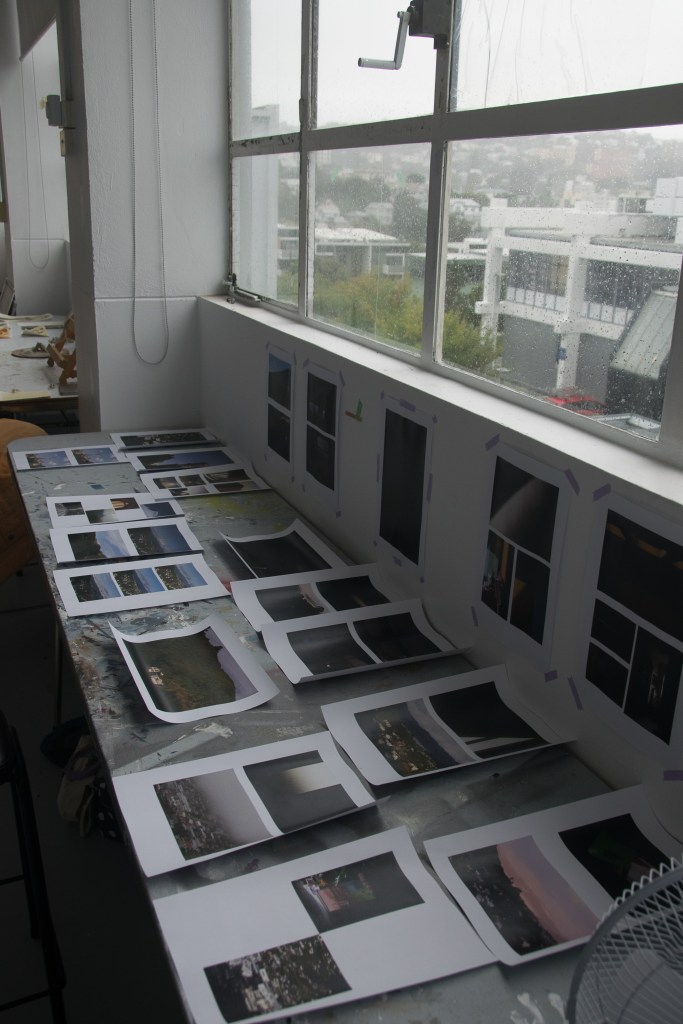
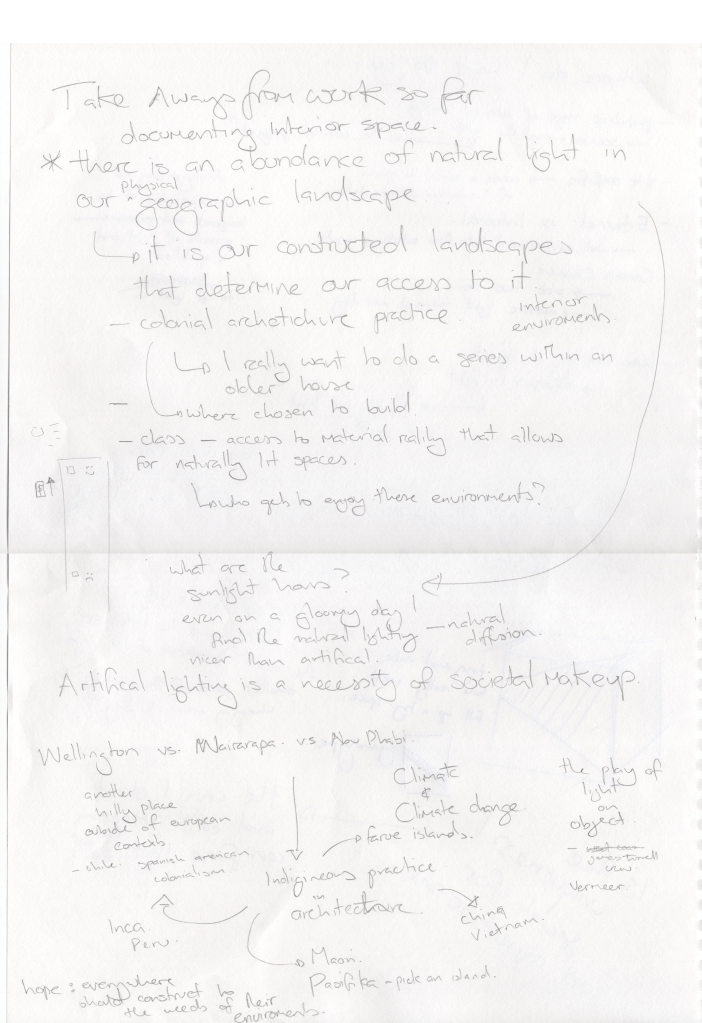
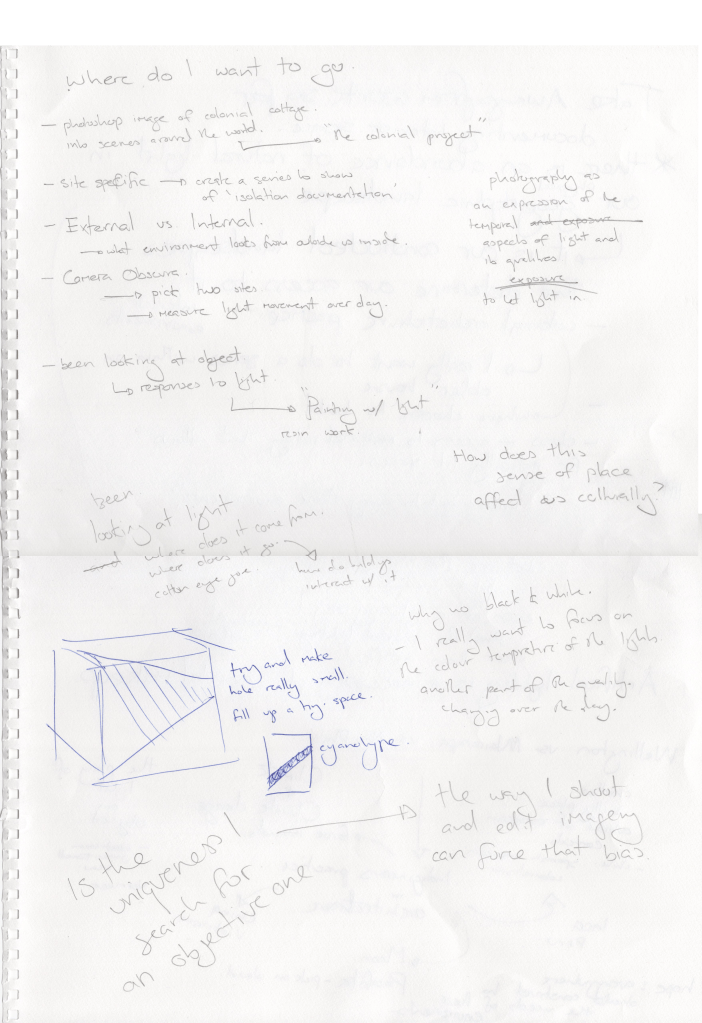

Main takeaway from critique was interest in increasing abstraction. Which allows a person to paradoxically place themselves in space by seeking out familiarity.
the idea of double taking in your environment – reexamining connection to place.
I have been shown two cool works about Kāinga as a potential in to discussing indigenous practice.
Kake, Jade. Rebuilding the Kāinga : Lessons from Te Ao Hurihuri. Bridget Williams Books Ltd, 2019.
Tapsell, Paul. Kāinga : Tangata, Whenua, Taonga. Bridget Williams Books Ltd, 2021.

Physical Work
“Your house is just one novelty sized camera for viewing the world outside your window”. Aaron Chapman Urth magazine.
Article by Aaron Chapman – How to make a Camera Obscura at home
I have been looking at Abelardo Morrell’s work of creating camera obscuras in bedroom windows. By placing the exterior on the inside it forces me to think about the room as an extension of the environment instead of divorced from it. In that way each unique view of a cityscape upside down is as much an expression of the people that inhabit those spaces – why they choose this room – this place.
Abelardo Morell’s Camera Obscura Work
I am interested in using a camera obscura to create that abstraction and double taking people liked so much in critique. Allowing the space for the viewer to pick out the familiar, placing themselves in something that seems alien.
There was another note of thinking about light and space as a constructed image – which a camera obscura is a direct representation of – turning the space into a more conventional image. I want to be thinking about why we choose to create constructed environments the way we do.
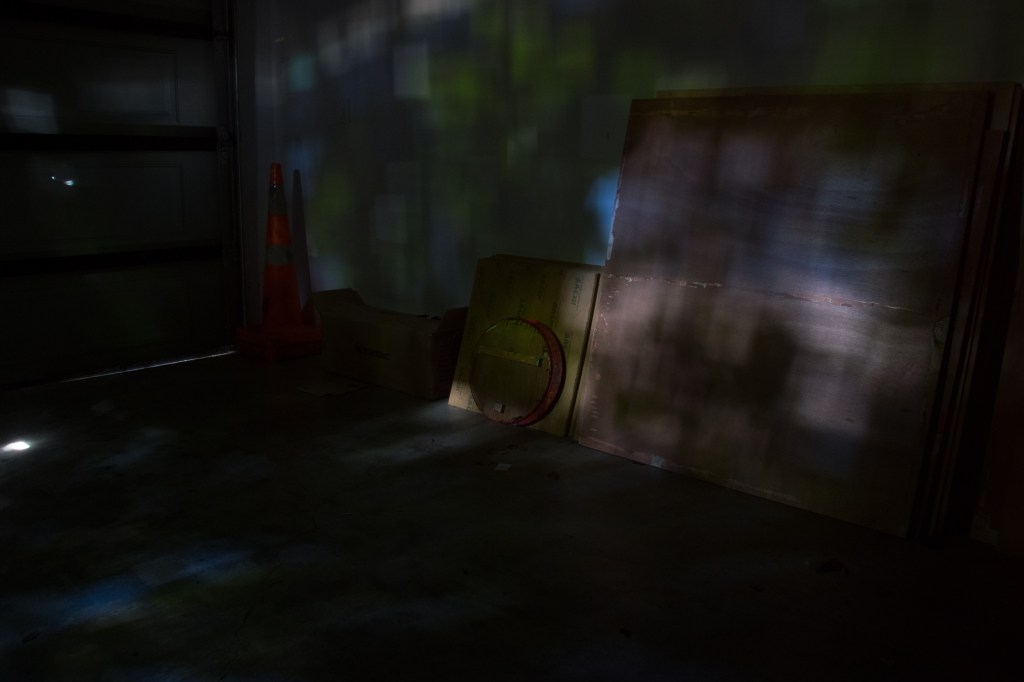
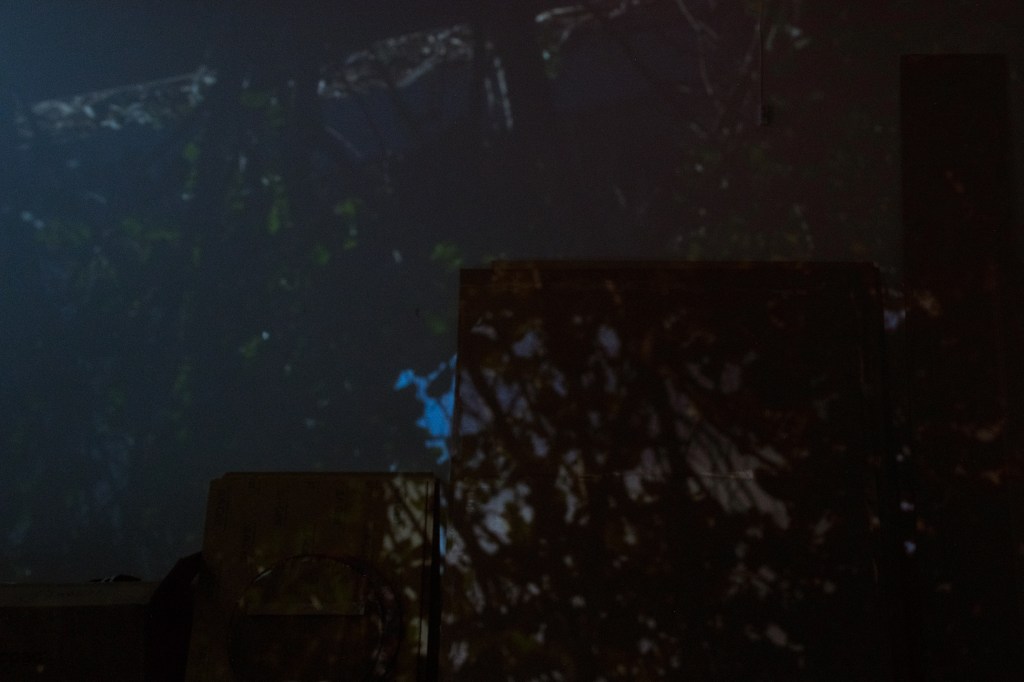
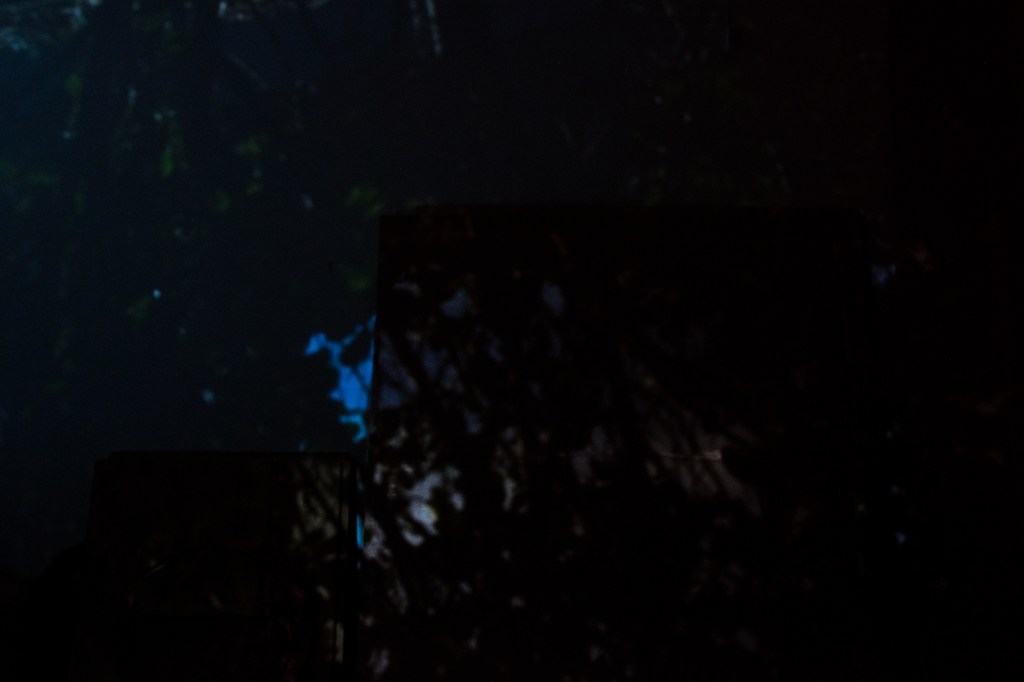
I found the best place to make the camera obscura was in the garage – there was a large flat wall to project against at a reasonable distance from the window. I really wanted to work in the lounge as I think it would have been to reflect the image on the place we normally sit and look out from. This was deemed uneconomical for the amount of light blocking work we needed to do for it work.
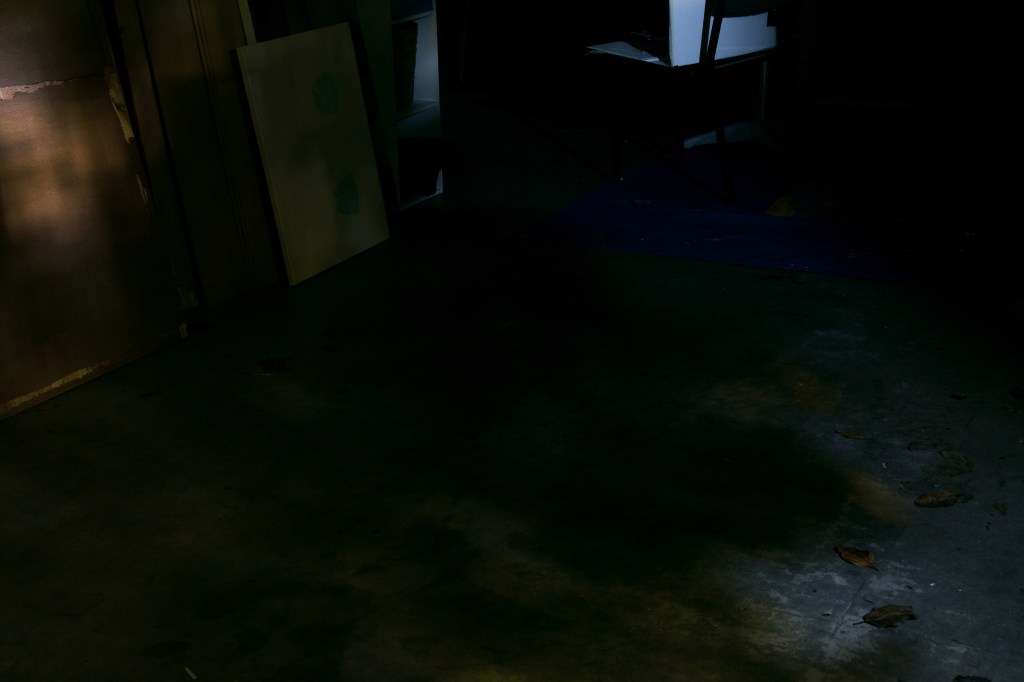
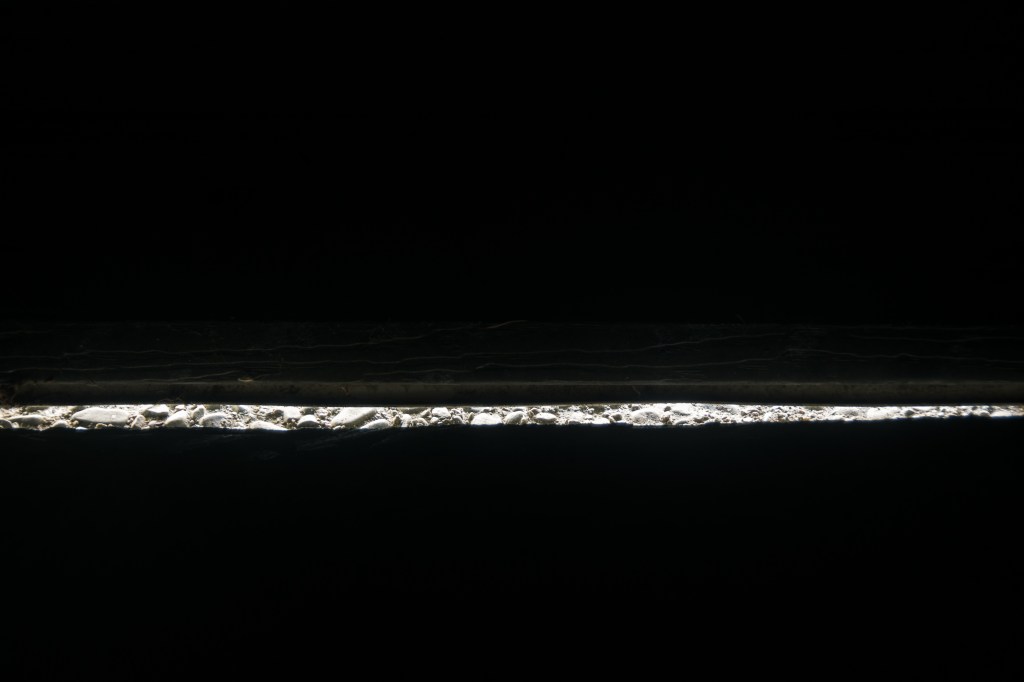
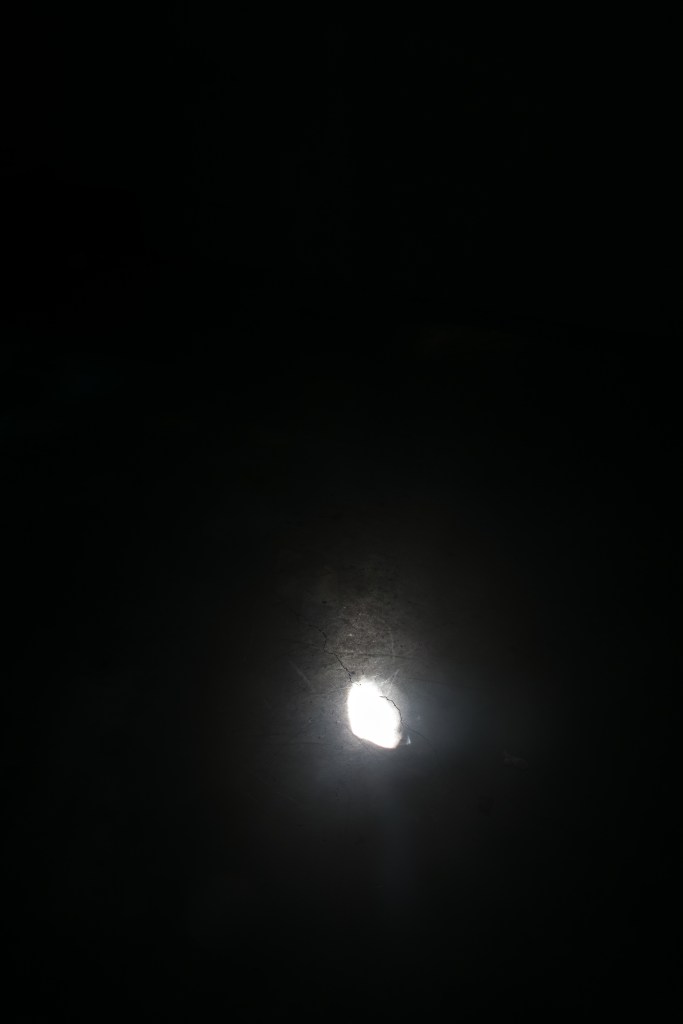
I tried the camera obscura on a bright sunny day so I had the best chance of seeing the contrasts. At first I was really disappointed. I could not make out any image and was worried I had cut a hole to big. I made an aperture out of some cardboard with different sized holes to try and fix this. I still wasn’t seeing the results I wanted. After sitting in the garage for about an hour with no results I tried a last ditch effort of trying to further light proof the room. I had read that it didn’t have to be completely light blocked to work, but in this case that was the issue. After about a couple of minutes I began being able to make out shapes and I started to realise the orientation of objects and began constructing the view I was used to outside.
I took photos at multiple aperture sizes. I liked how the colours abstracted as the aperture got bigger, further forcing that focus to construct the image of place outside. I also became entranced with a small ball of light travelling across the room and filmed it. It was a direct representation of how light moved through the space over the day. This was similar to an idea I had earlier to map light in a room using chalk over a day that I didn’t follow through with.
I was thinking about more physical processes I could bring into this exploration and move away from digital photography. I want something that I can take out of the site and put somewhere such as the studio, re-contextualise it.
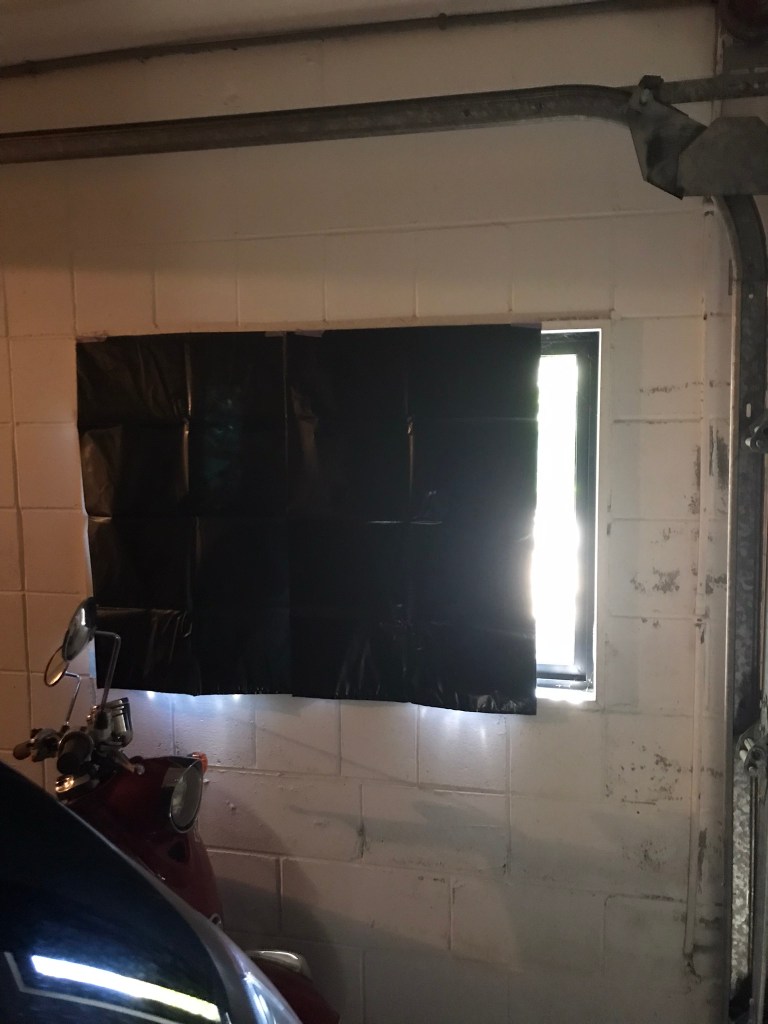
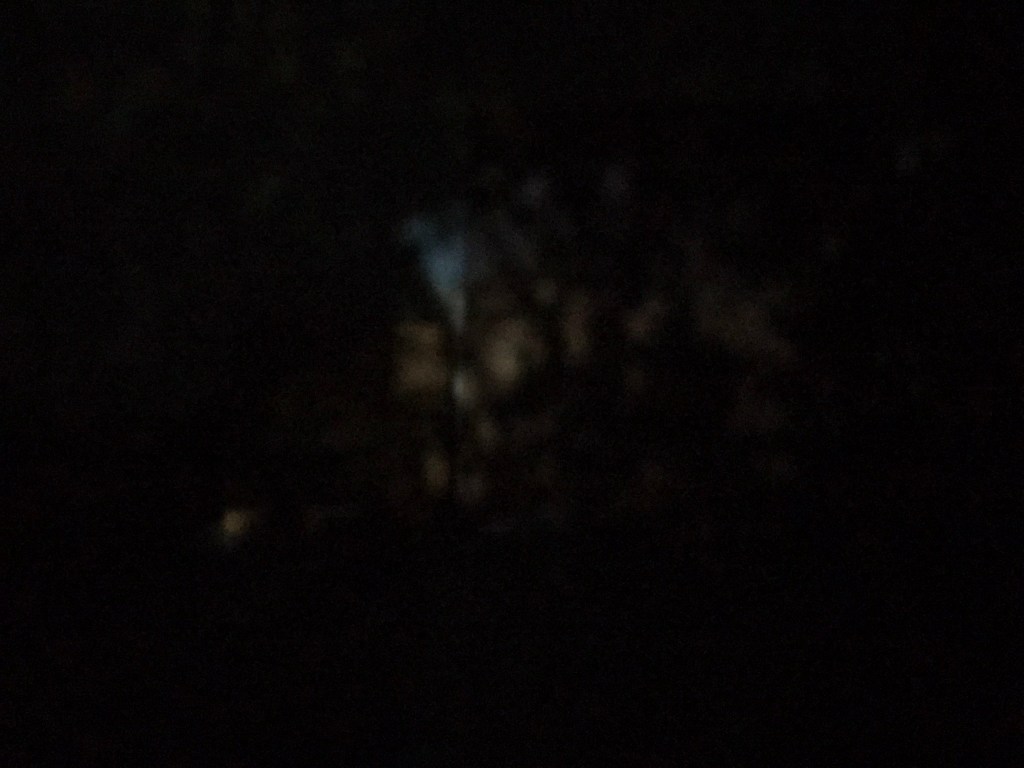
initial testing of bags blocking light and what the phone camera saw when obscura worked.
Camera Obscura
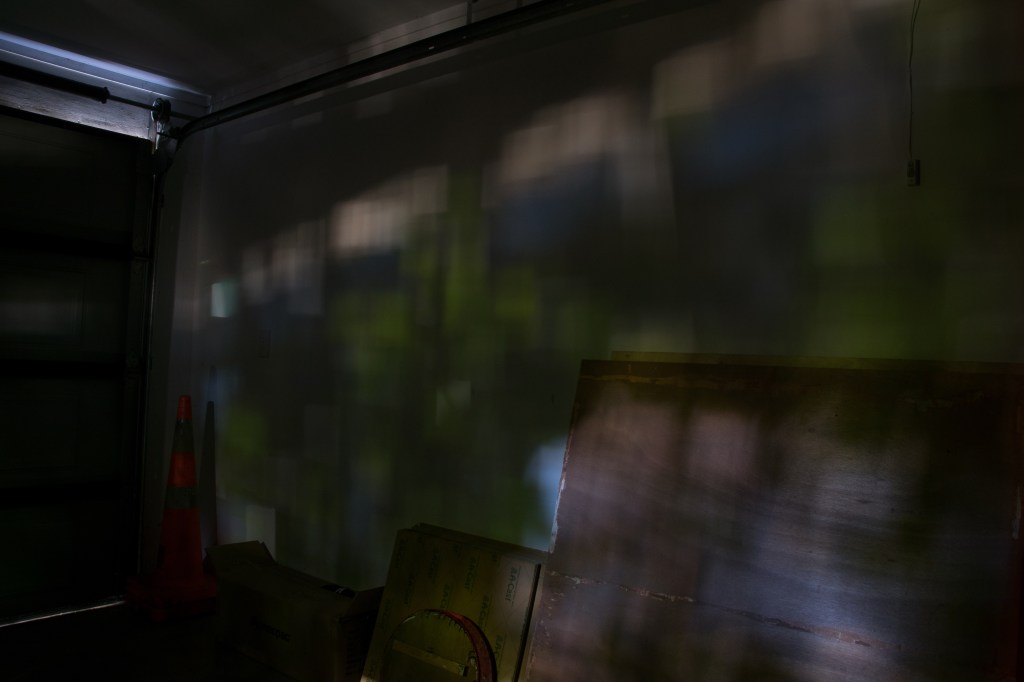

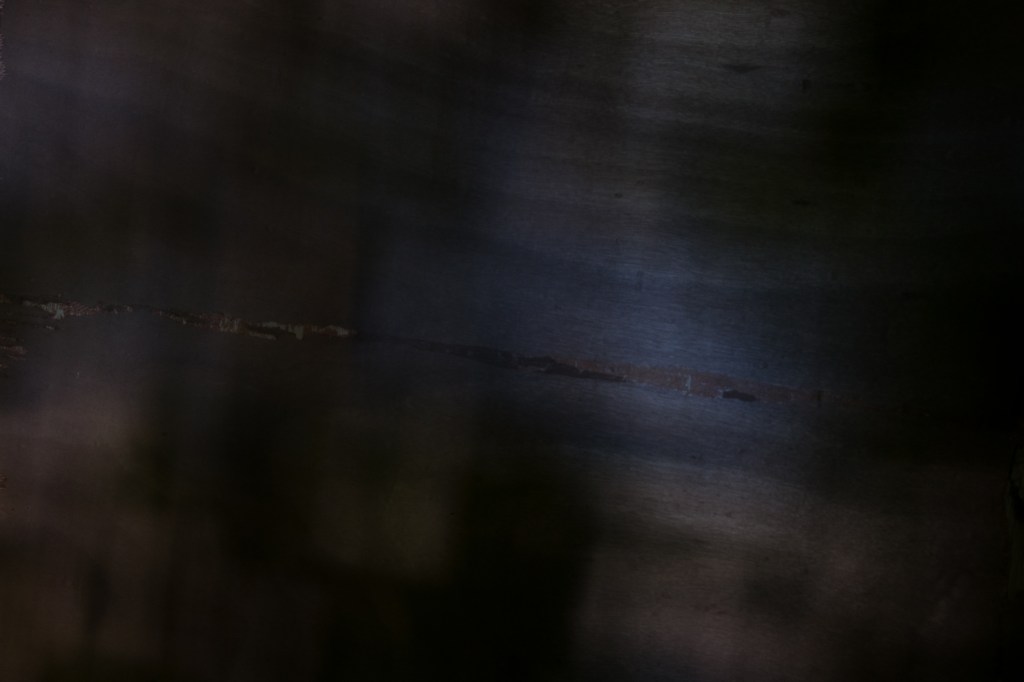

Cyanotype
I’ve been wanting to try Cyanotypes for a while and thought that I could get an exposure of the light beam over the day.
Usually cyanotypes are created by placing an object on top of fabric or card and exposing to UV light, in this case I wanted to try the opposite – hopefully making the darker blue of the image being the light travelling through the space and white either side.
My first attempt I mixed up the chemicals and drenched the fabric and placed it directly onto the floor of the garage without letting it dry. Thinking that it would be fine. It was not fine. When I came back after 4 hours and began washing all the chemical came right off the fabric leaving it in its original state. I also had not seen any development happening on the fabric through that time either. I decided to try drying the fabric out like it said on the bottle – and left the re chemical’d fabric overnight.
On this next attempt I was a little more hopeful – but the fabric had changed to this yellowy colour and I was unsure if this was right – nowhere online mentioned this. I tried the process again leaving it on the floor for a long while – I was more interested in getting some blue to stain the fabric than getting the correct result. This did not happen, I washed again and it all dripped off immediately. I was running out of time for Formative assessment so I decided to wait and go back to the drawing board
Further research suggests that the fabric material wasn’t right for the chemical, and I plan on contacting Jonathan over in the photography department as the resident cyanotype expert for advice. I often like trying a new process for myself first, though this can often end up being a costly exercise, as repeated cyanotype experiments might become.
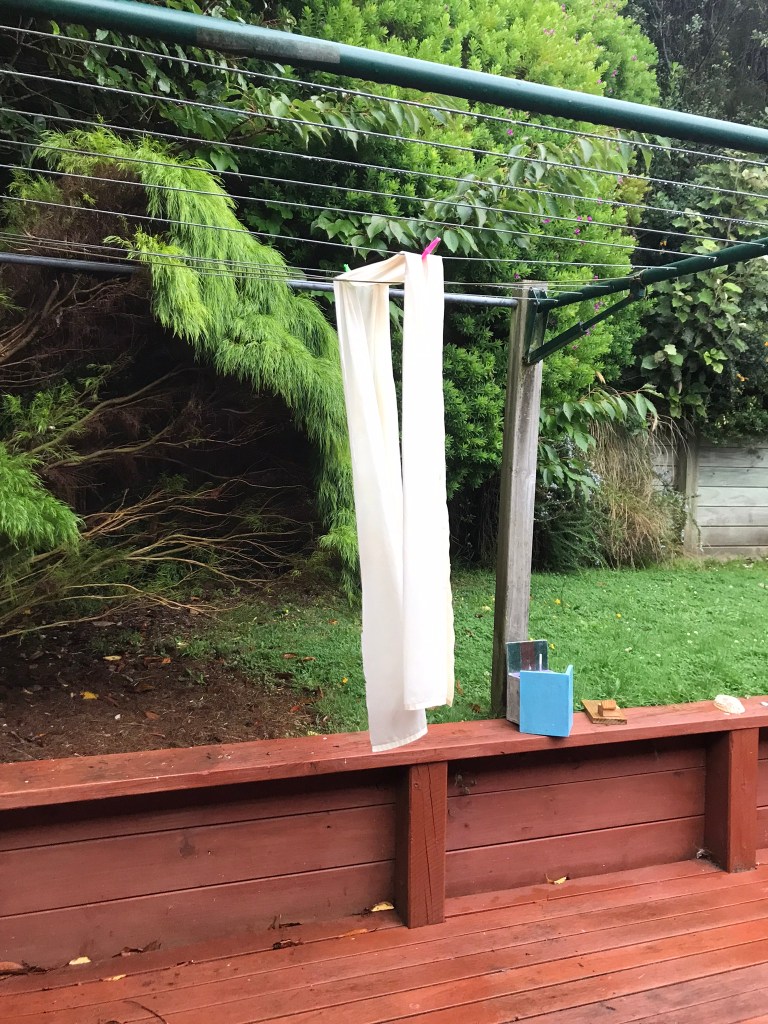
Sadness
shown is the strip of fabric I was using – washed of its potential.
Final Picks for Abstractions – printing
I like these images the best of what I have taken so far. There is a sense of abstracting from the place they are in. Paradoxically these images could be anywhere – yet they are of this particular site.
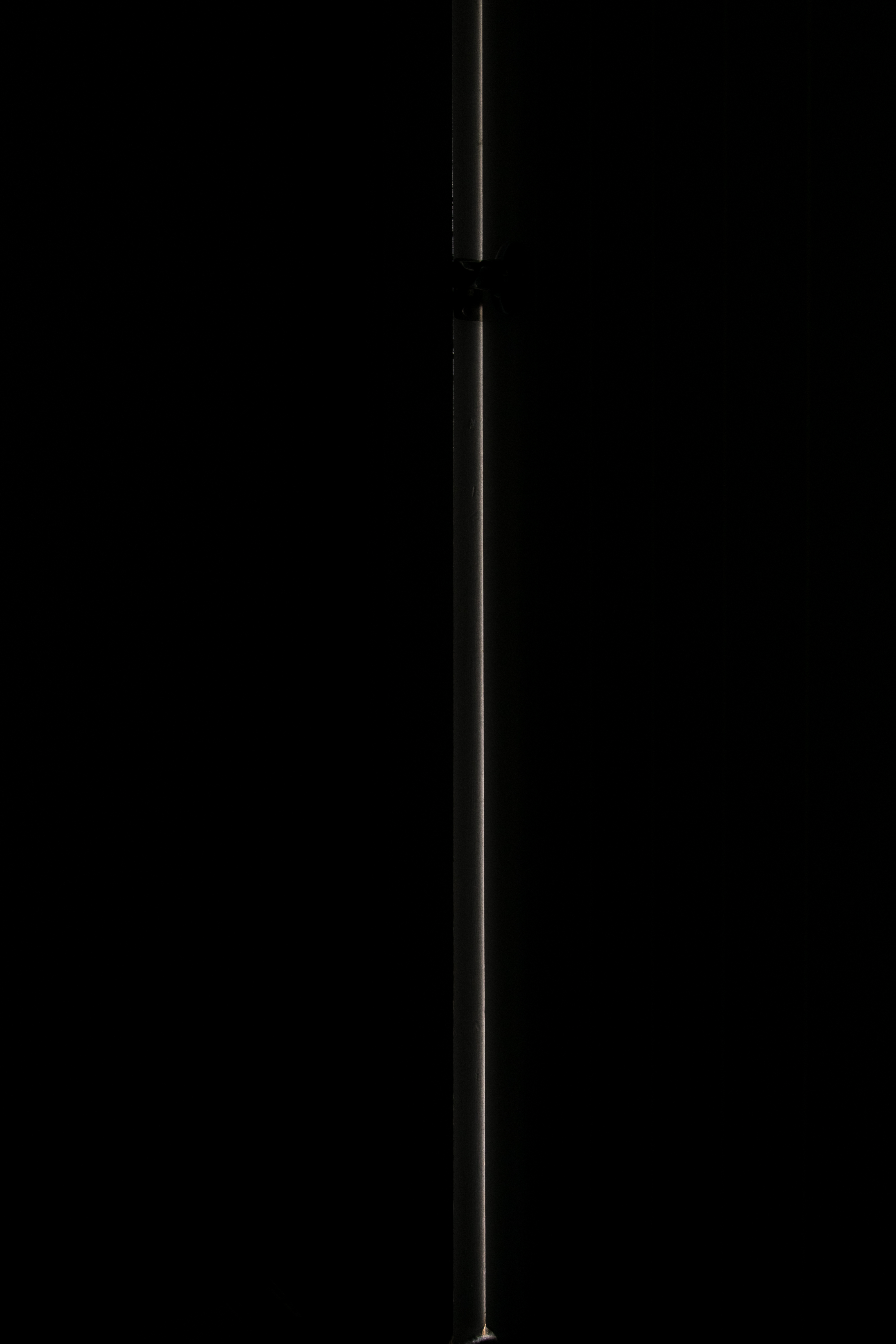
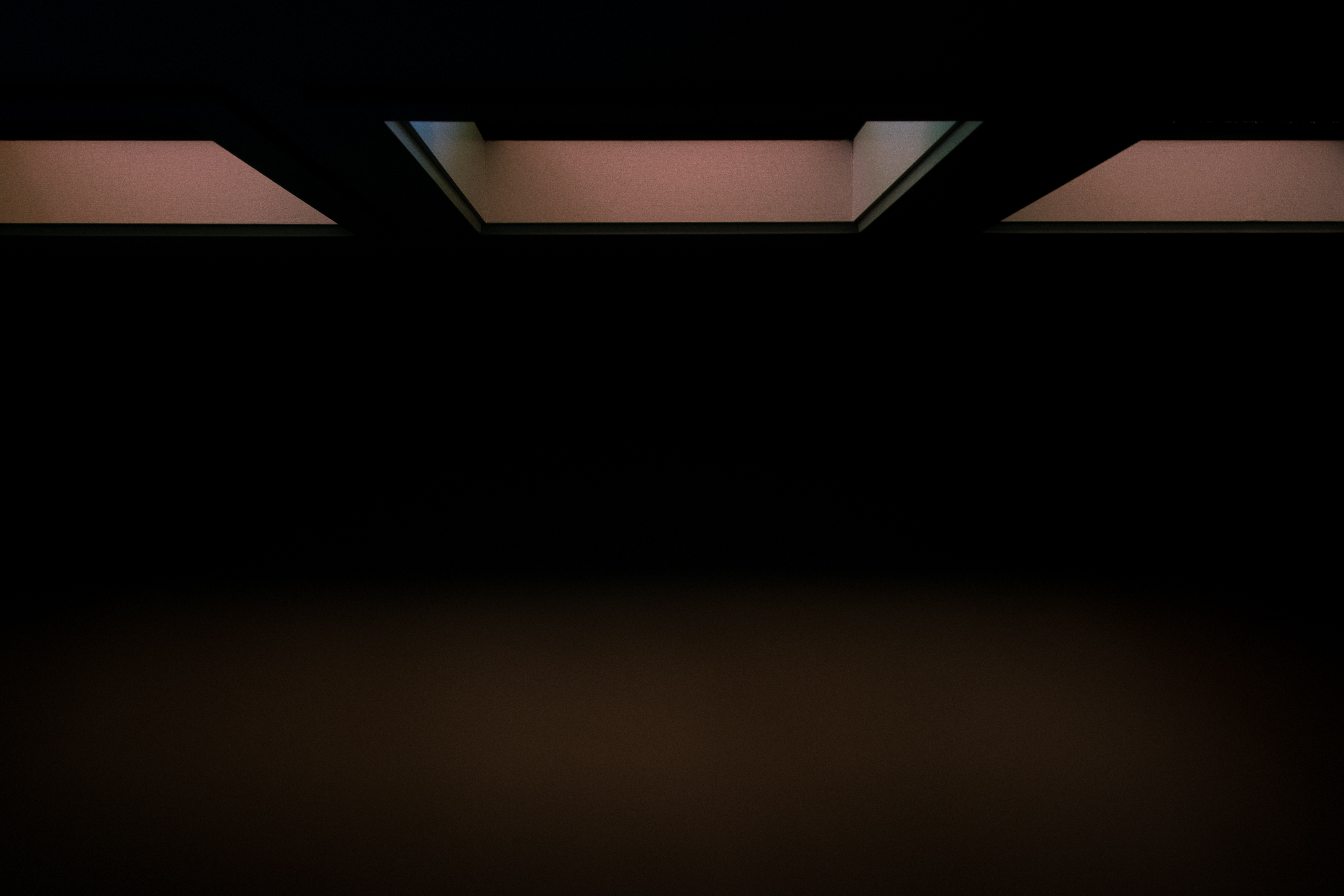
Reflection
Looking back at the last six weeks I am surprised with how much I was able to complete despite the constraints. I am definitely feeling disconnected form my studio space and people there currently, and over the next six weeks I hope to use a new media (painting) that will allow me to interact in that space more.
I have been interested in the development of the initial idea to now, what started as a quite a nebulous thought exercise that I struggled to think about how to artistically visualise has naturally evolved into this exploration of abstraction in light and space. I Think the idea of a ‘cultural geography’ has become more of a discussion about how we perceive our constructed space in relation to the natural environment. There is still space to bring back the original thesis into the discussion but I am unsure whether it is a question that could be meaningfully answered within the next 6 weeks.
This is a project that I can see needing a significant amount of travel to document and interact with different spaces all over the world – create a comprehensive library of how light interacts with space.
I still wish to look further into indigenous practices, which has been side-lined in the current work. I have some interesting readings I was given talking about the experience of Kāinga and resurgence in Papakāinga around the country. The impact of colonisation on views of our constructed environment and its relationship to the natural world are undeniable and should be given space in this conversation I want to have.
At the end of the day I think I want this work to end up making people more reflective of the spaces they inhabit, become aware of the uniqueness of place that can develop as a result of being conscious of this in constructing our environments. Fundamentally I suppose this is a question of how do people want to live, not how they are forced to live.
Moving forward into painting media – I am going to try ‘painting with light’. I have a basic idea at the moment of using resin shapes to refract light onto a wall to construct an image. Again taking specific lights and asking us to interrogate the space that causes them.
Formative
Notes from formative:
Reminds Rachael of seeing a guy from shortland street showing up in a netflix movie
Supposed to be a foreign country but is so obviously Dunedin to us
Think of Power of the Dog – set in montana – filmed in Otago
Those scenes are iconic Otago to us but would someone notice that – what is our perceptions of montana
If you have any sort of relationship to place – cannot exist outside of that relationship
Find something that feels out of place
Create the alien in the Familiar
Some of the photos remind of Ralph Hotere’s work.
Photos remind Rachael of transient and flimsiness
Which is how houses are often described here
Look at Jane Wilcox’s work – dusk/Mahina
I am happy with the reception of this idea and work from both the critique and formative. People seem interested in the concept.
Each time I talk to someone about the project I get a new anecdote or experience from which to draw on. In this case Rachael’s ideas about film, creating scenes and sense of place without physically being there. In the case of Power of the Dog it was filmed in Otago and not Montana where it was set. What about Fantasy places – how do they evoke place to us – what familiarities do they use to ground the viewer.
I am drawn to the line ‘if you have any relationship to a place – you cannot exist outside of that relationship’. It reminds me of worldviews and political leanings. A theme that Raul has brought up again is the idea of trying to make yourself a tourist in your own city, which of course is a headspace that is impossible to create naturally. By going on a walking tour and trying to find things that seem out of place or odd we refocus on what makes Wellington for someone, force that tourist framing.
I have a few artists to continue to explore approaches to light such as Jane Wilcox and even look at Hotere’s work and unfold their thought process. I should try and find artists working in different part of the world to try and see how their approach differs.
2nd Half
How is NZ art impacted by its light intensity?
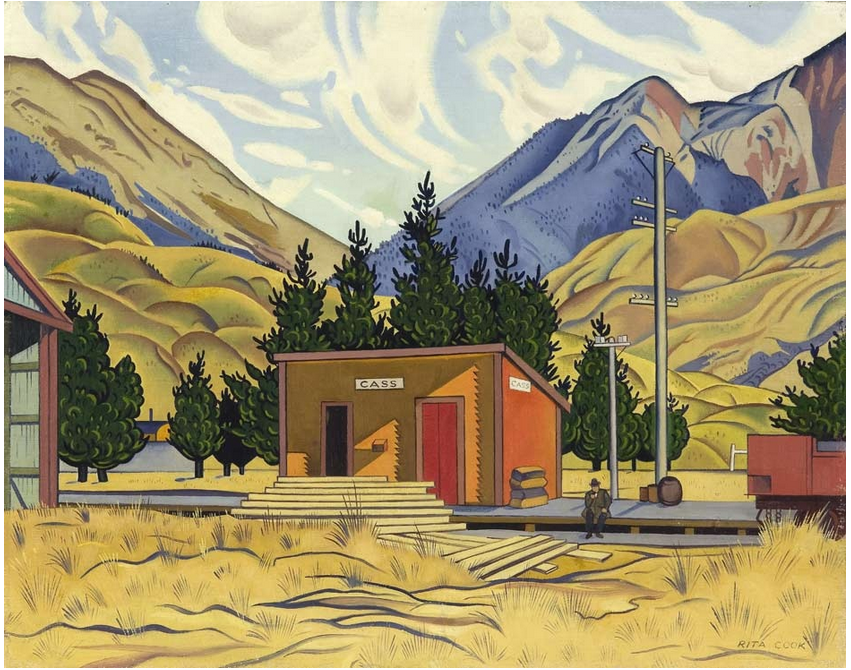
The Light in Aotearoa has long captured the imagination. The comparative harshness of the light against places at other latitudes which lends a strong clarity to the imagery in NZ landscape art. We can see this in Rita Angus and Christopher Perkins, who both created works that was defined by strong lines and bold colours, edges between light and shadow clear cut.
Taranaki – Christopher Perkins 1931
Welsh Artist Brendan Burns on his Residency in NZ
I think it is interesting that this difference is apparent within the western canon, in particular Perkins who grew up and formally trained in Europe – sought to create a different approach to capture the surroundings here. You can see the contemporary tradition of landscape in England was a lot hazier, promoting a soft palette.
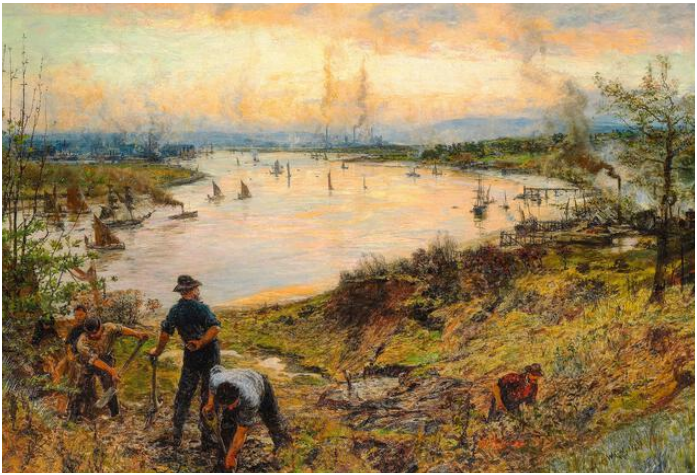
This is not a conversation between two different historic cultures artistic practice, which I am not willing at this time to dive into at the risk of creating a environmentally determinist idea – I feel that my earlier research questions were leading that direction. These ideas were traditionally used to create white supremacist narratives and promote colonialism. (I expand on this later in cultural geography)
Rita Angus ‘Cass’ (1936)
I am often drawn to the flattening of the landscapes that Angus creates. It gives more space to take in the solid forms that dominate the piece. Each part of the landscape is distinct, the foreground, mid – feel almost incongruous, cutouts placed together. It is only through placing all the pieces together can you construct the full view. The part most important to this discussion and comparison is how light is used on the building. While the weatherboarding is not detailed, it is very apparent that is the material by the jagged lines of the shadow. I guess this is something that only those that have grown up around these shadows would pick up on, a subtle placing of the landscape within NZ. (I will talk about this later in sense of place). This comes up quite often in my own practice, especially within the context of the current work, how much can you take away before the place becomes unrecognisable. In this way we can find what is immutable to someones sense of place.
JWM Turner ‘The Fighting Temaire’ (1838)
I could have picked a more contemporary comparison to Angus’ work but this Turner’s landscapes are something I have seen in person and are so quintessential to the British landscape practice. I feel that especially for paintings, a lot is lost in the photographing – the ‘aura’ of the piece is missing. I have always felt seeing the paintings at the national gallery i get the sense of Turners landscapes expanding beyond the edge of the canvas. I think it has something to do with the mistiness of the images, fog spilling past into the room. On a larger scale i see this emulated in pieces such as Olafur Eliasson’s ‘Sun’ that exhibited at the Tate filling the whole engine room with light. Both these works light is the principal focus. Though unlike Angus, light has a less tangible materiality, effusive. Unlike the station house, the ship falls away into the scene. Again it is experience that separates this sense of place as being English – waking up to fog rolling across the Humber at my Aunt’s place in North Ferriby.
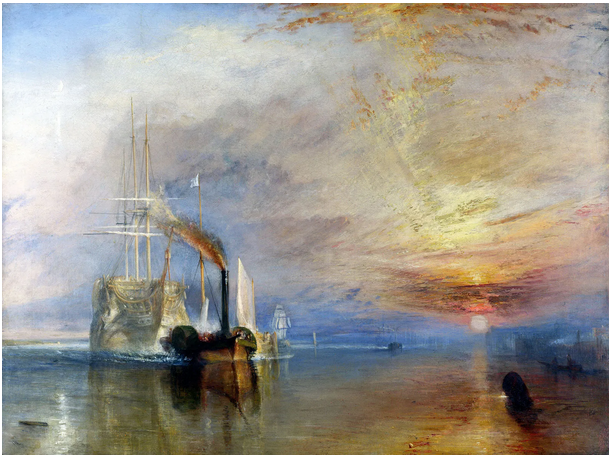
Without experiences at both ends of the world, could I reliably match the landscapes to their subject? Someone who has not been to England, or experienced smog filled cities would feel Turners painting as more ethereal, otherworldly – and intangible. Place is created in familiarity. I think I need to examine my personal experiences of place before trying to explain how someone else may react as I have been in the first half of the semester.
The Cultural Landscape
The study of Cultural Geography is a branch of the social science that looks at how ideas and practices originate and flow across time/space. Whereas other aspects of Human Geography focus on groups based by their environmental classification (eg. islander, desert people), Cultural Geography is concerned with the cultural landscape. This in opposition to what is known as environmental determinism, which was the initial way in which the science chose to categorise peoples. It posited that to attain a certain ‘level’ of society, one must have access to specific resources and environments. Not so surprisingly this was used to explain the superiority of the European cultures, and has become widely criticised by the post-colonial movements of the 20th Century onward.
Whatmore, Sarah (2016). “Materialist returns: Practising cultural geography in and for a more-than-human world”. Cultural Geographies. 13 (4): 600–609.
A Cultural Landscape is one that is a interaction between Human uses and extant natural spaces. This can take place as modification of the land, or associative. UNESCO World Heritage has classified Tongariro and the surrounding areas as an associative culutral landscape citing the “spirtual links between the community [Māori] and the environment.”
Those that live within Te Ao Māori readily understand this connection between a people and their landscape, as a place of conversation between the two instead of control. The deep significance of the landscape is what ties one to place, it is whakapapa.
As Tauiwi my relationship to landscape is different, but not at odds with these associative views – and this is how i come to understand cultural landscape.
Cultural Landscapes are so intrinsic to the location they situate, they create what is called a strong sense of place.
Place vs. Placelessness
Geographic Place is very important to Geography, without a grounding/Idenitity to attach concepts to the science is non-existant. Place provides a logic. It could loosely be associated as a Tūrangawaewae, a place to stand.
To best describe the feeling of place it is easiest to first explore placelessness, or ‘non-places’. These lack a significance, and feel transient misconstrued often as liminal. Place that could be anywhere, and in turn nowhere. Examples people cite are Hotel Hallways, Airports, Malls. I unintentionally began exploring this in my photography earlier in the year, looking at how far can abstraction occur before you lose sense.
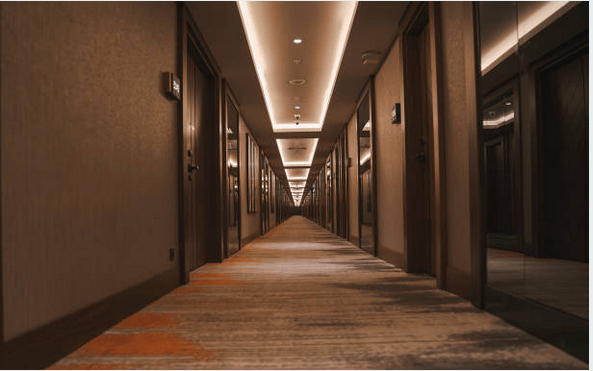
A lot of non-places are heavily interior, and with little natural light, disorient from the surrounding landscape. Light is important to creating our sense of temporality, without we are indefinite.
Marc Augé, Non-places: introduction to an anthropology of supermodernity, Le Seuil, 1992, Verso.
I believe natural light to be intrinsic to our sense of place. If you step out into the open anywhere in the world it is an automatic guidance to locality, how far North/South – Climate – Time of Year etc. I also see light as implicity cultural in this respect. If cultures are in conversation with their natural environment, light is a part of this environment. Therefore the play of light is an influencing role in shaping cultural practice through cultural landscapes.
Light is probably the main way in which I interact with my own construction of the cultural landscape. It is the principal way in which I derive significance through aestheticism. If the light is beautiful so does the landscape become. I in a lot of ways feel disconnected from landscape in a spiritual sense, I have not been brought up with these traditions – and without this grounding i have used a places beauty to derive its importance. I have been eternally drawn to Mountains, this in large part to how dramatic the are in scale, colour, shadow – and constantly changing across a day. I love being up in the Mountains, they evoke the romanticist attitude of the sublime, such a strong sense of place. When something creates these feelings, this level of significance in a natural environment it is safe to say that they become a cultural landscape.
I want to explore this idea of place in my coming work, how interactions of light can give this sense and connection.
Chalk
I wanted to look at the way light interacts with our constructed environment
I began this piece by deciding to experiment with the different light values within my chosen site. I used different colours of chalk to outline the edge between light and shadow on the wall over the course of a day. I had no idea how it would turn out, I was entirely in the hands of a natural process to guide me.
While waiting I also decided to look at other ways light interacted with the space. I noticed the dappled light of trees appear in one area and filled it in. This reminded me of the camera obscura in made in the space – i liked the idea of this chalk as a physical sensation of the materiality of the light as witnessed through the camera.
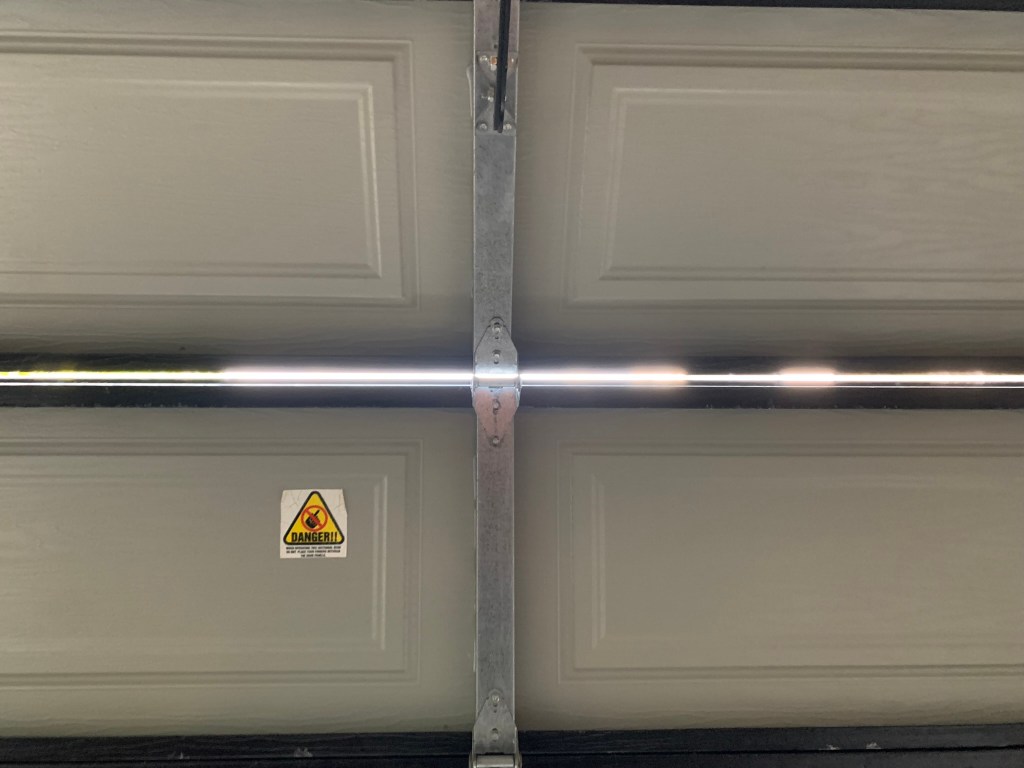
I also looked at how light in space changes with some human modifications such as opening the garage door which let a prism of light through as well as artificial lighting from the mechanism. While I am interested in natural light principally, I felt i could not exclude how we choose to artificially light our environments, whether to thwart or mimic natural processes.
note That the colours used, while not intentional are all part of the Rainbow – emblematic of the electromagnetic spectrum (visible light).
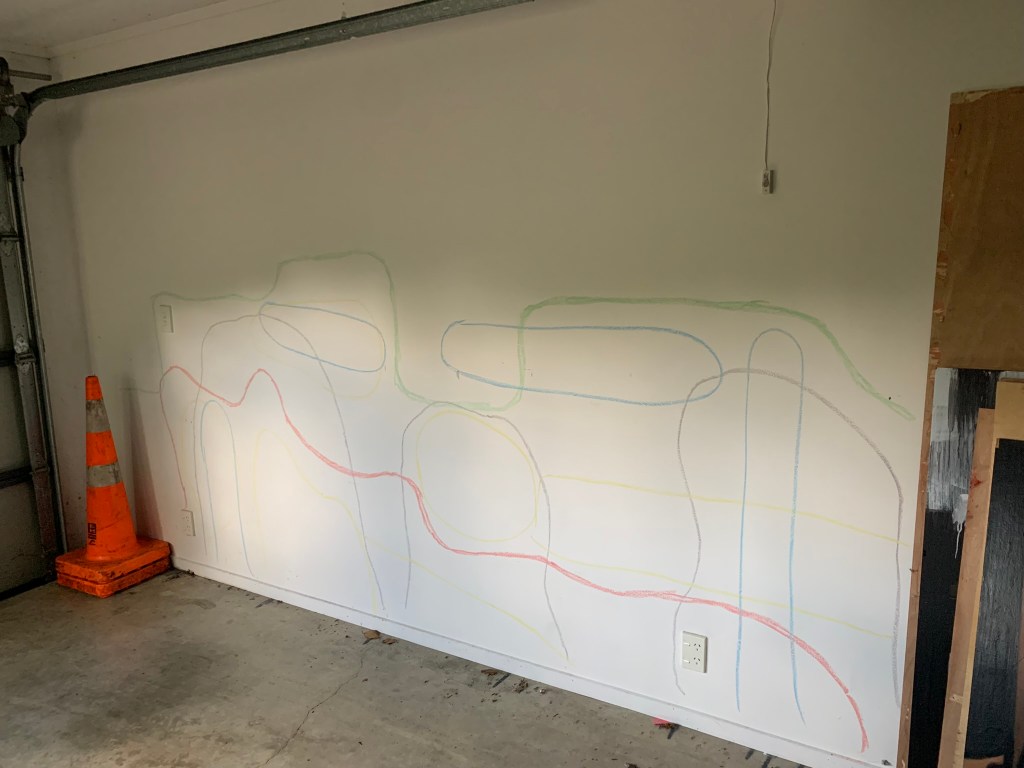
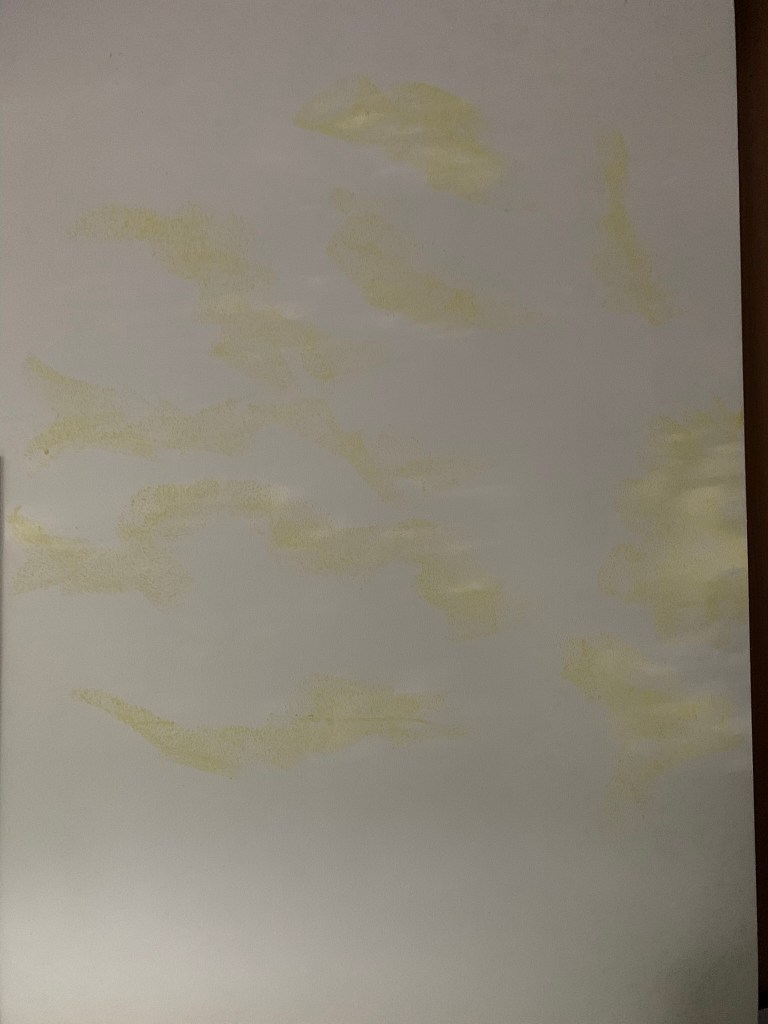
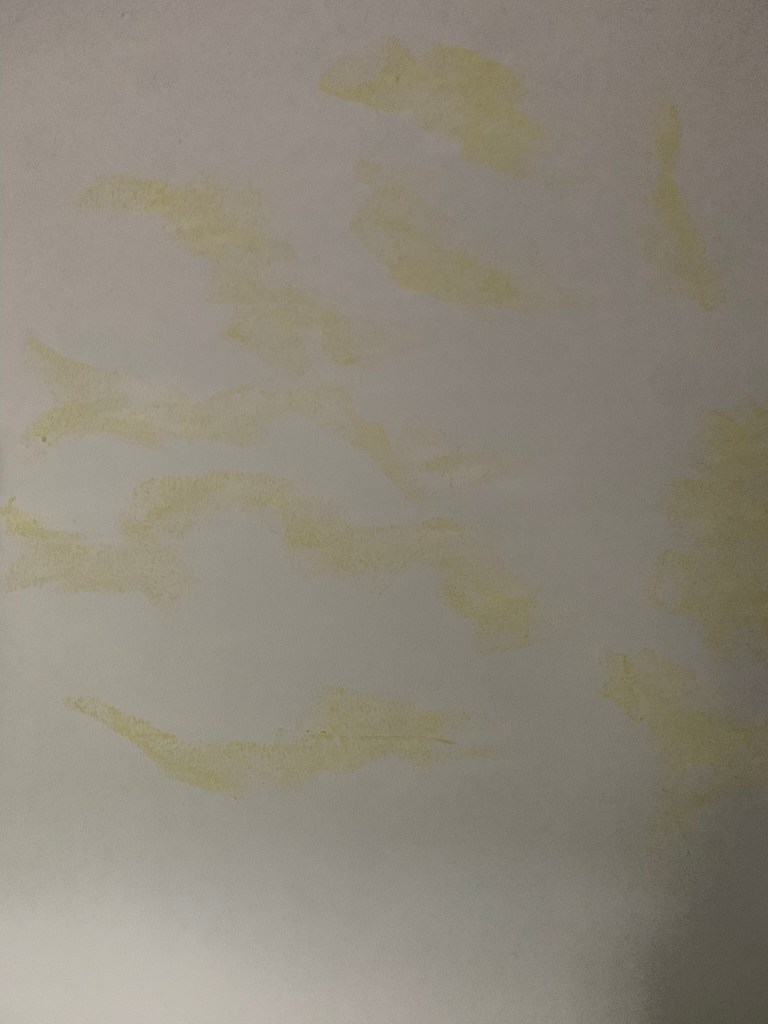
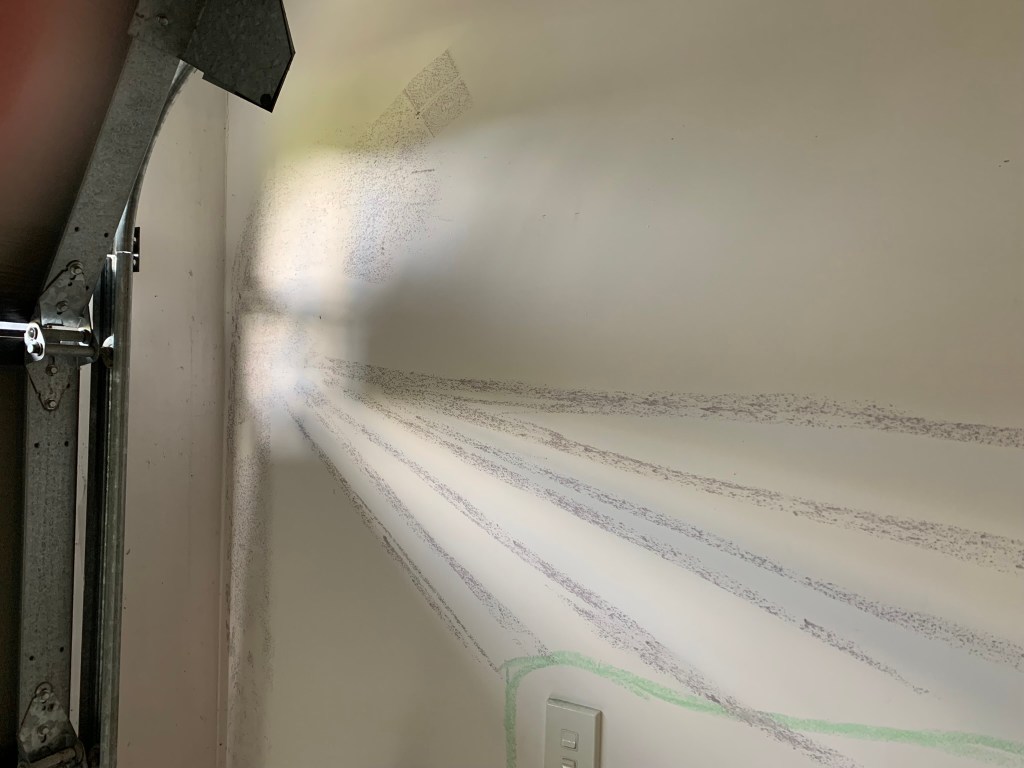


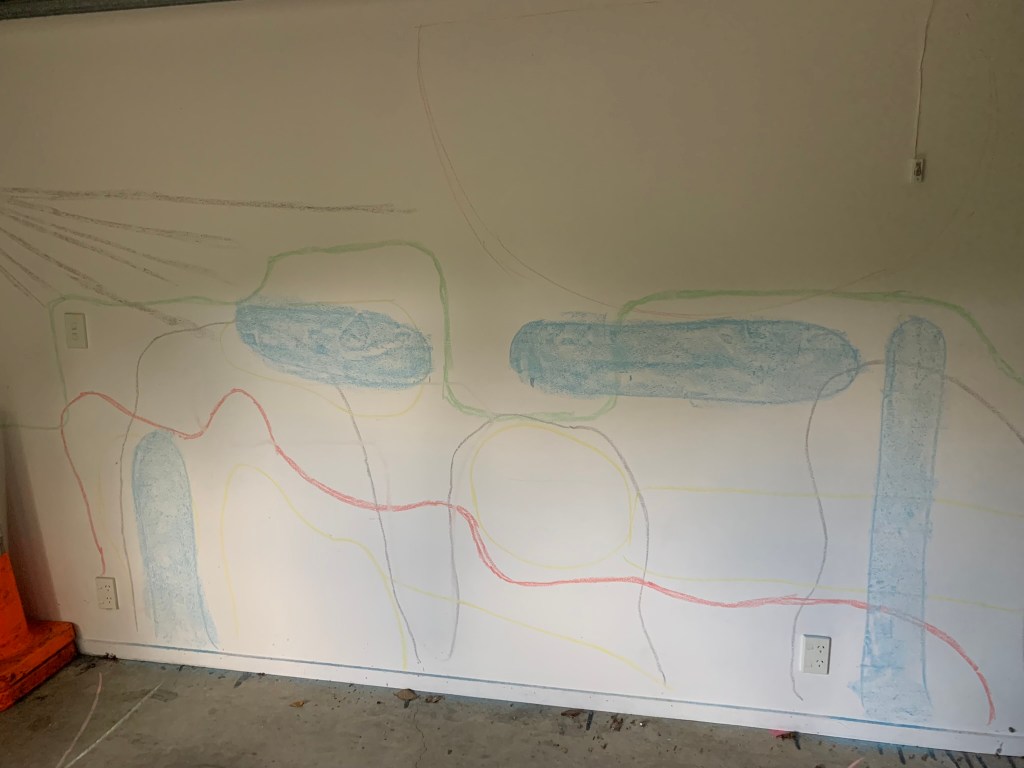
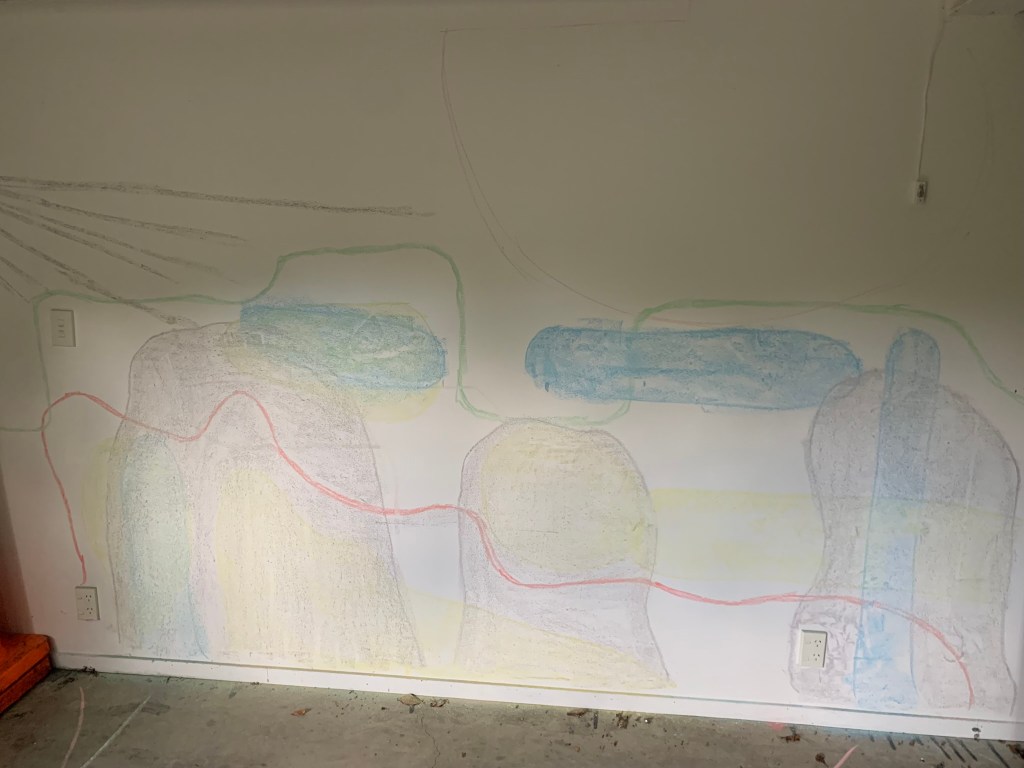
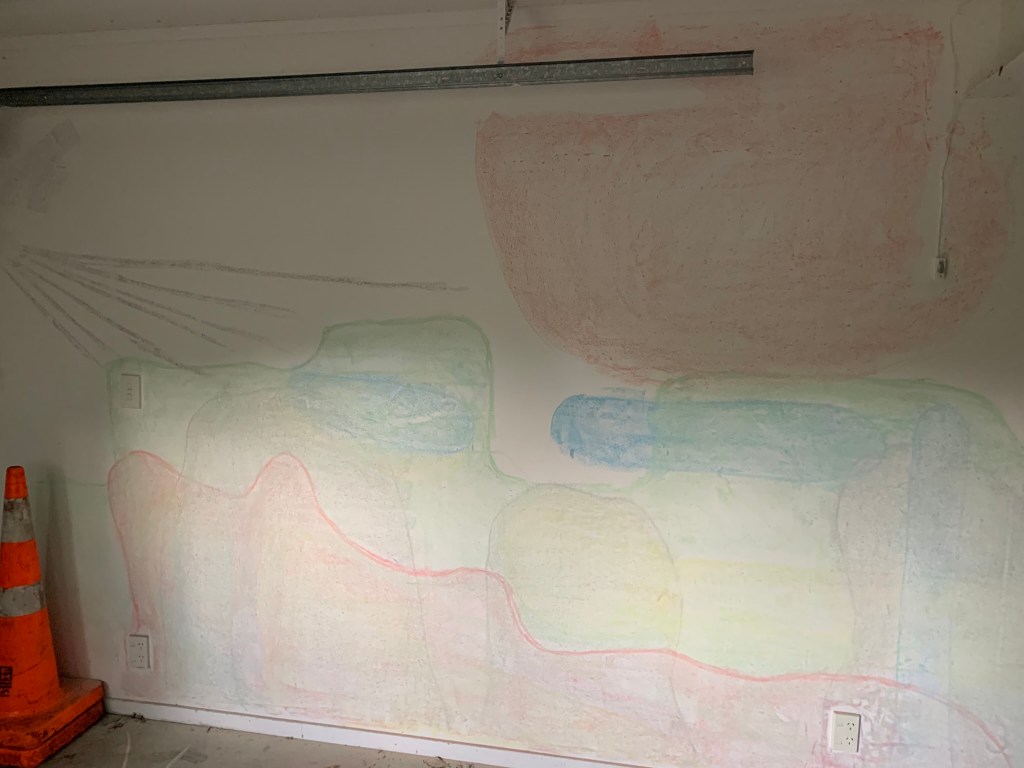
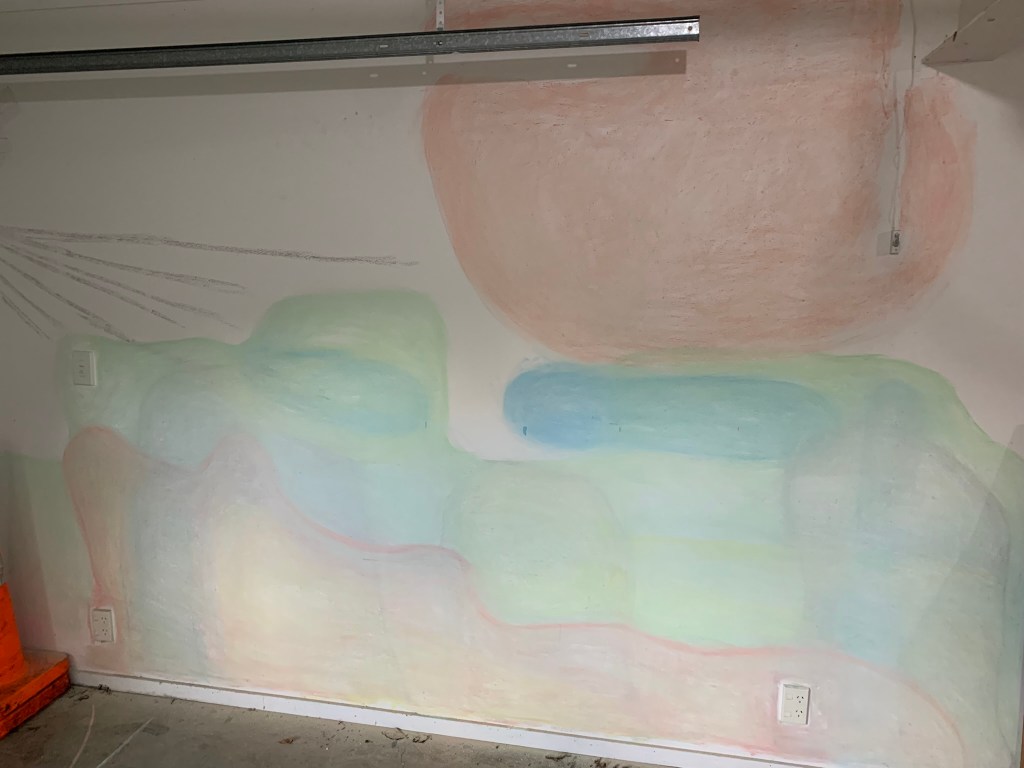
At this point the outlines themselves did not feel substantive enough, so the next day I decided to colour in the blocks. I wanted a physical interpretation of the light, so i picked the interior of the lines where the light shone and filled in everything – allowing for colour to mix and blend. I liked the look of this that i then blended in everything by hand. I like to think of this process as physically connecting myself to the light of my landscape through touching and kneading the wall – a task that was time consuming and labour intensive.
At this point I could consider the work a cultural landscape in its own right, through the associative and physical manipulations I had made upon the wall in relation to a natural part of the environment. At this point I decided, why not codify that, by making it into a discernible landscape, so as a piece it operates on both being a landscape and of a landscape. Is there a meaningful difference between the two? This is sort of how I feel about houses/architecture – if the approach is appropriate it becomes apart of the cultural landscape, not apart from it.
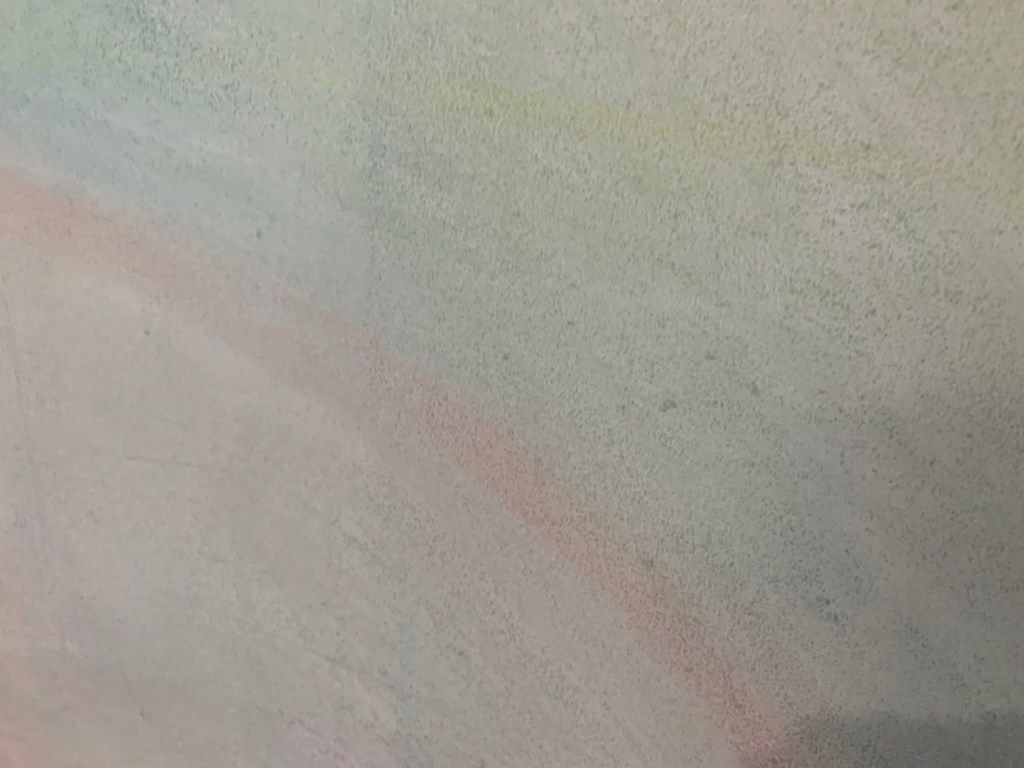
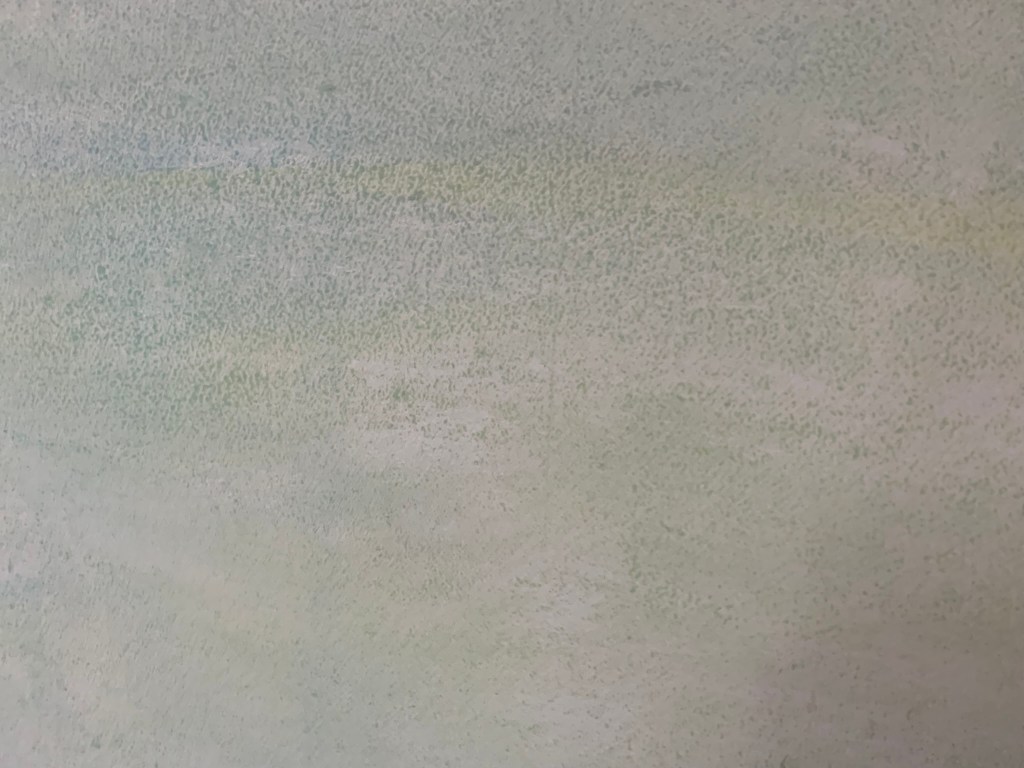
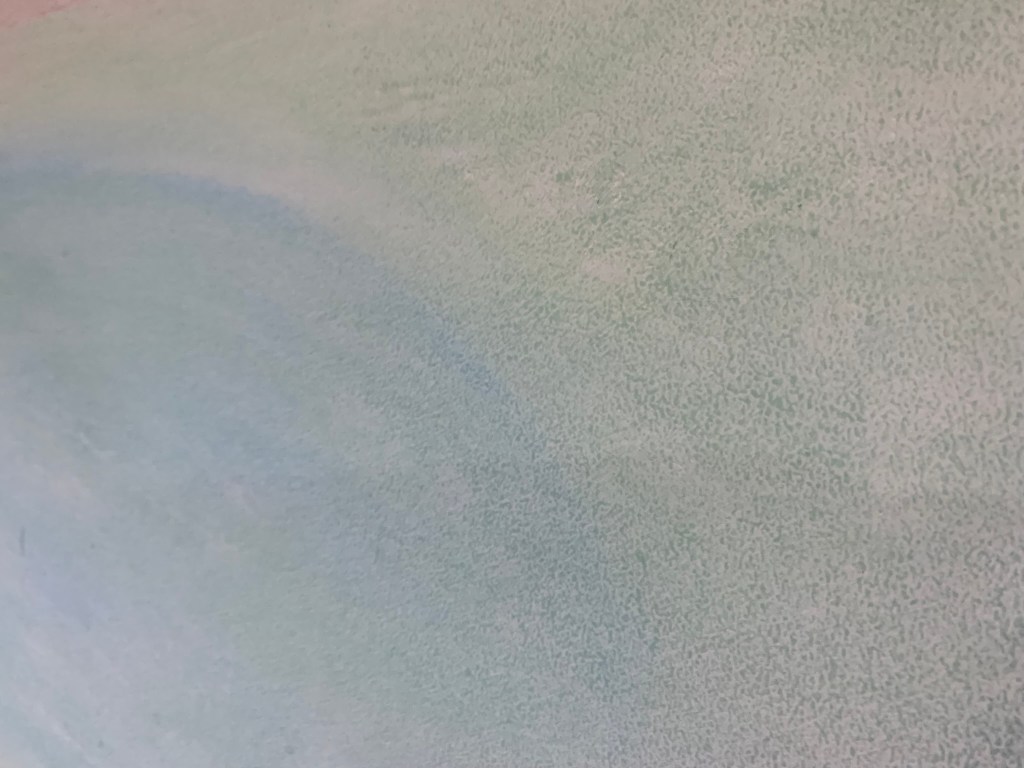
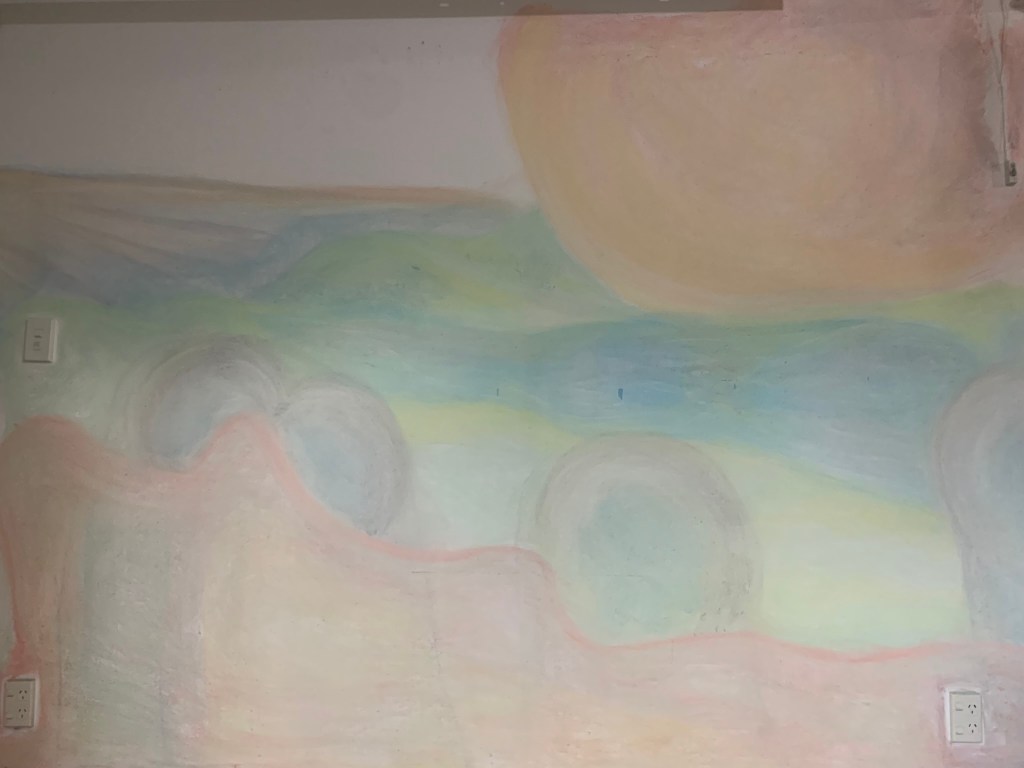
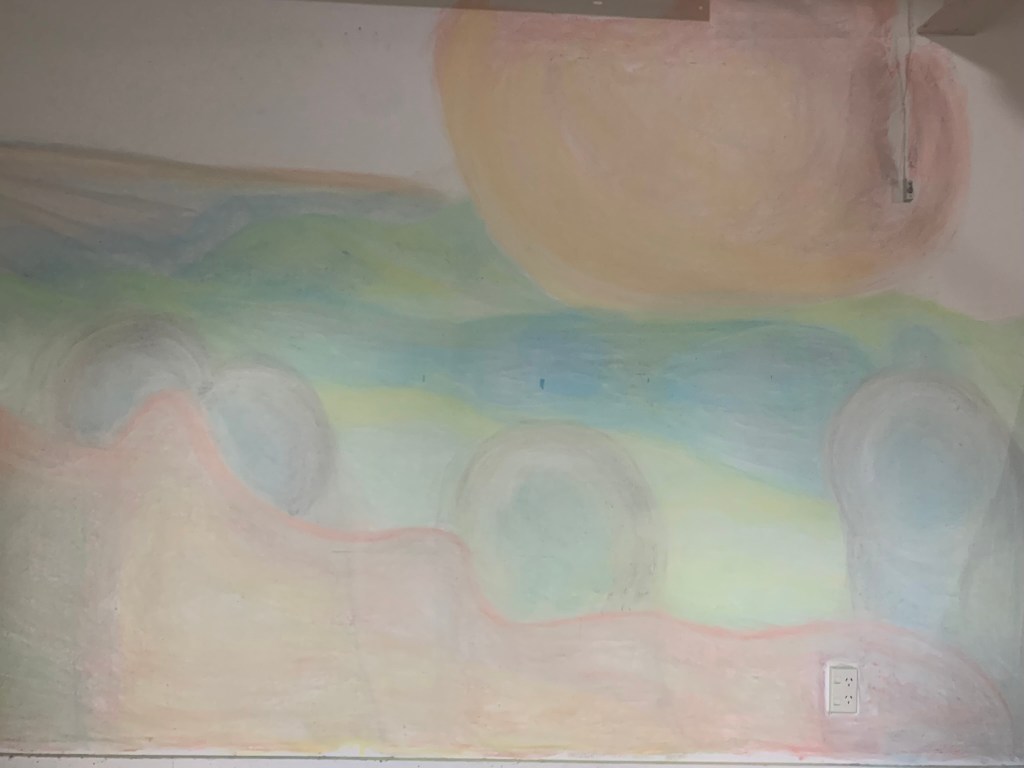
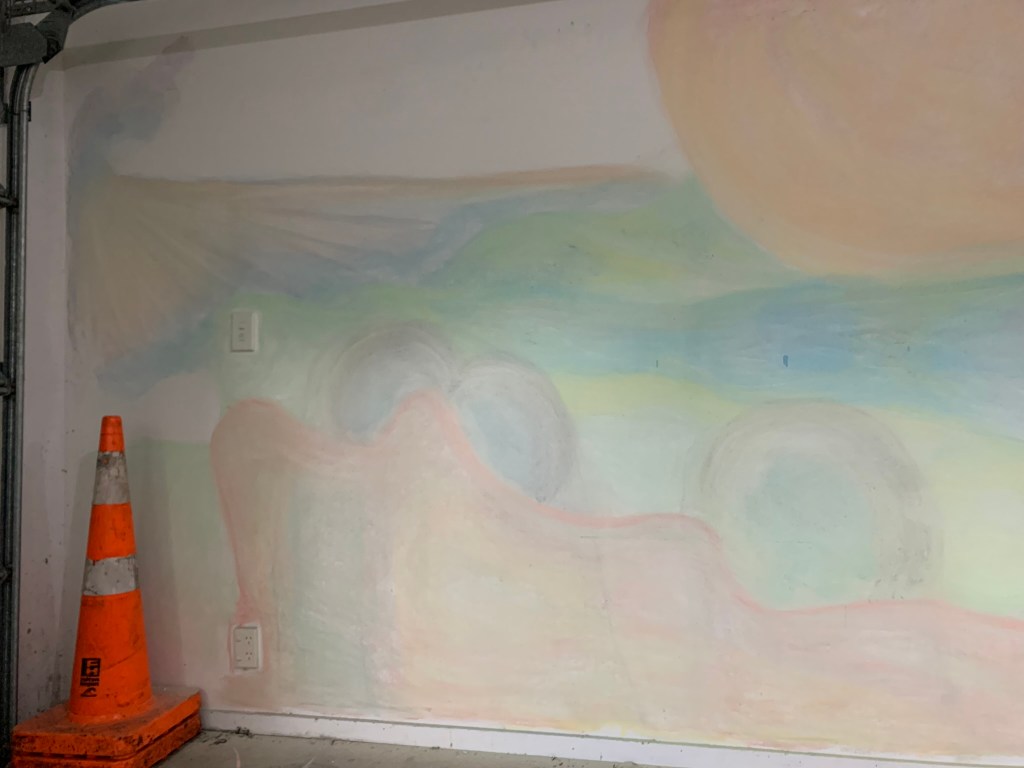
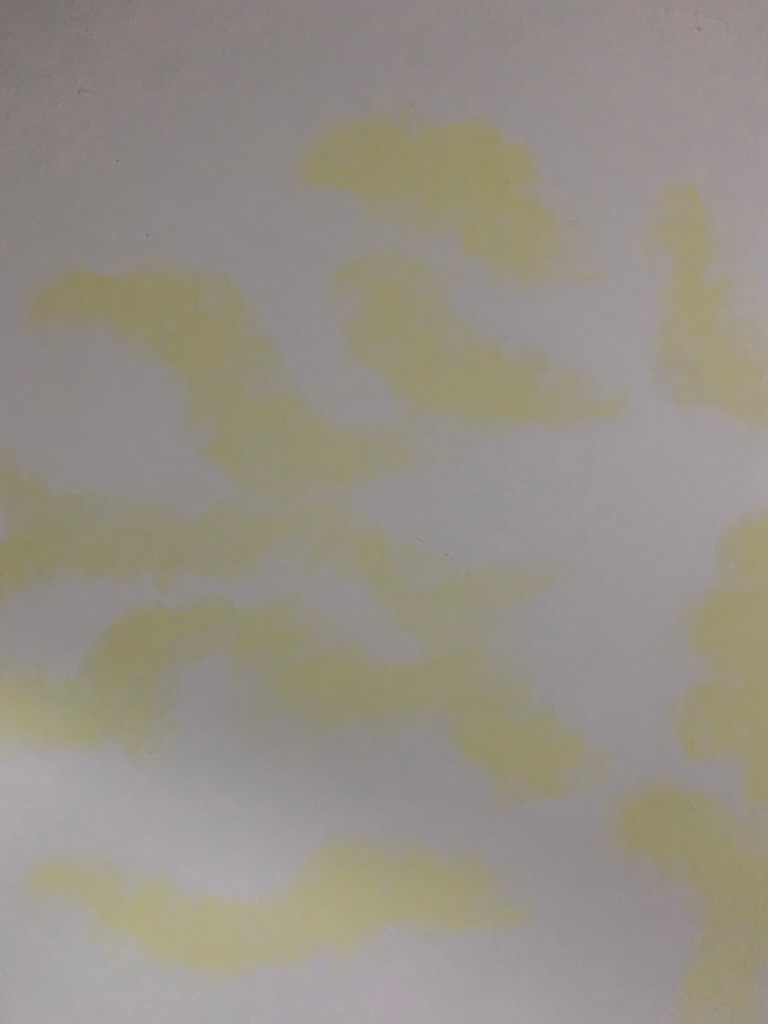


To me, the resulting piece looks like a group of people on a couch looking over what could be an apocalyptic scene. There is an element of the surreal to it, asking us to engage with whether its of a place or placeless.
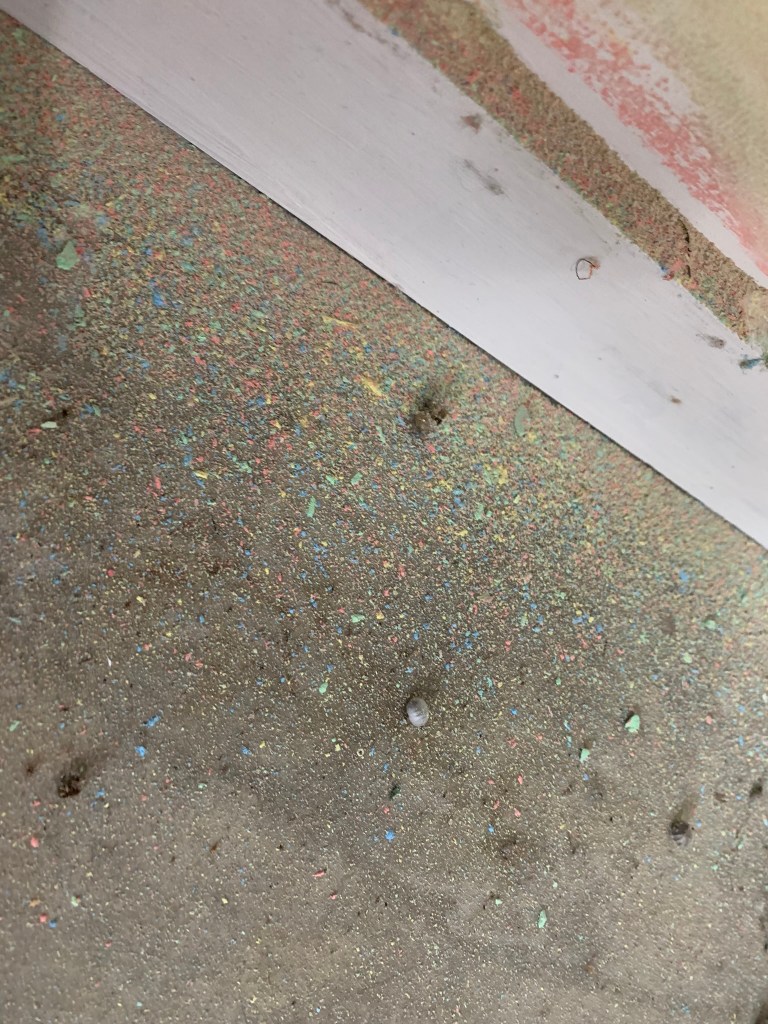
I also liked how the chalk dust fell and collected around the piece, extending the colour beyond the wall, a manifestation of the way light seeps into areas. which gave me an idea for another work.
Come Through
Why not take the chalk dust and use it as pigment for a paint?
As the chalk became emblematic of the light, why not give that light its own colour that i can apply in mark marking. I was interested in what sort of hue grey would come out. I made the paint by mixing dissolved pigment with PVA
I was initially not excited by the outcomes, the marks felt to fluidy and not enough strength to show up against white paper. After adding a lot more pigment i got something that felt right. I liked how bits of the undissolved pigment sat in the fluid like glittering particles.
I didnt expect any exciting colours, after all it is a collection of ROYGBIV will always make a hue grey – but i liked how light it was – it was not the ugly grey-brown you often get when mixing too many saturated colours together. I think I would like to try making more of my own paints in the future if i continue painting.
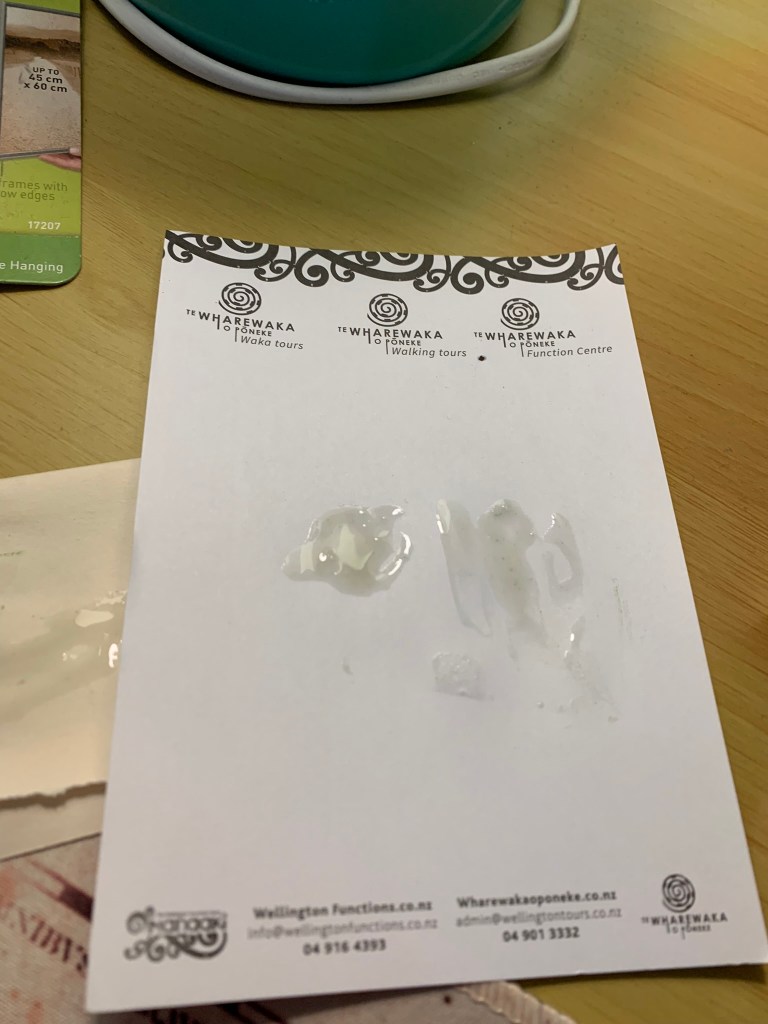
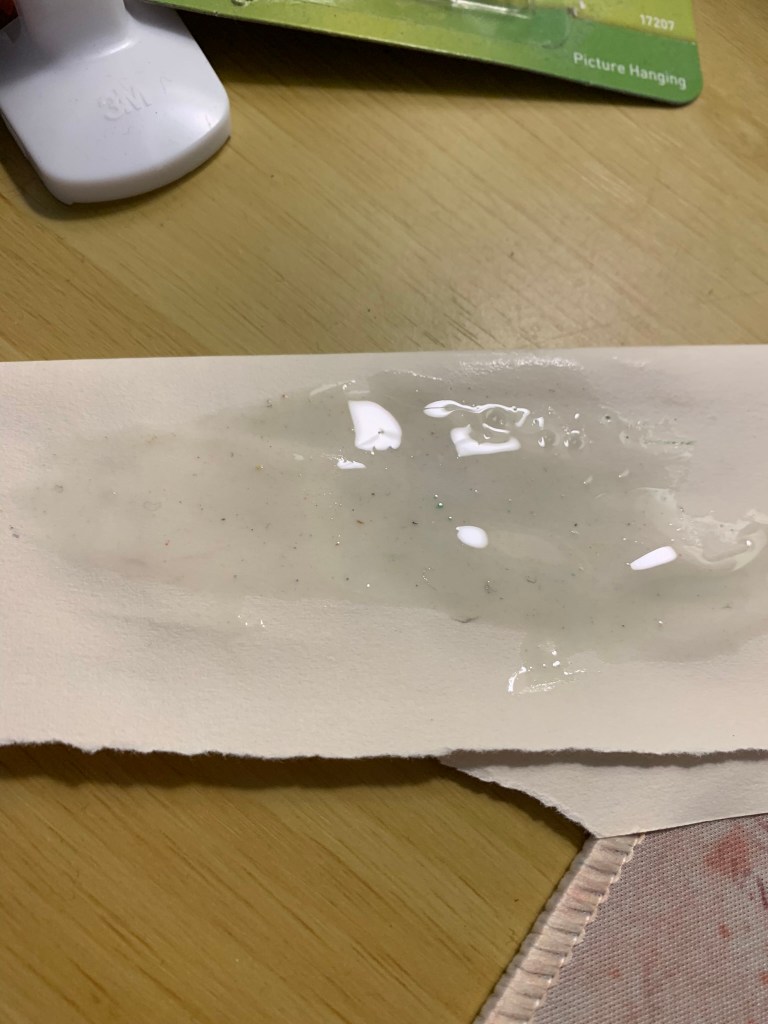
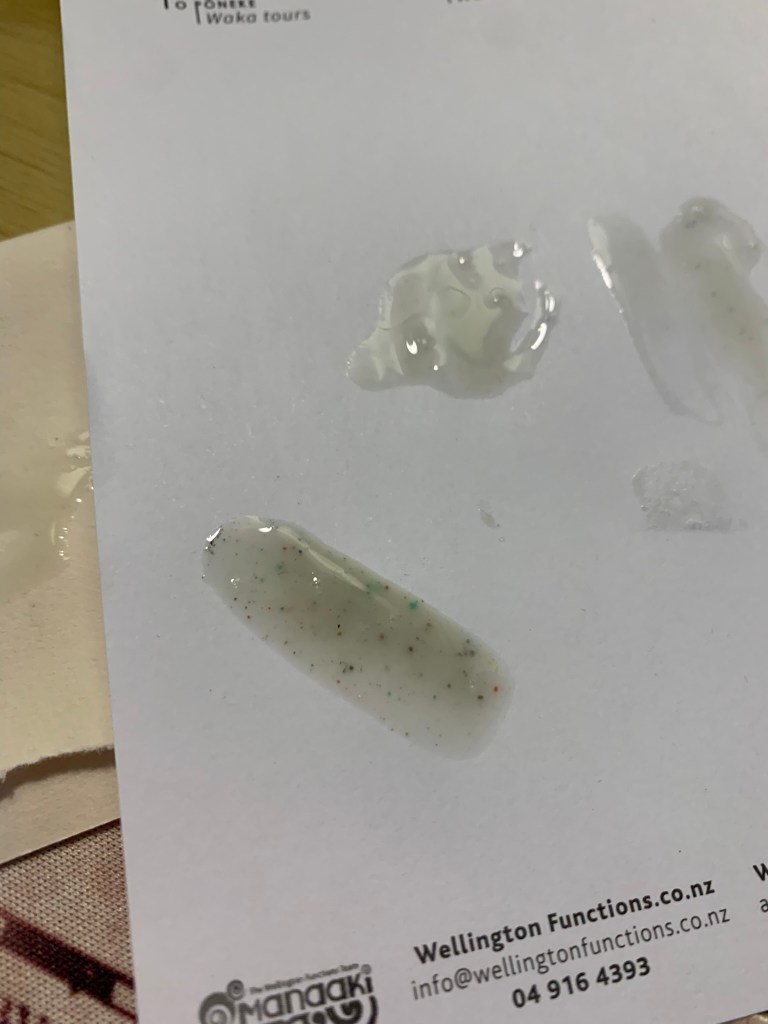
for substrate i decided to put on a reasonably thick card so i could add more paint to make the colour more visible.
I had been planning on using this canvas I diagonally tore in another work where three colours would inhabit each face of the canvas (one on a backing sheet). I thought it would be interesting to put the ‘light’ colour as the backing. Once dried I took it around the house to look at it in different lights – my favourite result being from behind.
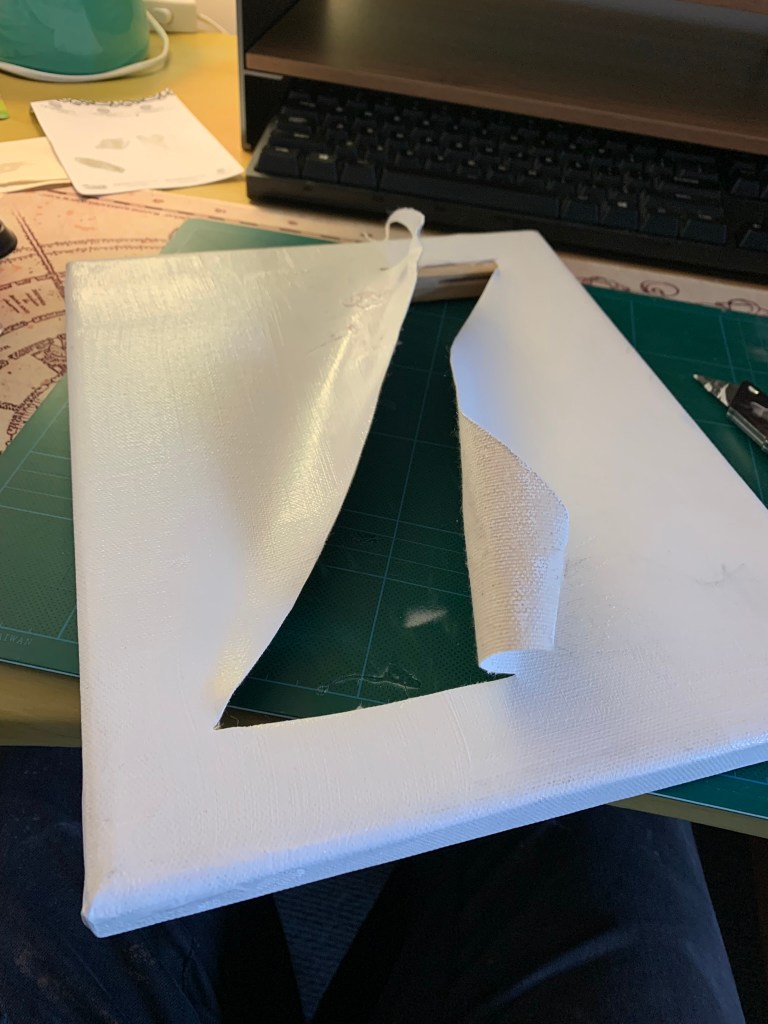
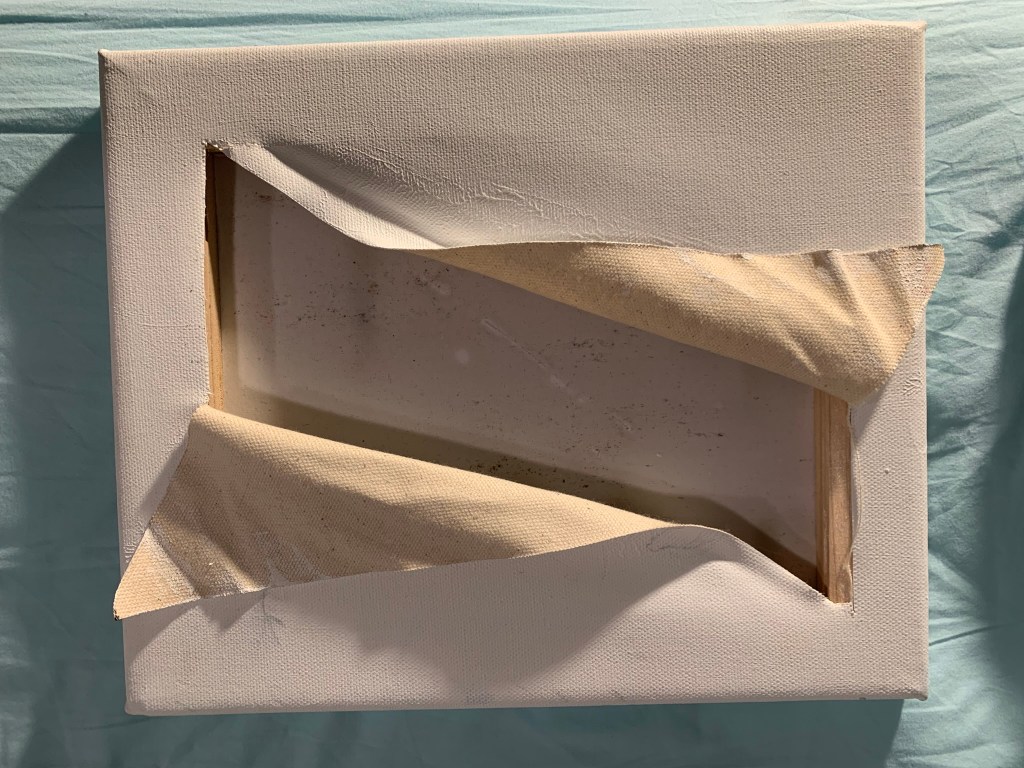
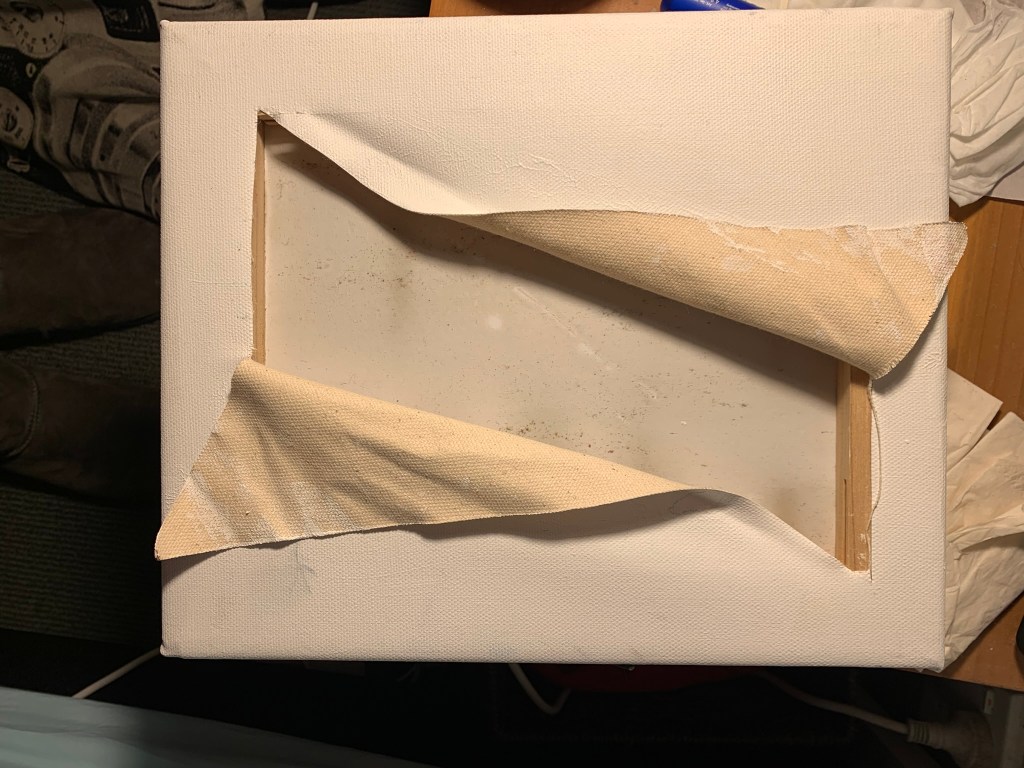
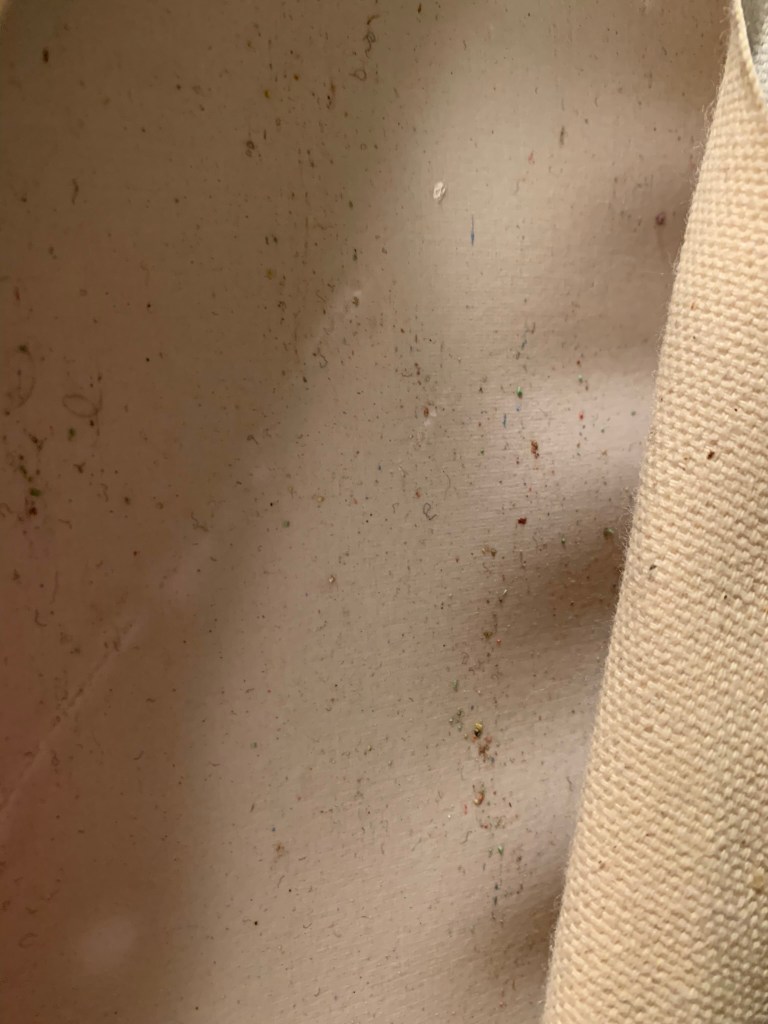
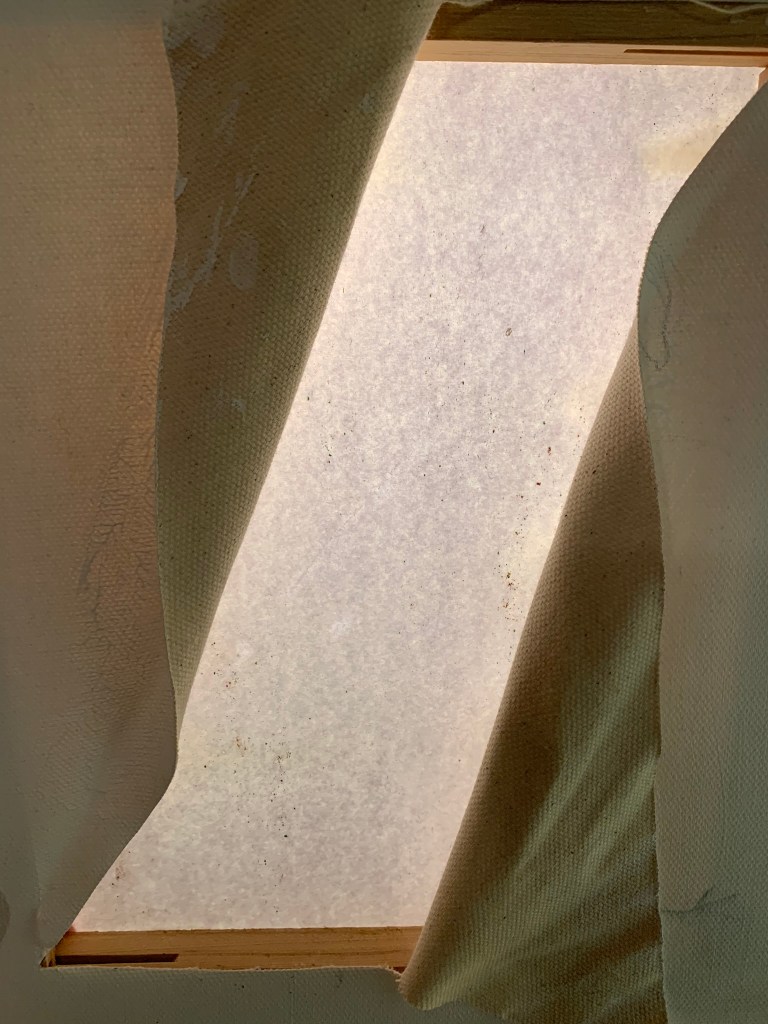
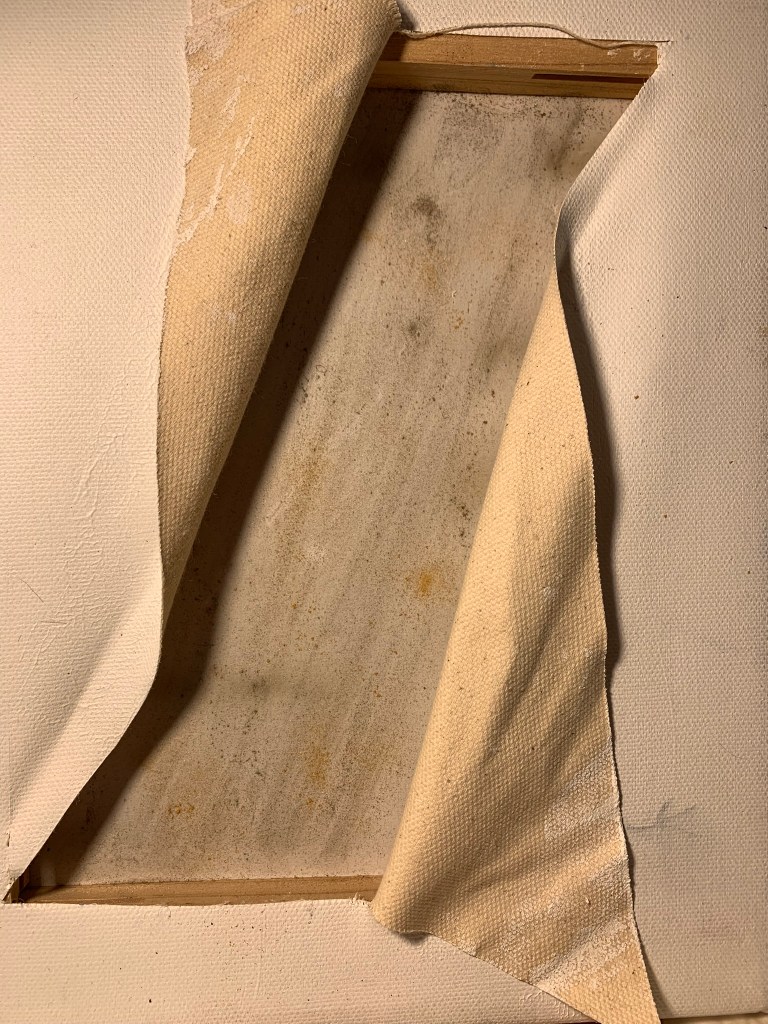
I see this work as another way of trying to grasp light as this physical material. Instead I feel a reckoning with its immateriality here – the light only becomes an important part to me when shone through a material. It became more of a piece that explores lights impact on material, peeling back the canvas to let the light shine through.
This piece would have different effects depending on light condition, and only provides the emotional response i like when direct light is shining on it. In this respect, it does tell me something about my own aesthetic views. They maybe rooted in a wish for the familiarity of the strong natural light we experience in NZ, what was a formative childhood sensation has become a part of my principles.
The work then is an insight into my relationship with the land, and in itself has forced me to examine my own ideas on sense of place.
I feel this work has a loose kinship with Teresita Fernandez’ ‘Drawn Waters’. I first became aware of this through the folding of the canvas, the texture reminded me of the solid yet ‘flowing’ metal. Fernandez’ piece also seeks to create a sensory experience of things we dont normally get to ‘touch’ – rainwater and waterfalls. While we can be rained on, it is a different experience to moving through cloud, and as with a waterfall it is experienced through single droplets hitting the skin, not the solidifying force with which the water moves. Water is also highly temporal so ‘stopping’ it in this state is a novel experience allowing us to stop and renegotiate our relationship to it.
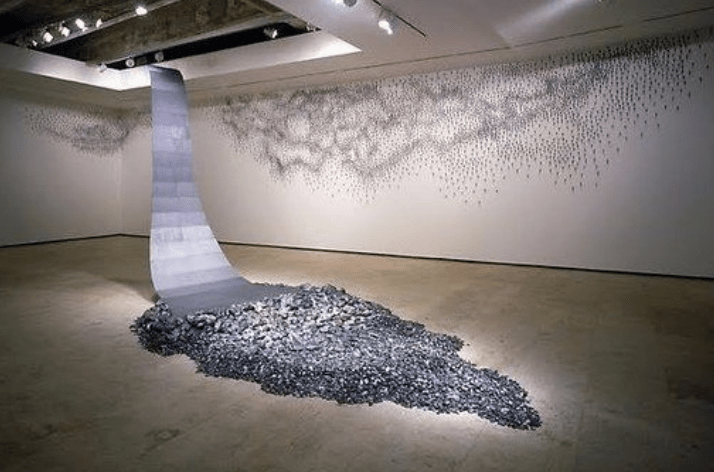
Teresita Fernandez has been a big inspiration for me to work on bigger, bold, more solid projects, and I find every time I come back to the work there is something new for me to draw from.
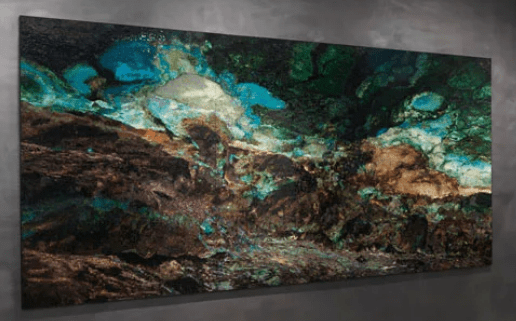
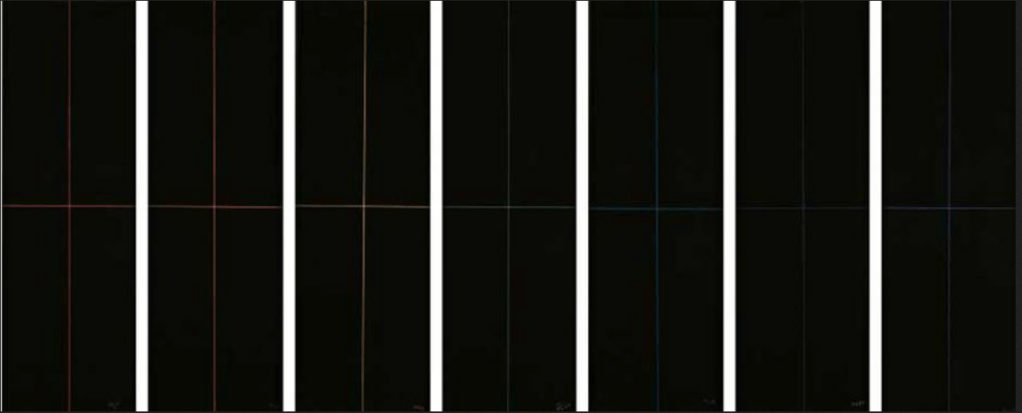
Another person’s work others have seen likeness in my own is Ralph Hotere. In particular I want to talk about the black paintings, as i feel this is an excellent example of someone looking at the transitional space between two points. There is a slow temporal distinction being made as you move from each canvas to the next, we are forced to take careful consideration, the lines being so that you can lose them in the blackness. This is exactly what i want to be doing with my own work, when you can pick out the smallest detail left that grounds you to a place, then we can begin to understand how place is constructed.
Beam
I talked about Fernandez and Hotere theoretically before, but I feel their visual presence most in this work.
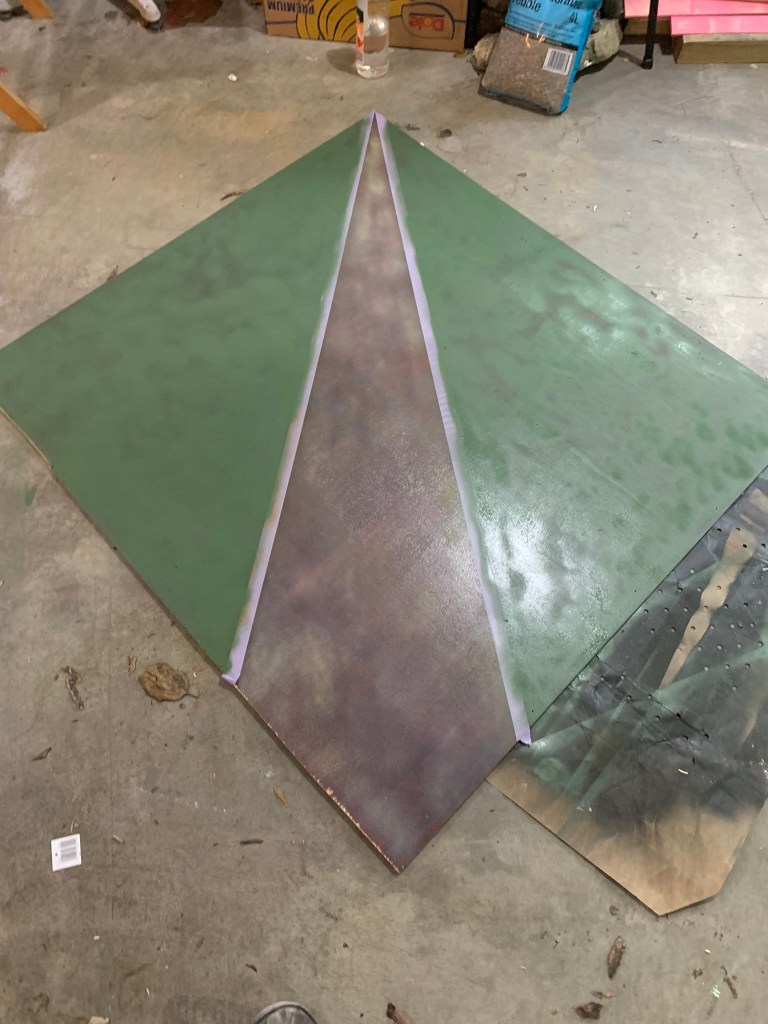
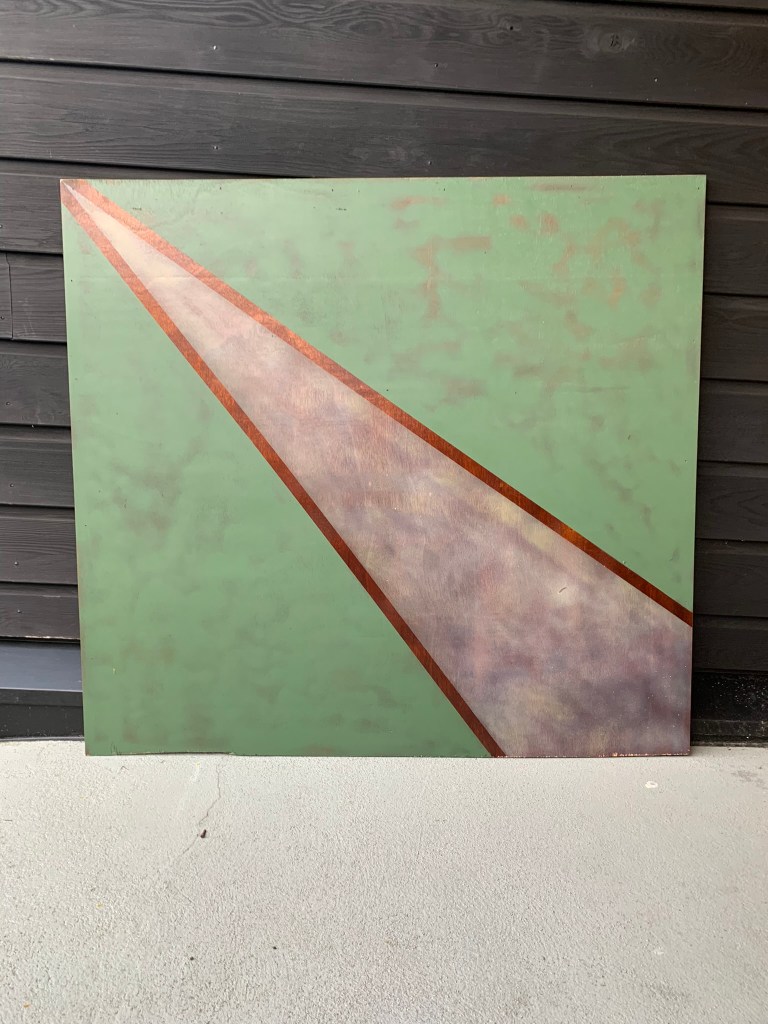
I wanted to make a more ‘traditional’ painting to illustrate my feeling/interpretation of light in NZ. The key principles i took into making this was directness and delineation. There to be a clear distinction between what and what isn’t lit/light.
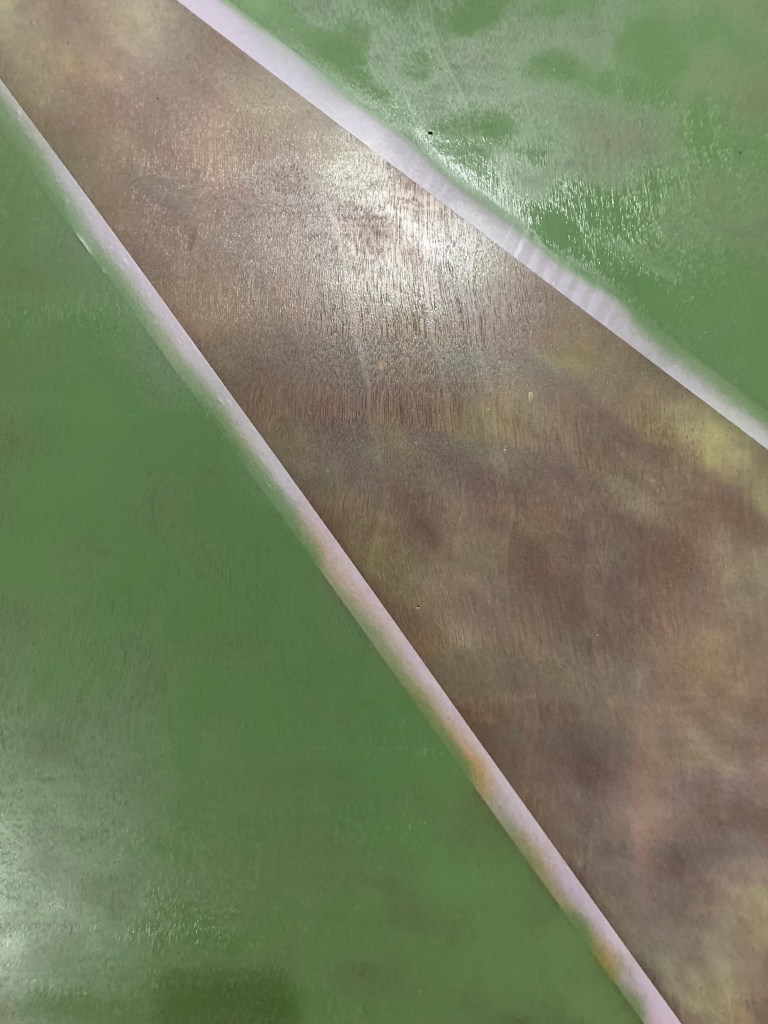
I have a bunch of veneer panels lying around, and i was drawn to their textural quality for this piece. As this was my most direct conversation about my interpretation of light in my NZ cultural landscape, i wanted to bring in the natural element. By using paints that were thin enough to allow the veneers grain to come through it alludes to the forests of this country – a reason i chose this green, a colour of light hitting the tree canopy in native bush.
Trying to decide how to approach this i started laying down tape and liked the triangular shape i created that we see here, at this point it reminded of a beam of light – and thus i made it a beam of light.
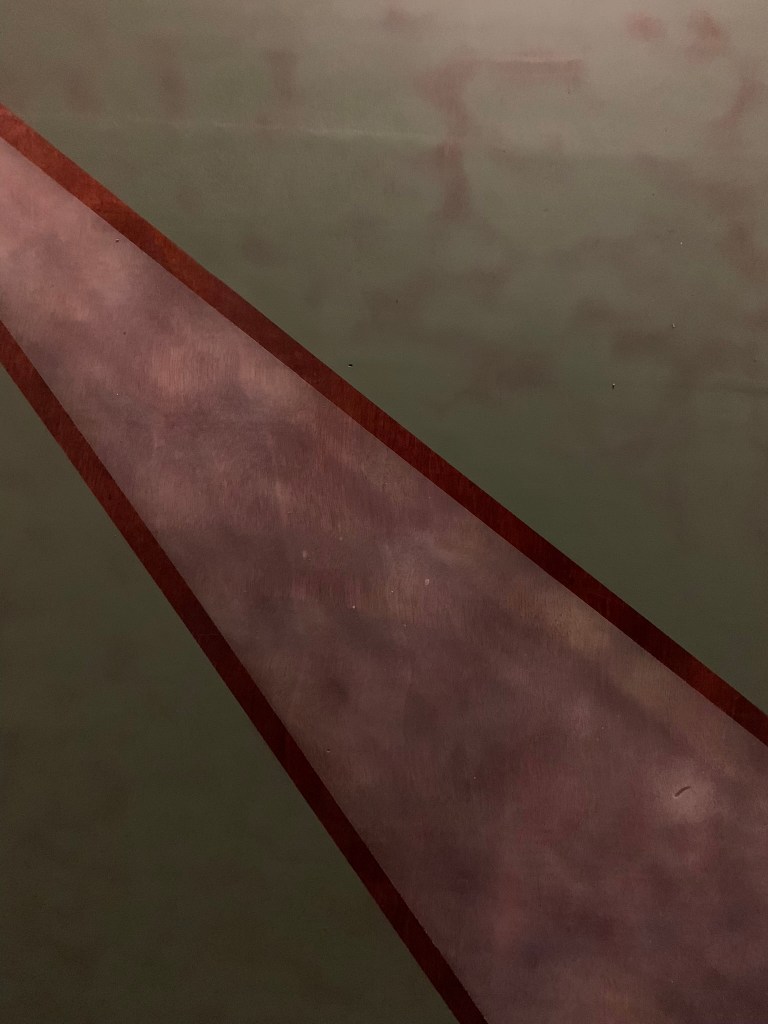
As I was working I really wanted to encapsulate the beams that come through the bush that pick up the glints of dust and insect, I worked to not cover the wood uniformly – standing back every few sprays to let the paint soak in and reach its final colour.
I love the effect I got from this technique, the longer I stare at it I feel like a little universe is emerging between the two solid lines – a fun thing to consider while light is carried from such far away places to bounce of this work.
The other thing of note to this piece is its size, i wanted to work big, let something encapsulate me, if i stand close enough be in the forest. Its simplicity does not reduce this feeling within me.
This is the closest I have come yet to creating a feeling for myself of the connection to a cultural landscape. The next step is to try and elicit these responses in others and see where the edge of their sense of place is.
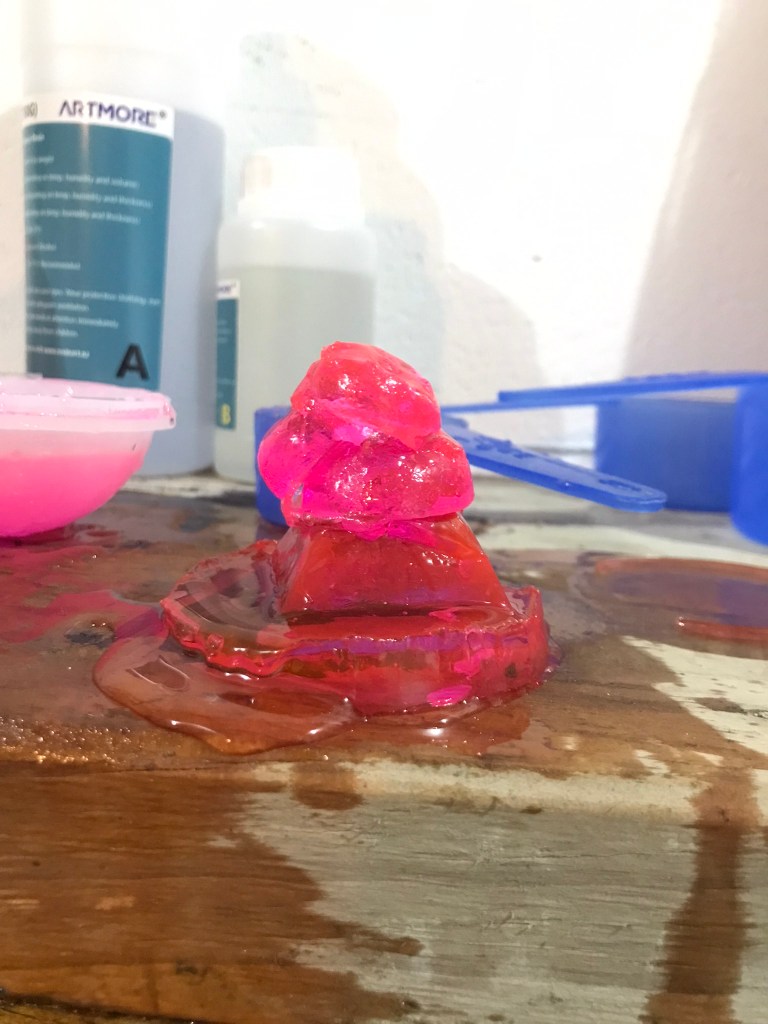
Not so successful – Resin
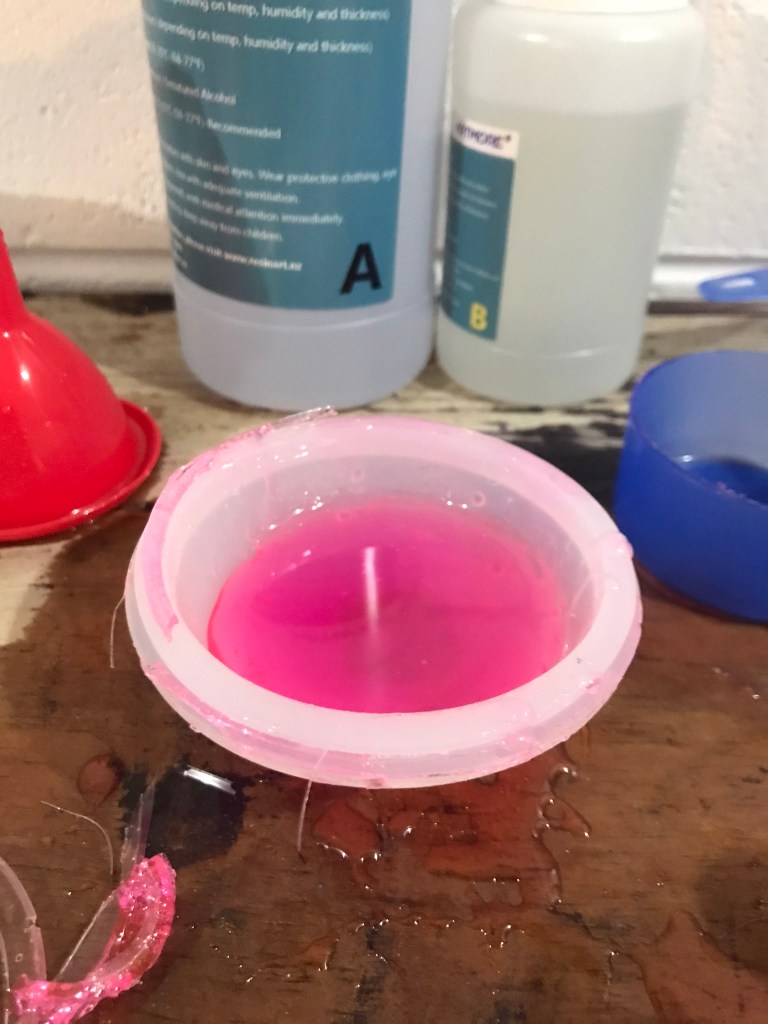
Working under time pressure in less than ideal conditions, My experiments with resin were shortened unfortunately.
The temperature of the garage meant that the resin never fully cured, along with some rookie mistakes of not mixing my parts together enough. I still intend to complete this bit of work outside of uni.
I had multiple moulds, circular, cube, and prism – of which i was going to dye.
these resin shapes could then be placed anywhere to experience the light refracting through. You can see a little of this occurring in the shot of the blob of failure.
The aim of this was to make people more aware of their surroundings in regards to light, really take in the qualities of a particular location. One direction my practice seems to be heading in is creating interventions that make people reassess their surroundings. I find this especially fun to do within banal urban settings – help bring to light the beauty around you. Light is often not thought about unless it is in the extremes, people i have talked to are less interested in where a building is sourcing its light, and how a space is activated. I feel these are important aspects of our everyday environment that should not be ignored, there have been many studies investigating how light impacts mood – something I am keenly aware of living with seasonal affective disorder.
Moving Forward
Without the time to continue this project, I can only discuss the potential scope for future work.
I still would like to take the principles I am working on here, and apply them on the road. Taking some time within each new location to discuss my relationship to the landscape – and engage in conversations with others about what makes their cultural landscape special to them. I can eventually expand beyond looking singularly at light.
I really enjoy the process of peeling a sense of place back to its minimum, I have been experimenting with this in photography for a while without the terminology for it. It was interesting to try and apply the principles that come naturally to me in photography to other media such as painting.
I would like to increase the size of work, or even live within extremes – as i feel creating work at extremities really highlights the focus I want to bring upon elements that can feel banal to the unconcerned person.
Reflection
Looking back on the body of work created for this semester, while it is not large, it is of a quality and size that I am personally surprised with considering I struggled a lot to be motivated to do anything beside even making.
Photography is a really useful tool for quickly ideating or exploring ideas about a topic which was really helpful when i was feeling a bit at a loss. I initially felt like I bit off far more than i could chew, as the scope of possibility rapidly expanded. I am use to having a tighter focus, what it really came down to was I was asking the wrong initial questions. It was not until the last week or so I really found the right terminology to grasp the feelings I had.
It was fun to approach a topic as more of a ‘pioneering’ research rather than retreading the steps, eventually given enough time there will be space to properly inhabit this role. I often wonder whether there is any meaningfully new question I can posit – or whether it is better to instead have an artistic focus on activism/praxis to current needs and goals for a community.
I like being project focused, while i don’t mind the end goal shifting – I feel I often need one to be able to begin creating. This is something to work on, i could loosen up my practice, but i often feel uninterested by the work i make in that state. Hopefully continuing in this course helps find a balance that i know is needed to create a sufficient body of work required.
I would also like to thank the generosity of all the staff I have interacted with in this degree so far, which have been highly focused on getting me through it rather than treating the learning environment as a degree mill I have experienced in the past. It is in a large part of resolution to continue pursuing a degree in a area i have a deep passion for.
ngā mihi nui
 Sasha's WorkBlog